Overview
This presentation discusses ecological landscape design, emphasizing biodiversity, sustainable practices, and the importance of native plant communities.
Landscape Ecology
- Interdisciplinary approach connecting environmental patterns with human culture and land-use practices.
- Recognizes landscapes as cultural entities shaped by human interaction.
- Emphasizes the integration of plants, animals, and their environments.
Ecosystem
- Ecosystems are complex adaptive systems influenced by local interactions among diverse agents.
- Acknowledges the interdependency of species and their environments.
- Scale of ecological investigations ranges from individual patches to larger mosaics.
Ecological Design
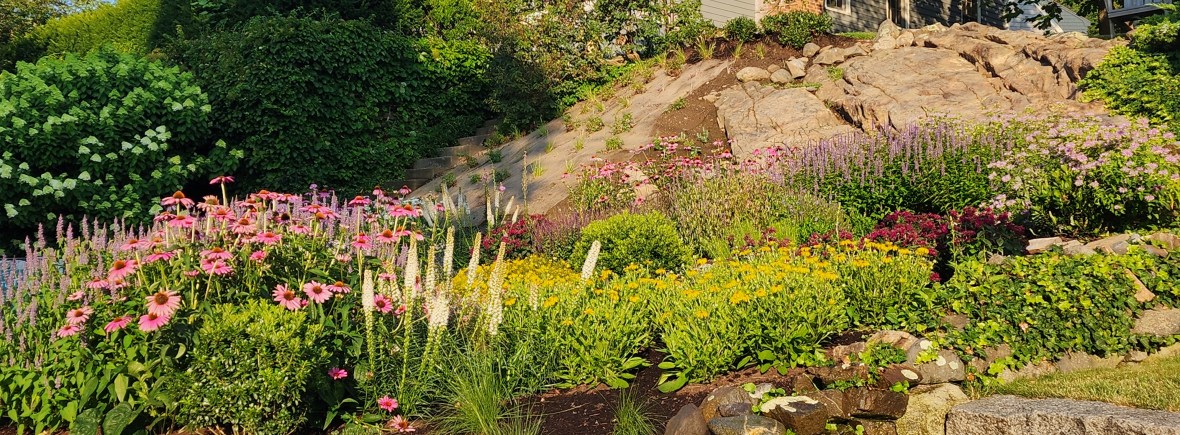
- Benefits include low-maintenance plantings, natural species combinations, and resilience to environmental changes.
- Sustainable practices in storm-water management exemplified by the Town of Danvers.
- Aims to perform essential services while using fewer resources.
Biodiversity
- Refers to the variety of life on Earth, including species and genetic diversity.
- Biodiverse ecosystems are more stable and resilient to environmental changes.
- Provides essential ecosystem services like water purification and climate regulation.
Lawn Issues
- Traditional lawns often lack ecological value and contribute to environmental harm.
- Large mowed lawns provide minimal habitat and shelter for wildlife.
- Chemical treatments used in lawn care are detrimental to surrounding ecosystems.
Planting Design
- Proposed meadow design includes native perennials in a 10’ x 10’ module format.
- Focus on ecological principles for plant selection to ensure health and sustainability.
- Emphasizes the importance of right plant placement based on biogeography.
Sustainable Design
- Holistic approach minimizing negative impacts while optimizing resource use.
- Focuses on energy efficiency, waste reduction, and promoting circular economies.
- Sustainable Sites Initiative provides guidelines for land development practices.
Microclimates
- Small-scale environmental variations influence plant growth and selection.
- Factors include humidity, temperature, soil moisture, and sunlight exposure.
- Matching plants to microclimates enhances their health and thriving potential.
Ecotypes
- Local ecotypes are adapted to specific environmental conditions and promote biodiversity.
- Use of local ecotypes increases the likelihood of successful plant establishment.
- Emphasizes the importance of genetic diversity in plant populations.
Conclusion
- Ecological landscapes provide significant value in addressing global changes.
- Preserving ecological functions benefits all living organisms within these landscapes.
- Highlights the need for thoughtful design that integrates natural ecosystems.
 Driftwood Garden Club