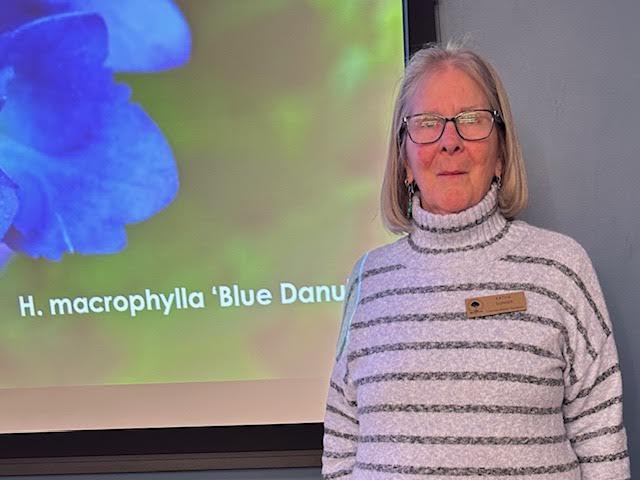
It was a full house for our March program on hydrangeas! Our presenter, Kathie Skinner, is a Lifetime Master Gardener and a retired educator with over 40 years experience in teaching and administration. Although her home is in Cambridge, her gardens are on Martha’s Vineyard, and she was a wealth of experience and knowledge of how to grow beautiful and healthy hydrangeas in our own gardens here in Marblehead.
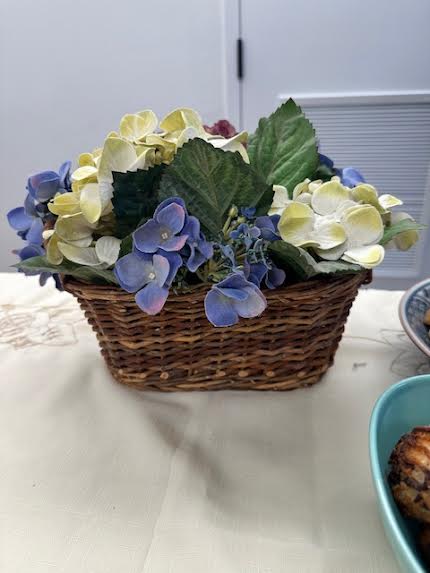
As always, our Hostess Committee provided us with a delicious assortment of goodies, and a beautiful centerpiece of silk hydrangeas, perfect for the presentation.




Kathie began her talk by letting us know we had a bit of an advantage in Marblehead because hydrangeas thrive in a maritime environment. Fog and early morning dew, as well as a temperate climate, help these plants thrive. As we all know, with changes in our climate, our winters can be colder and our summers hotter, and these changing elements can affect hydrangeas.


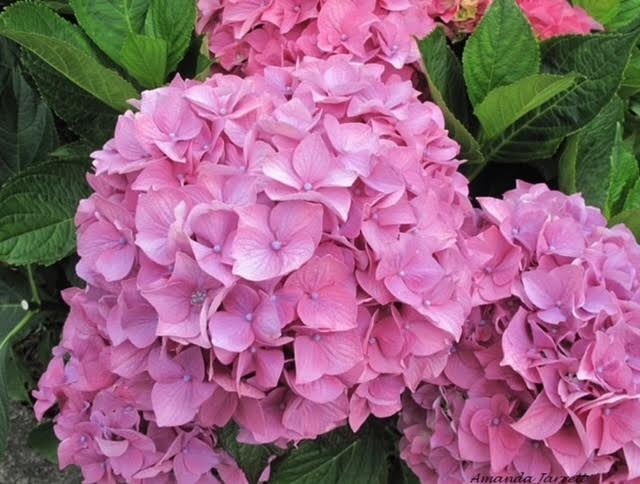
Identifying the species of hydrangea we have in our own gardens is the most important thing we can do for success. Knowing what species you have will determine the amount of sun or shade, whether the color of the flower can be changed by Ph, and how to prune the plant. Although there are many species of hydrangea, there are seven that are normally found in our region and do well here. They are:
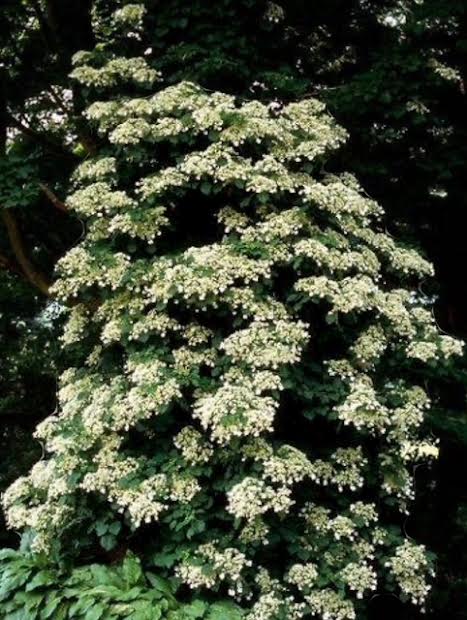
- H. anamola (climbing hydrangea). Does best in part-sun/full shade, has old and new wood varieties;
- H. arborescens (smooth-leaf). Does best in full-sun/part shade, blooms on new wood.
- H. aspera (rough-leaf). Does best in part-sun, blooms on old wood.
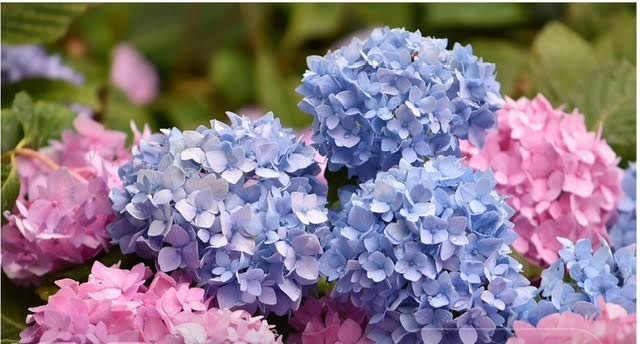
- H. macrophylla (Bigleaf). Does best in part-sun/full shade, blooms on old wood.
- H. paniculate (Panicle). Does best in full-sun, blooms on new wood.
- H. quercifolia (Oakleaf). Does best in full sun/part-shade, blooms on old wood.
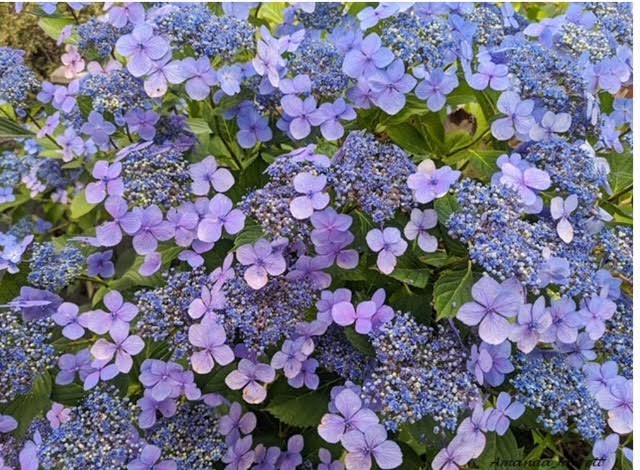
- H. Serrata (Mountain). Does best in part sun, blooms on old wood.
Hydrangeas can be identified by leaf type and shape of blossom, so you may have to wait for spring to identify what you have in your garden. We also learned that hydrangeas should be watered from the bottom, at the base of the plant, where the water can be absorbed by the roots. Knowing the type of wood (old or new) on which you will get blooms, will determine when and how to prune. Kathie explained rejuvenation pruning vs. pruning on both old and new wood, and left us with a wonderful reference sheet to use, as well as a list of website and sources for hydrangea gardening.


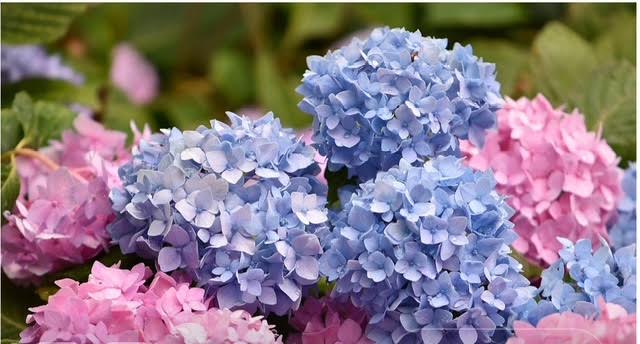
Although hydrangeas are not deer resistant, most are rabbit resistant, and, with the exception of H. macrophylla mophead, they are great pollinators in our gardens. Hydrangeas, whether climbing or a shrub, white, pink, blue or purple, are in a class of their own when it comes to a beautiful addition to our landscapes.
 Driftwood Garden Club