Established in 1952 as a volunteer, non-profit organization, the DGC maintains the Abbot Public Library gardens and provides educational opportunities in gardening and support of our environment.
The Driftwood Garden Club was established in 1952 as a non-profit organization to “obtain a practical knowledge of gardening, to assist in preserving the natural beauties of Marblehead, and to practice the art of flower arranging.” In 2026, we do all that and more!
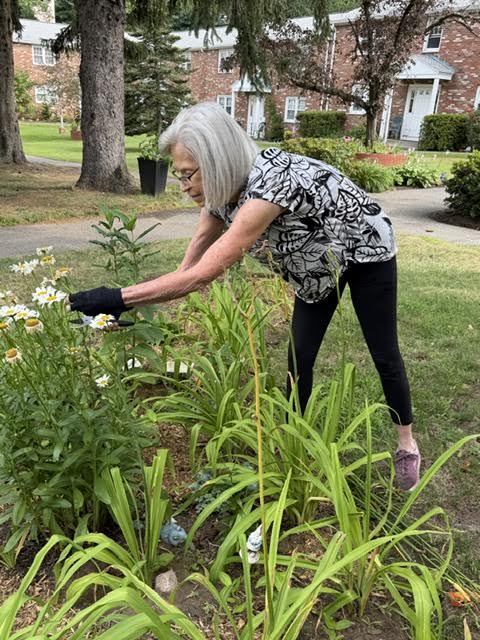
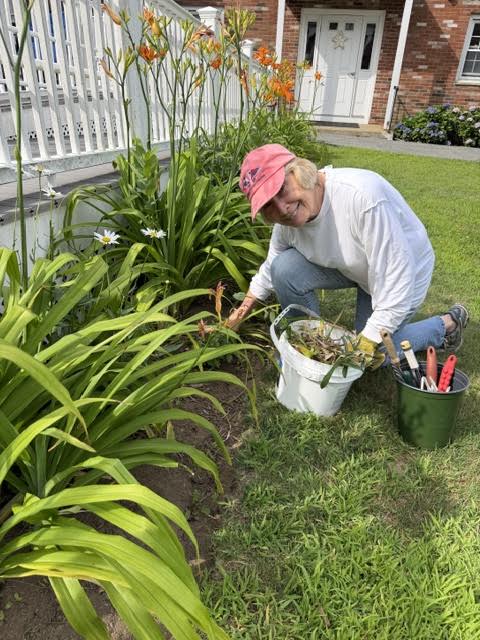
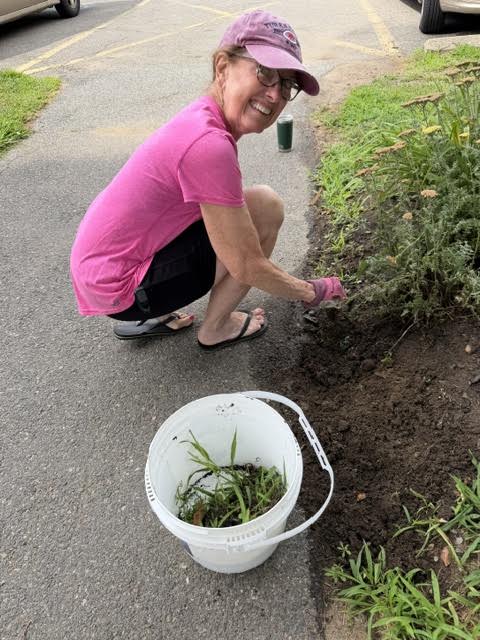
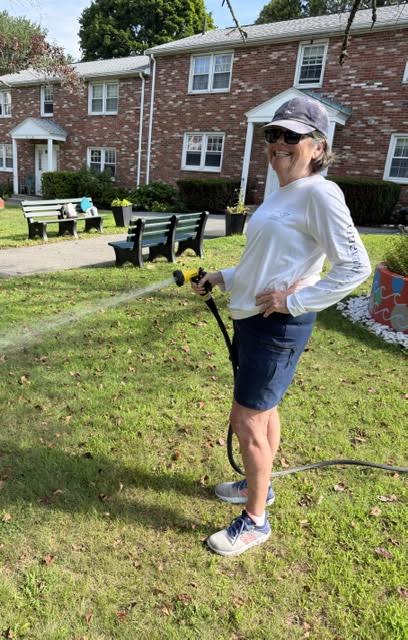
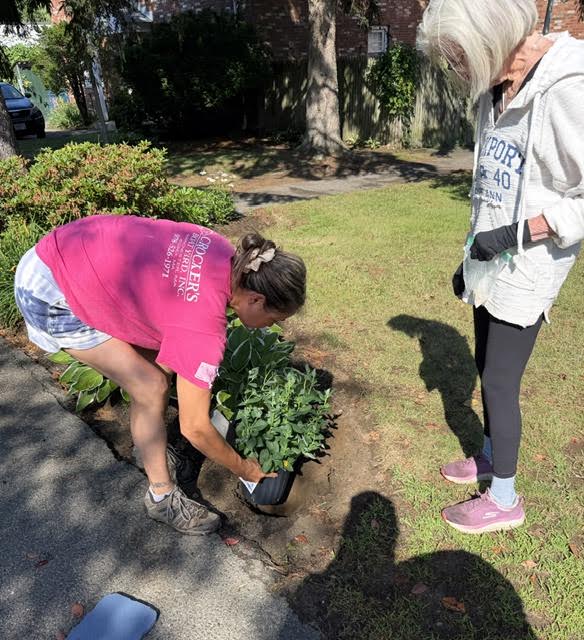
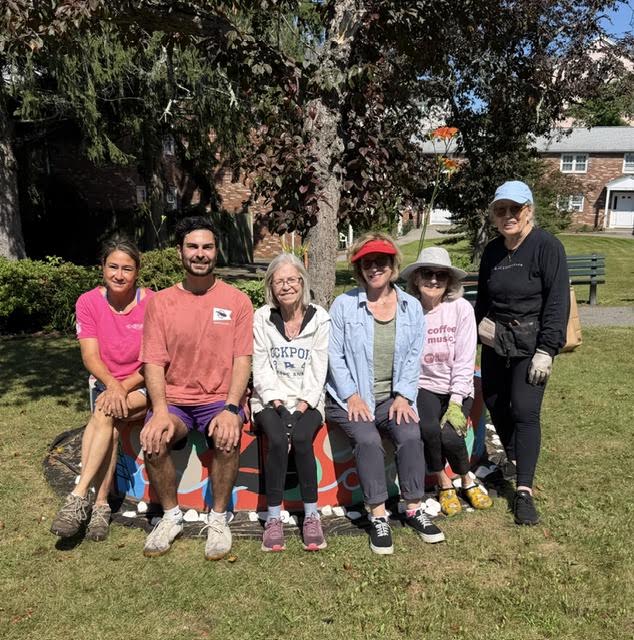
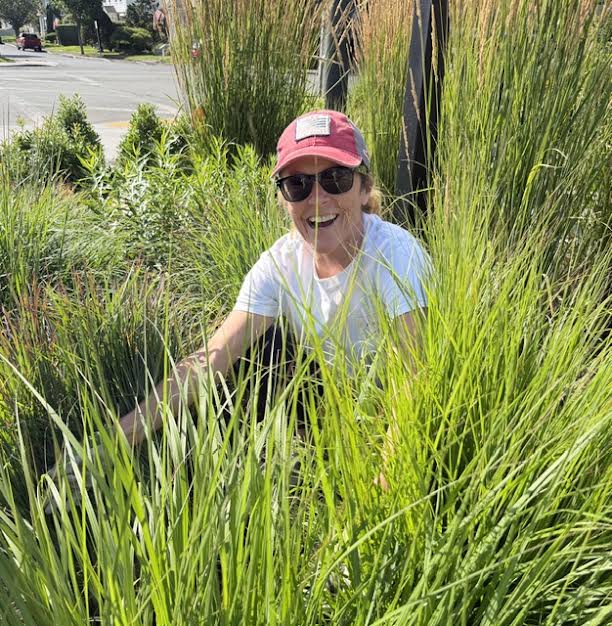
During the summer, our DGC members work in teams to care for two properties: The Abbot Public Library gardens and the courtyard and gardens at Farrell Court, a property under the auspices of the Marblehead Housing Authority. With direction from our two Civic Chairs, Kathy B. and Joy G., our member work groups make these gardens flourish from spring cleanup, through the dog days of summer, until the fall cleanup.
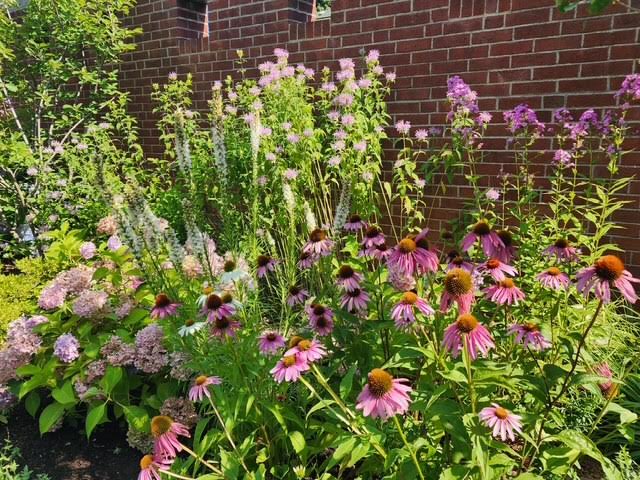
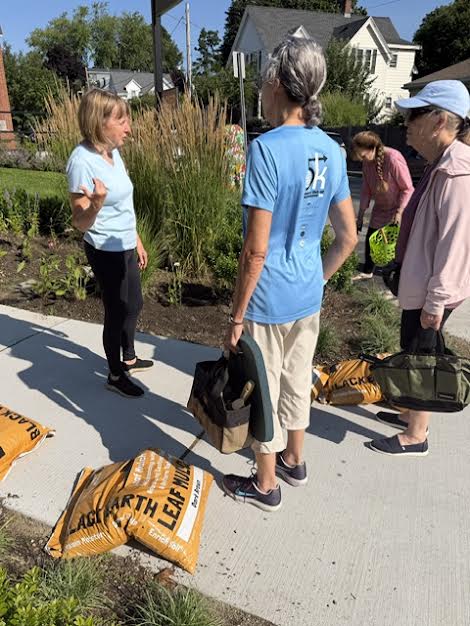
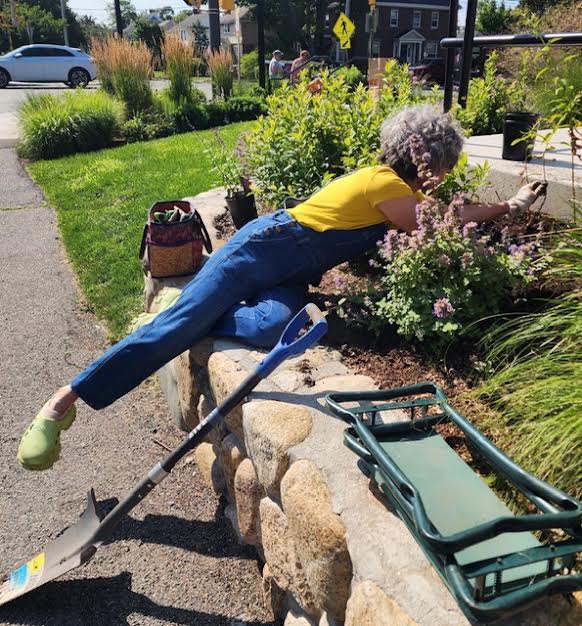
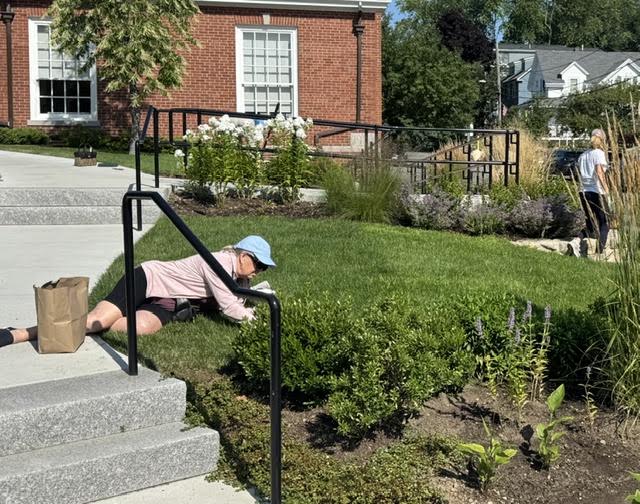
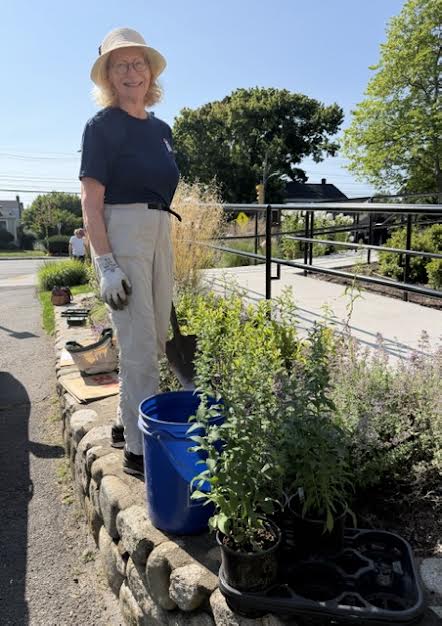
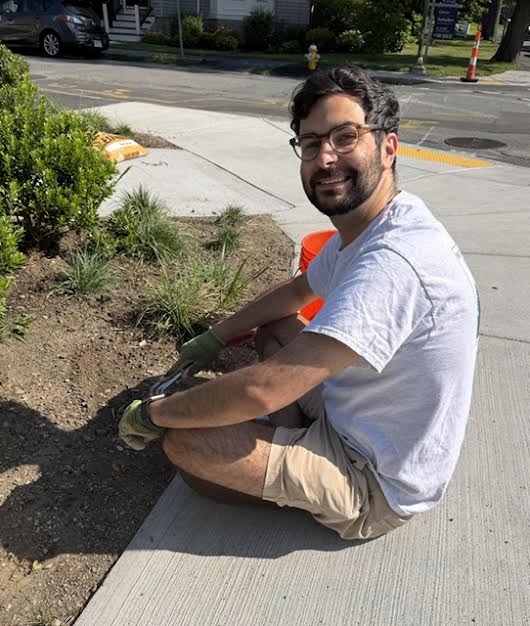
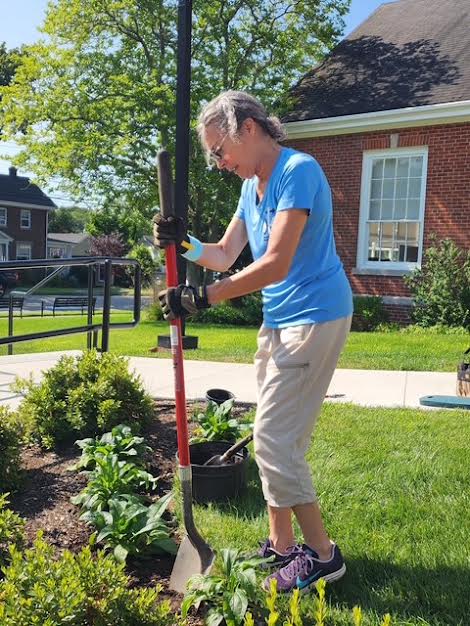
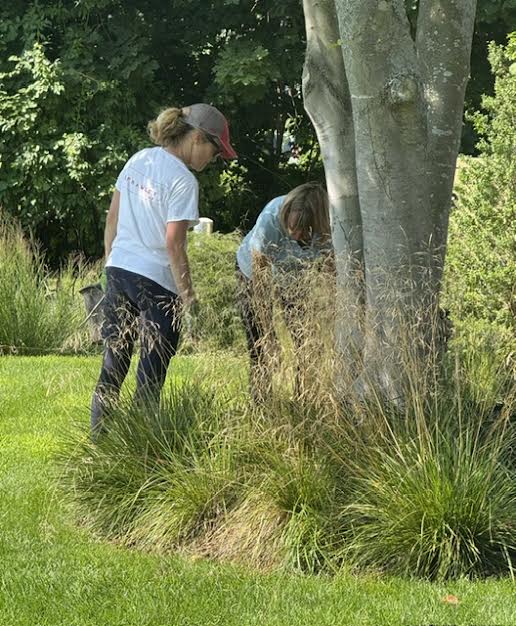
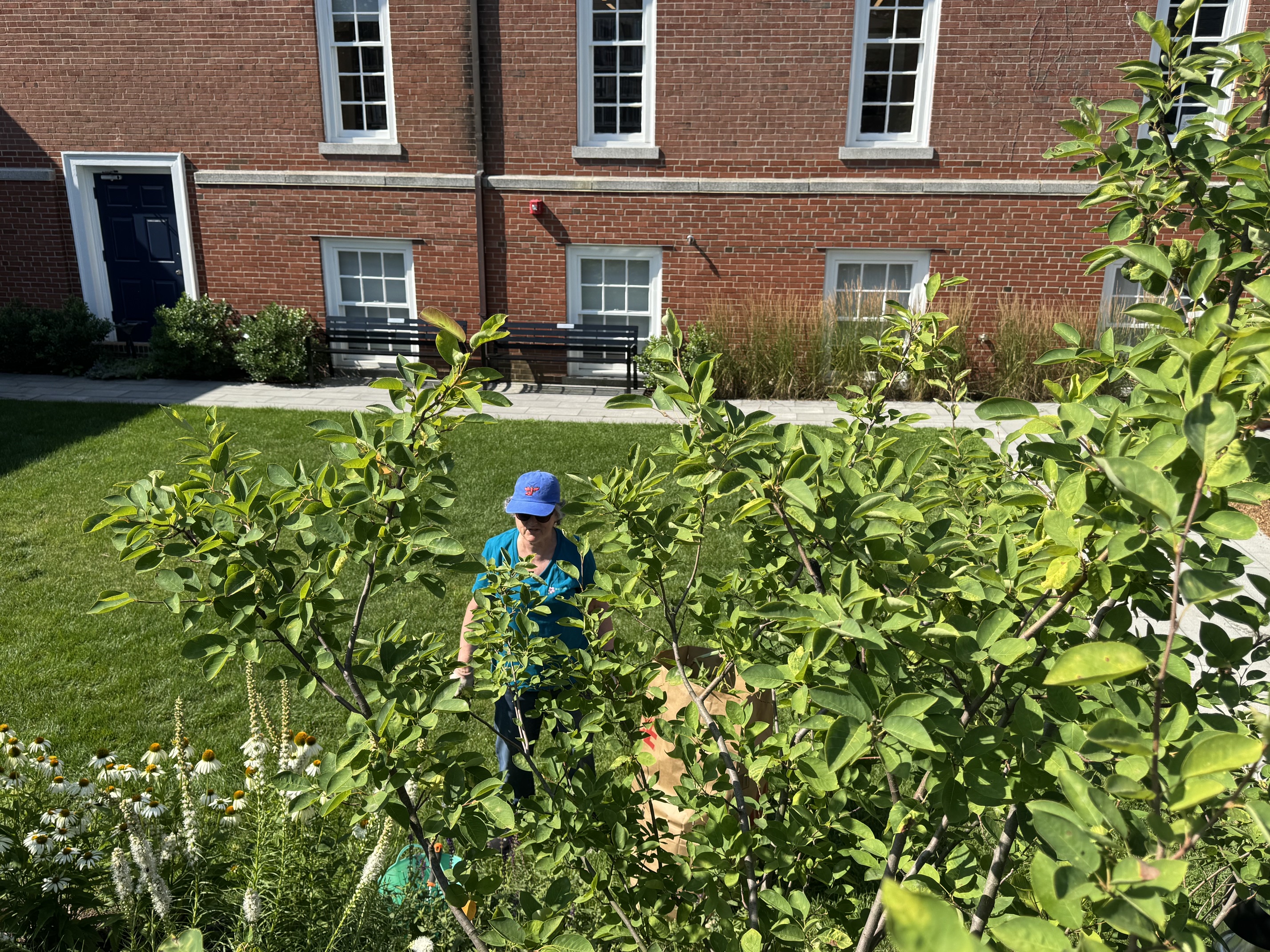
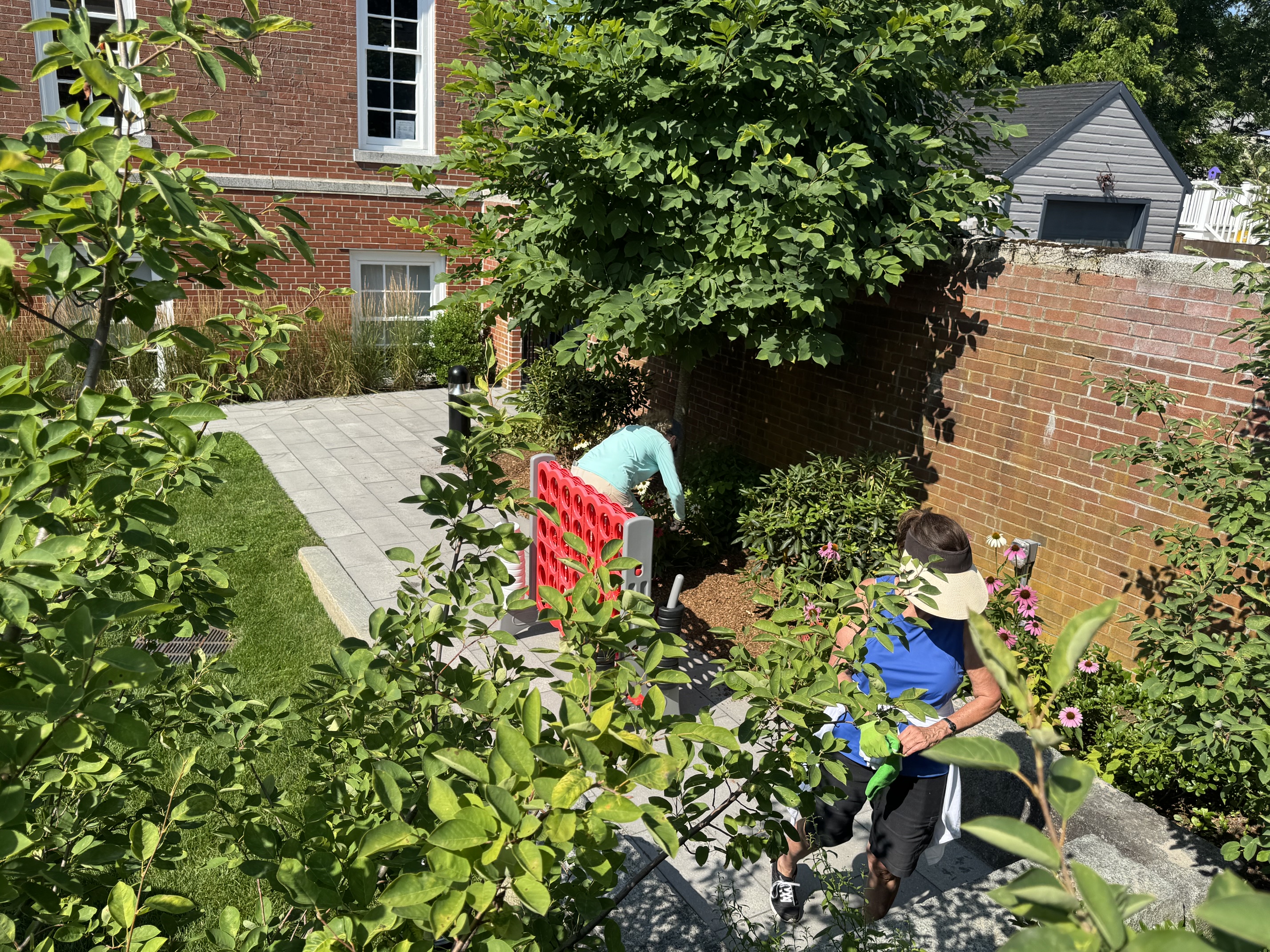
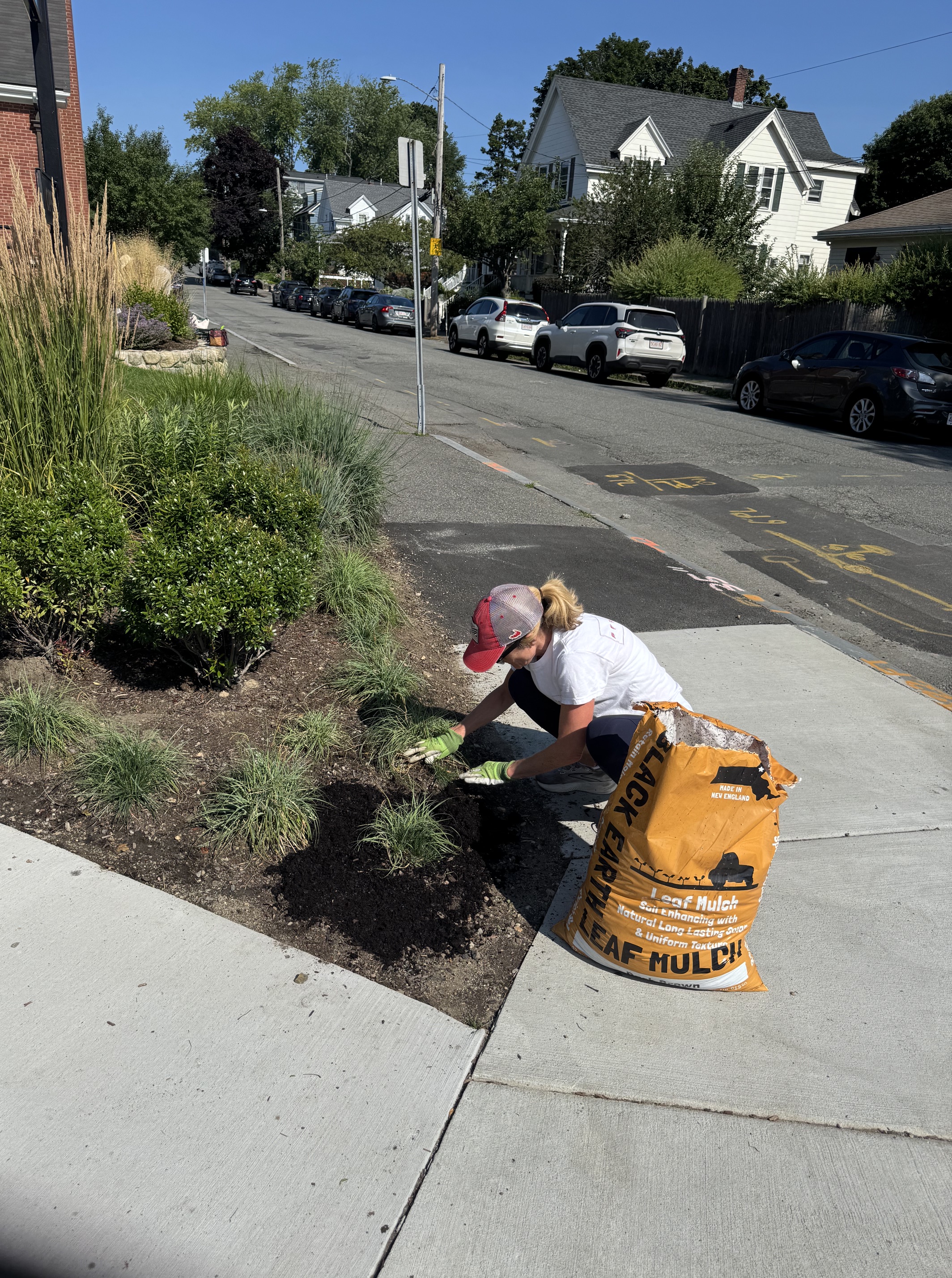
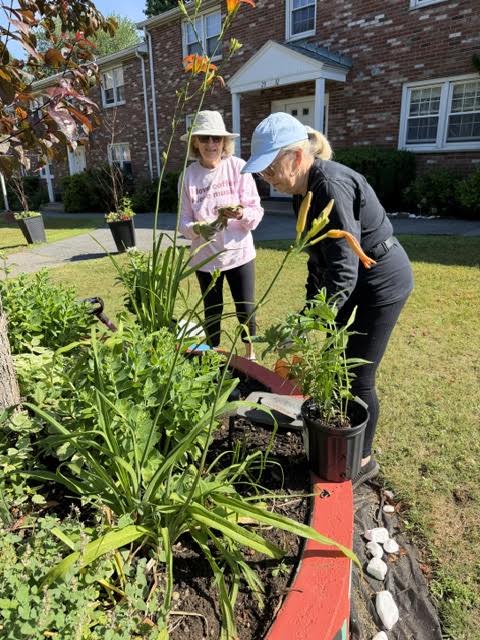
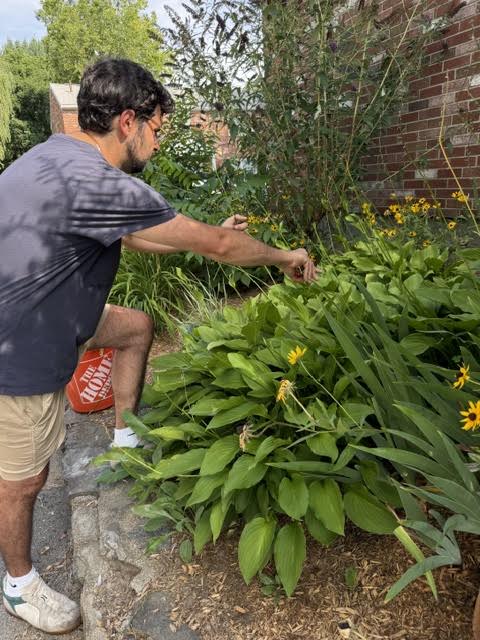
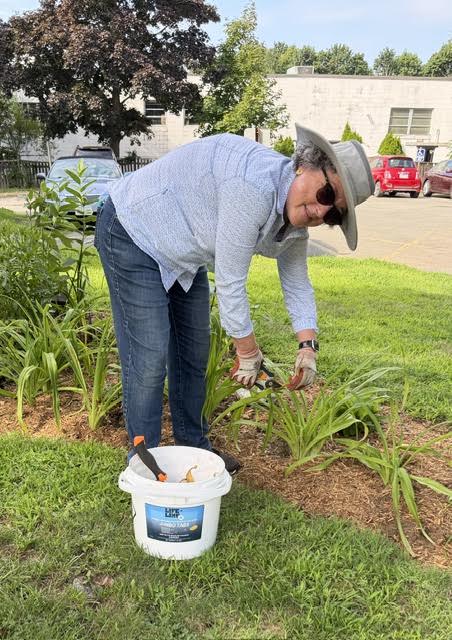
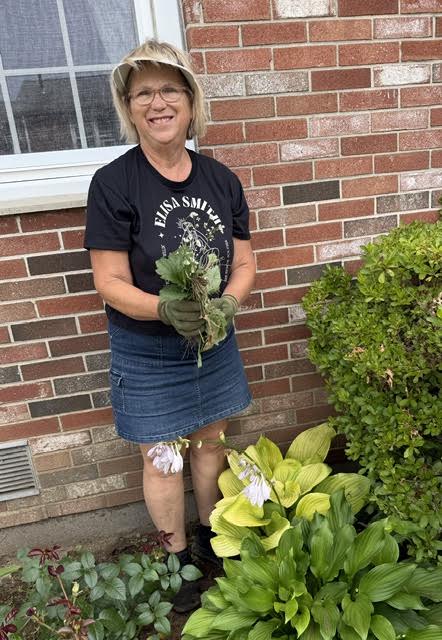
For our history and your enjoyment, here are some photos of DGC members working at each of the properties.
Abbot Public Library
Farrell Court
Thank you to all of our gardeners for all your hard work this summer!
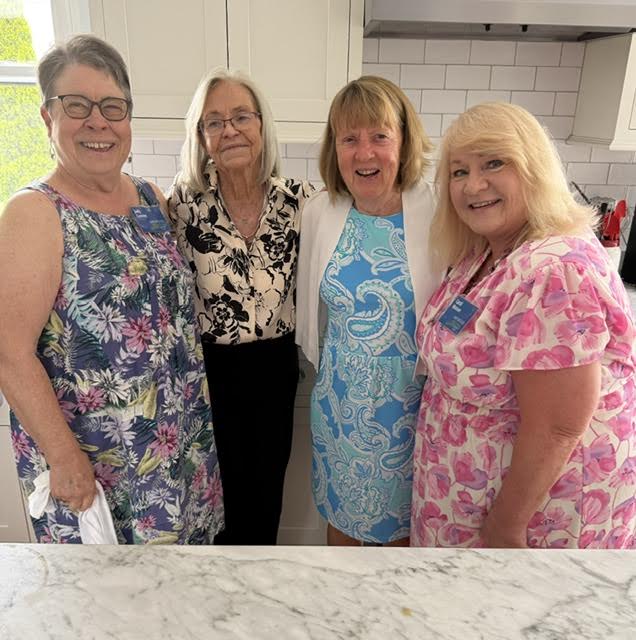
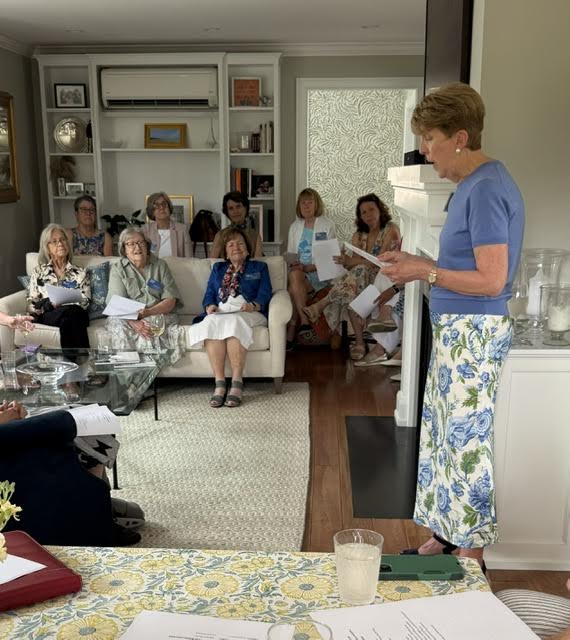
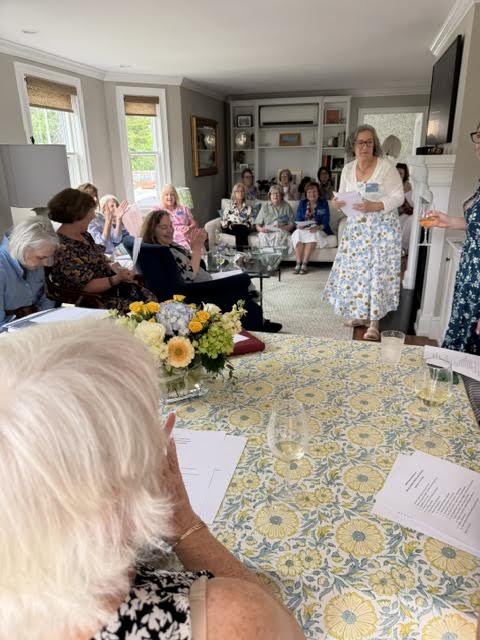
It was a beautiful day for the members of the Driftwood Garden Club to gather for their annual business meeting and luncheon. Smiles and chatter filled the rooms as members arrived and began connecting with each other.
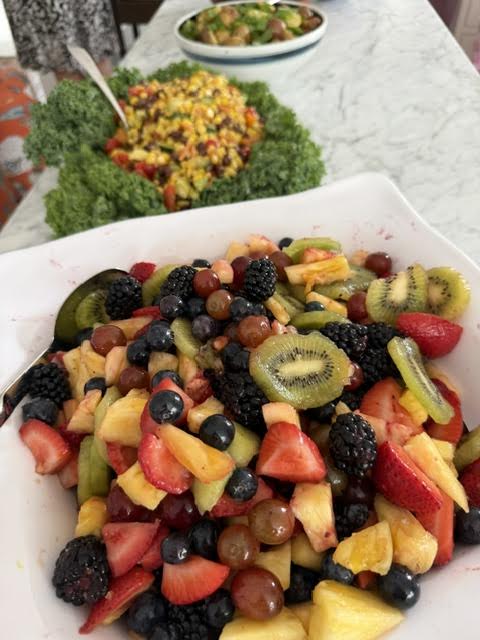
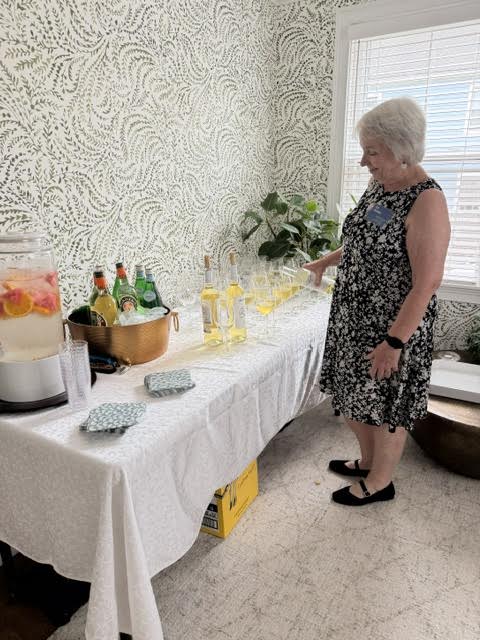
Many thanks to Adrienne Sweetser for sharing her beautiful home for our annual meeting. DGC hosts provided a delicious variety of salads, fruit, and side dishes to accompany our main course. We especially thank Louise Moore of ‘Every Little Breeze Catering’ for the amazing lobster rolls and lobster salads, as well as Lily at ‘Three Hundred Fifty Bakery’ for the scrumptious cupcakes.
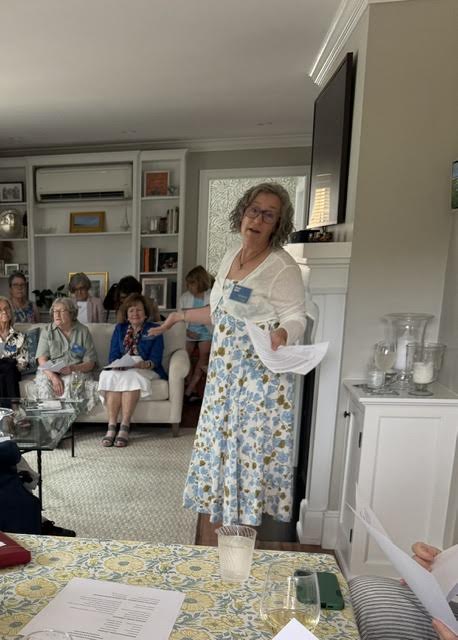
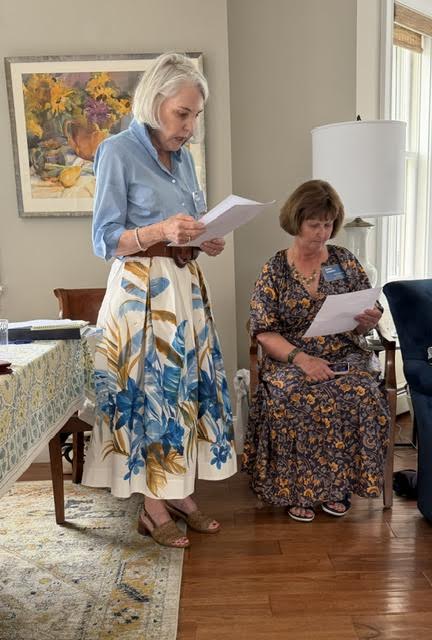
DGC President Cheryl Miller began the meeting with an overview of the past year’s activities, and thanked the chairpeople and members for continuing to work hard to make this club such a vital part of the community. Along with our work in the gardens of Abbot Library and Farrell Court, we attended wonderful programs over the winter, and took several fields trips together. A new civic activity that was started this year was to bring food donations to every meeting. After each meeting, the donations were brought to either the Marblehead Food Pantry or the Anchor Food Pantry in Swampscott and both organizations were truly appreciative. We then voted on bylaw changes with Joyce Raymond, welcomed new members, and approved the roster of incoming officers and committee chairs.
Laurie Boggis, Treasurer, give her financial report to the members and talked about possible projects at both the library and Farrell Court for the coming year. Of course, we were anxious to hear the end results of our hard work at the 2026 plant sale, and we were not disappointed! Everyone said how much fun they had had, and we were happy to hear it was successful once again.
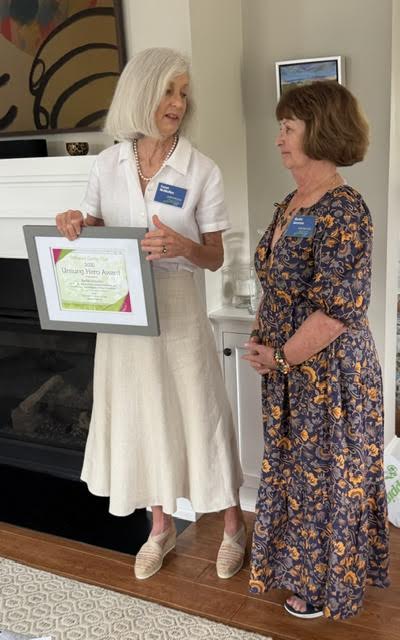
Susan McMullen, our incoming President, presented Barbie Saraceno with the DGC’s very own “Unsung Hero” award. Barbie has many talents, but she has an exceptional ability to manage anything and everything computer-related. From creating an online membership application to managing Sign-Up Genius to helping a member with a computer issue, Barbie is there, with a smile on her face. Congratulations, Barbie!
Luncheon was served, and we each found a place to enjoy our delicious lobster with wonderful friends, old and new, all of us looking forward to many Driftwood Garden Club events and programs in the coming year.
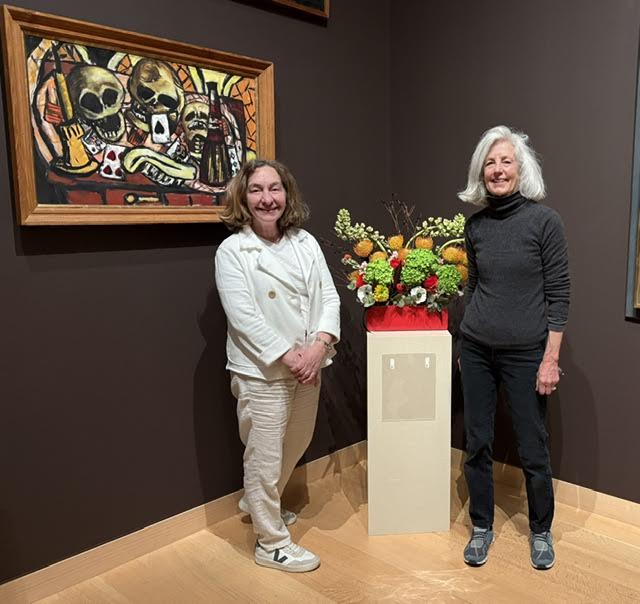
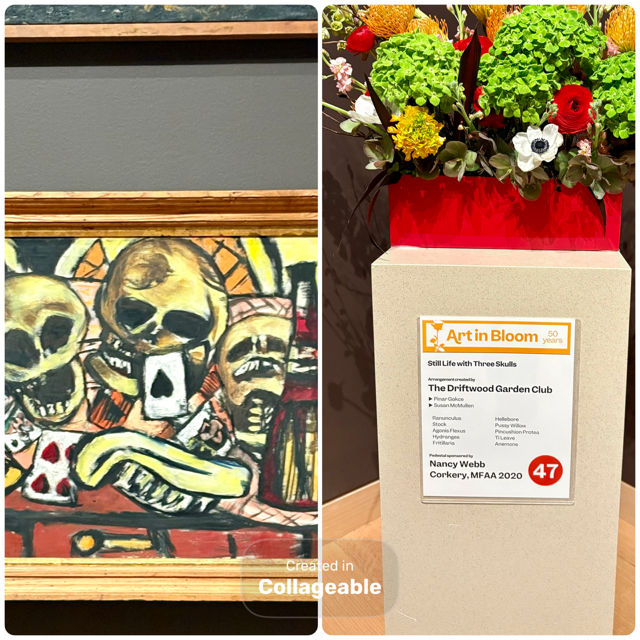
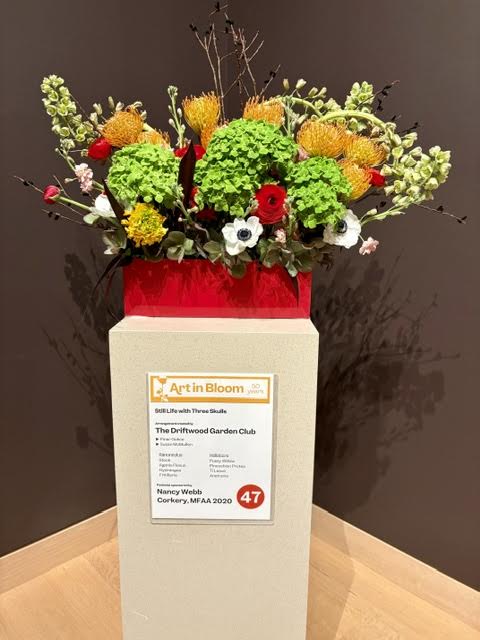
Congratulations to our DGC members, Susan McMullen and Pinar Gokce, for their participation in the 50th Anniversary of the MFA’s Art in Bloom. Their creativity and interpretation of Max Beckman’s piece was stunning.
Art in Bloom took place on May 1 to May 3 of this year, but the work for our designers began well before that. On March 2, 2026, Susan and Pinar reported to the museum to receive their assignment. Up until this time, it was a total surprise to the participants what their art piece might be. The designers were then given an opportunity to visit their piece of art, closely observing details of the work. Because of the heavy lines, dark colors, and three skulls in this piece, Pinar’s first reaction was a bit of shock. But as she and Susan looked closely, and talked about the details in the painting, they began to see where their design could lead them.
Max Beckmann was a German painter, printer, sculptor, and writer. Although classified as an Expressionist, he rejected that label. He fled Germany in 1937 after the Nazis seized 500 of his paintings which they called “degenerative art.” Unable to get a US visa, he spent the war years in Amsterdam, where he experienced Nazi persecutions, bombs, and hunger. Beckmann printed this tabletop scene during the final months of the war, using objects such as skulls, playing cards, and an extinguished candle to symbolize the transience of life.
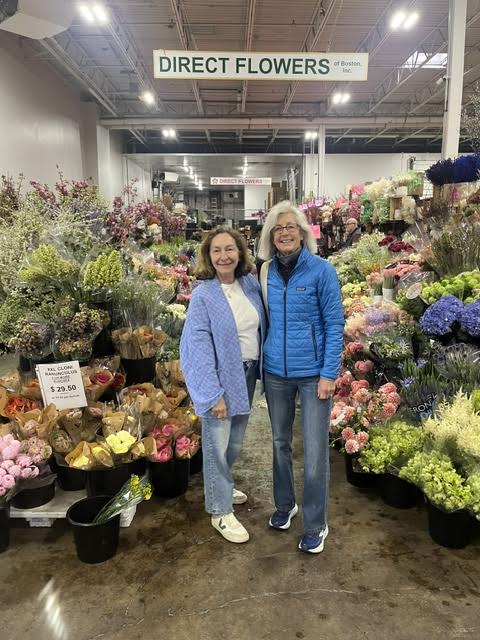
With this background knowledge, and the design sketches they had each made, our designers went to the flower market for the first time on March 2. This first trip was to see which flowers might be available and would work in their floral piece. They made a second trip on April 2 to check out the inventory of flowers. And then, on April 29, they went to the flower market for a third visit, this time to purchase the flowers that they would need for their arrangement. They chose chartreuse green hydrangeas for each of the three skulls, a gerber daisy for the candle, and lily blooms for the cards.
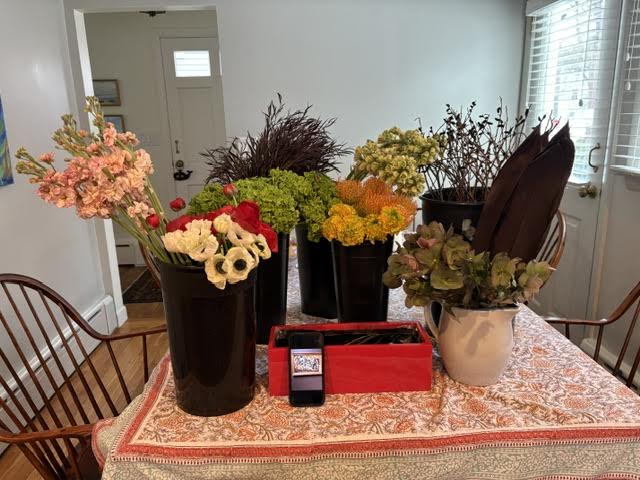
Everything from the flower market went home with them in buckets of water because on the following day, April 30, they would be driving back into the MFA for Arranging Day. They were ready!
During the three-day Art in Bloom exhibit, our designers had to make sure their arrangement stayed watered and refreshed which meant going in early to make sure everything was perfect. Art in Bloom is one of the MFA’s major fundraisers, and Pinar and Susan both said it was an honor to be participants. We, as the Driftwood Garden Club, are honored to have members like Susan and Pinar who are excited to put in their time, energy, and creativity to represent us in such a positive light!
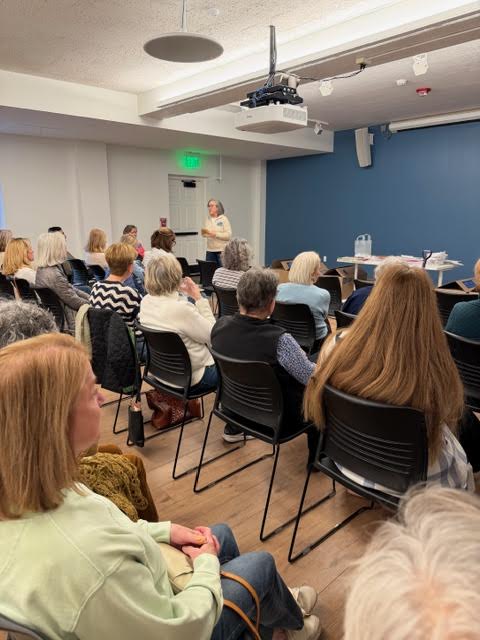
It was a full house for our April meeting in the Abbot Library Community Room. Members of the Driftwood Garden Club, veterans and newbies, gathered to participate in an information and question session about our upcoming Dig & Divide, the Plant Sale Set-up, the actual Plant Sale, and our Plant Sale celebration luncheon.
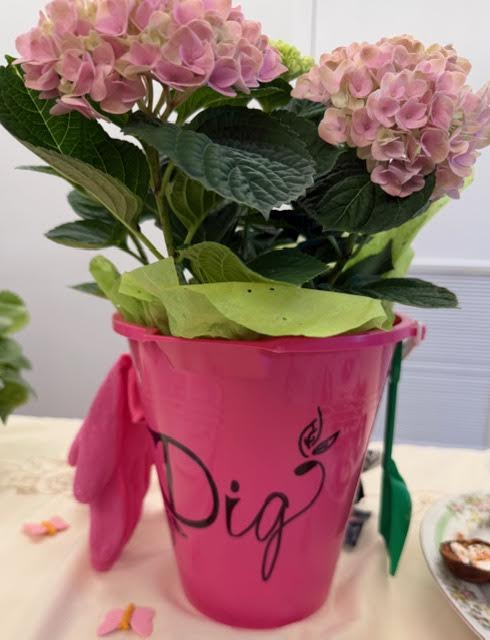
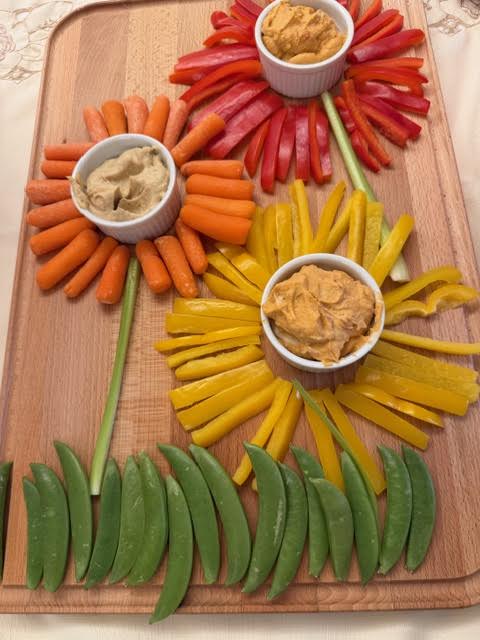
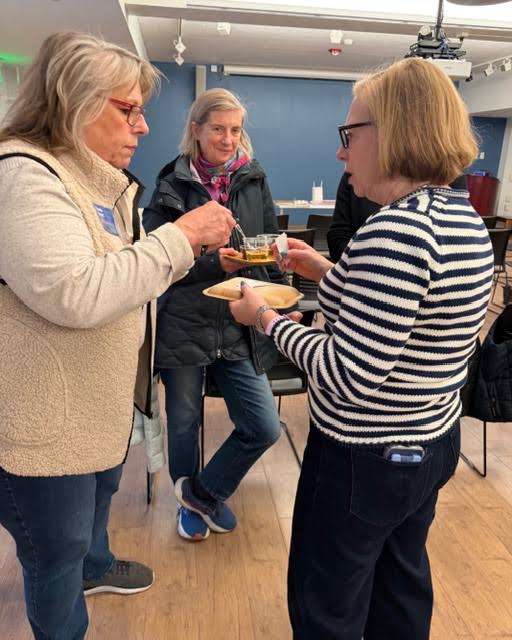
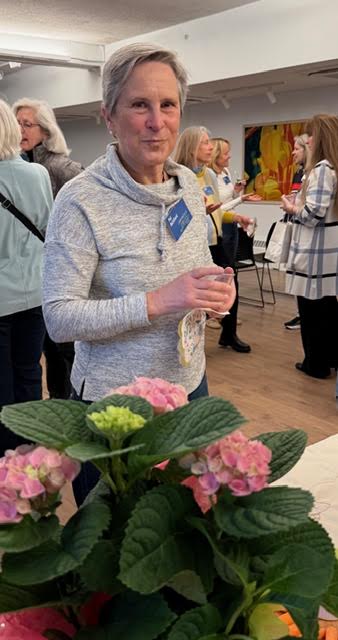
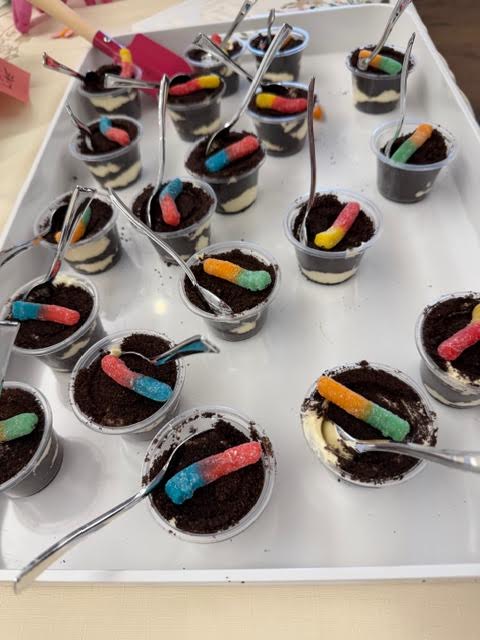
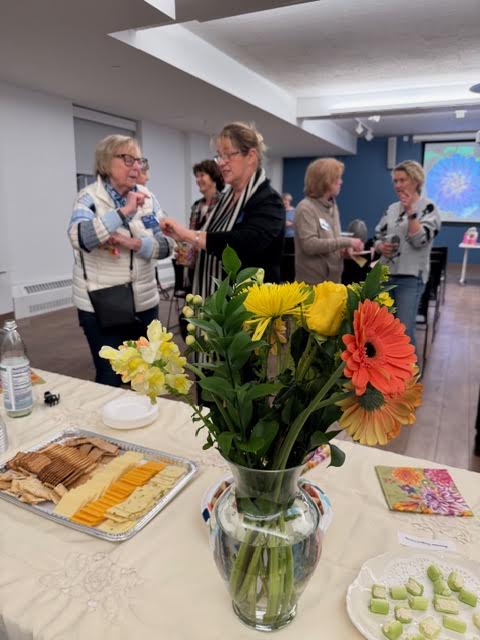
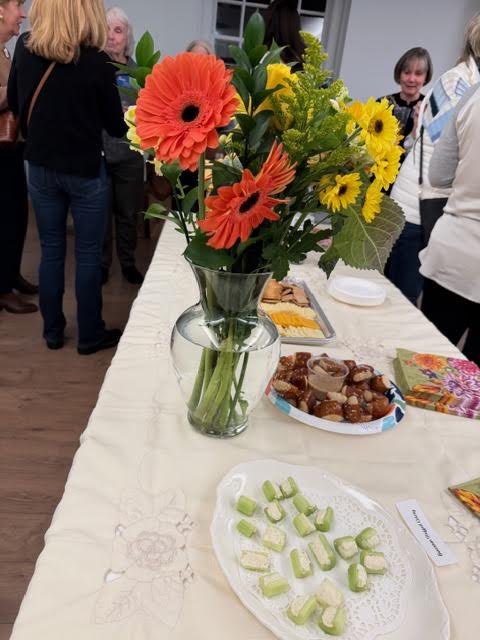
Thank you to our hosts for providing delicious snacks and beverages, and a perfect table setting for our topic tonight! Our social time is just as important to our members as the topic of the meeting, especially after a long winter. It’s a nice way to reconnect.
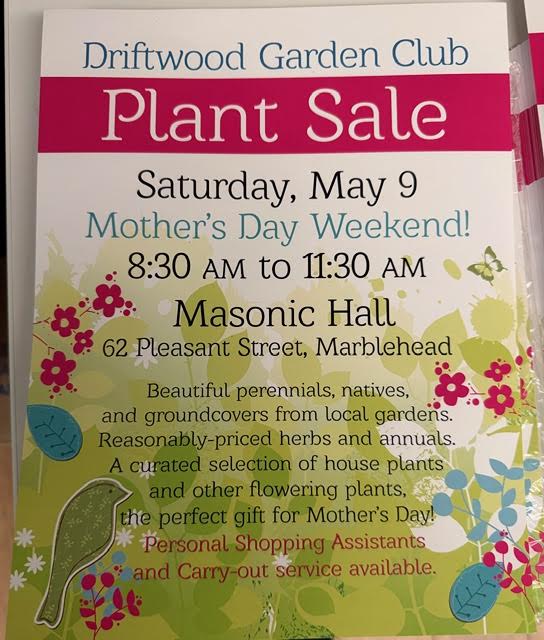
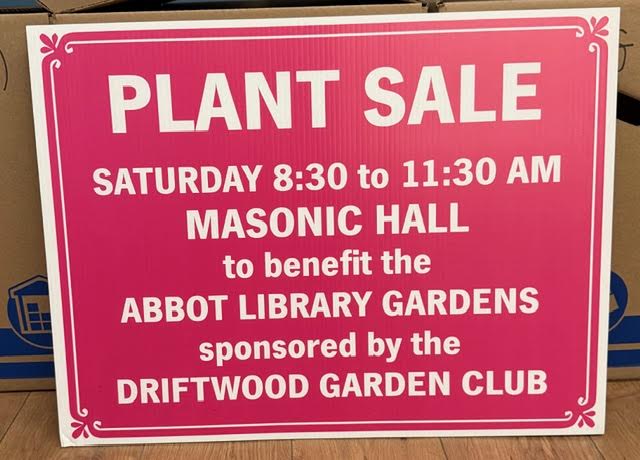
We were welcomed to the program by our Plant Sale Chairs, Susan and Adrienne, who, along with the members of their Plant Sale Committee, have been working for many months to set up donor gardens, gather supplies needed for our Dig & Divide days, assign Captains for each Dig & Divide garden, prepare flyers and signage for the event, and myriad other details to make our Plant Sale 2026 a great success.
They started off by reminding members to watch their emails for the Dig & Divide Sign-up. There will be choices of gardens and dates, so members will be able to choose the time and place convenient for them. This signup will be followed by an email from your captain reminding you to bring CLEAN tools, potting soil (large bag, please), and newspapers to your particular location for Dig & Divide. Your Captain will provide a table, tarp, and chair, as well as your individual bag of supplies to bring home for the 10 plants you will be digging in your own gardens. If you are new to this event, your Captain and teammates will help you. Dig & Divides are really fun, and you always learn something new. At the end of the Dig & Divide session, usually about three hours, members of your team will each take home 15 or so plants to care for until the plant sale. At home, you will dig and divide 10 plants from your own garden to care for until the Plant Sale Set-Up.
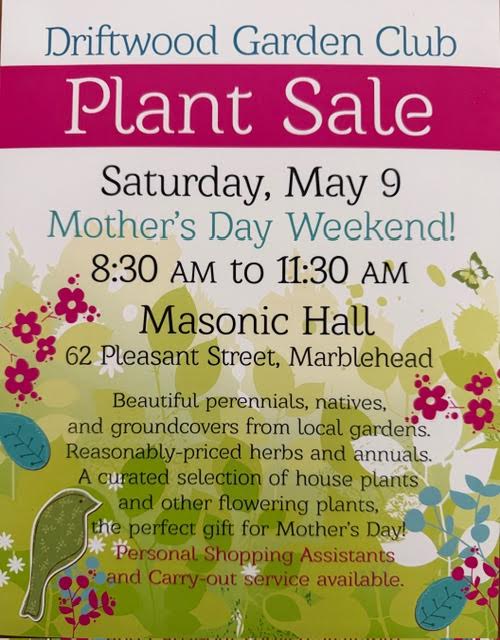
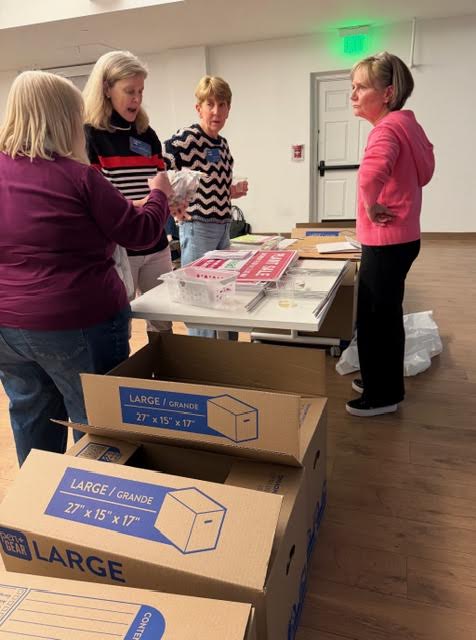
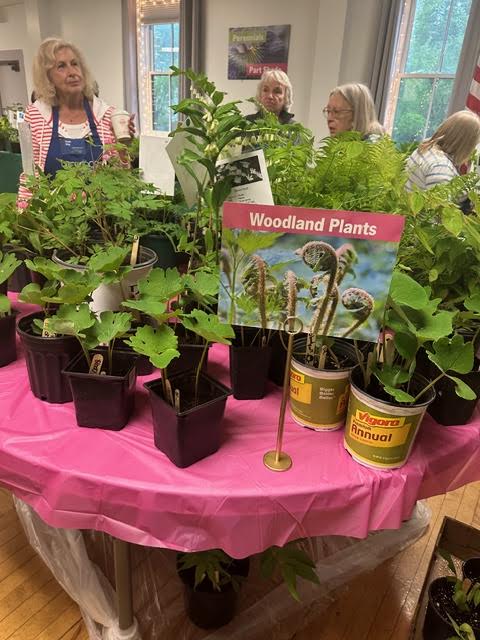
You will receive another Sign-Up for the Plant Sale Set-Up day, which is the day before the plant sale. This will take place at the Masonic Hall on Pleasant Street from 10:30-12 noon on Friday, May 8. Please clean (wipe down) each of your plant pots before bringing them into the building. The tables will already be set up in categories: perennial sun, perennial shade, etc., and in alphabetical order in each section. Take your time finding the right place for each of your plants. There is always someone to answer a question if needed.
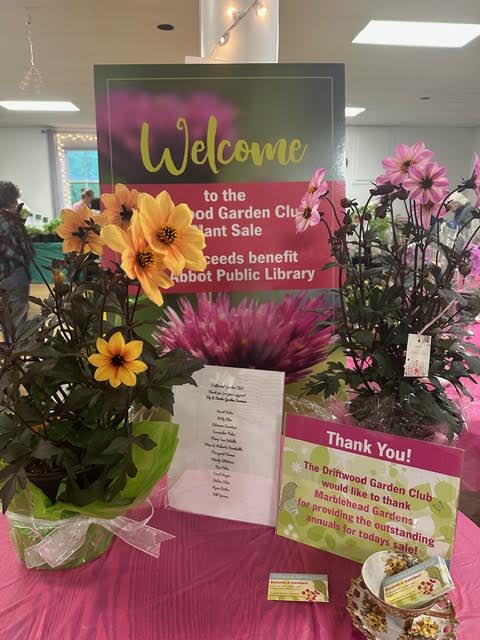
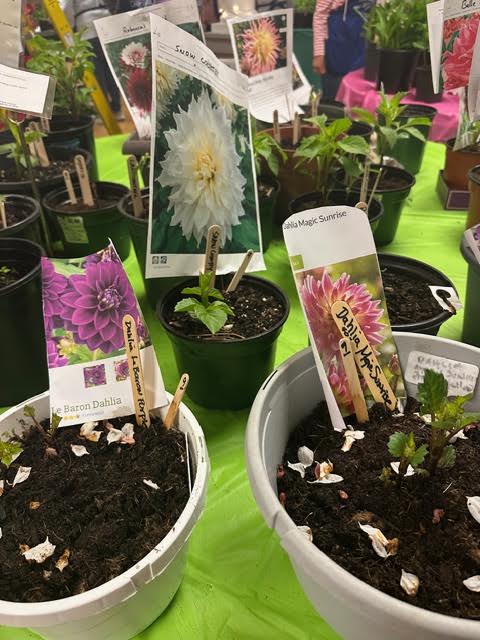
There will also be tables for “special” plants. This year, two of our members will be hosting a table of indoor plants which can be for Mother’s Day gifts, or for plant-lovers who like indoor gardening. There will also be our “Grab & Go” table with beautiful annuals or perennials wrapped and ready to be given as a gift on Mother’s Day. There will be baskets of dahlia tubers, donated by a friend of the Driftwood Garden Club, a station to help create a beautiful window box, and, and of course, Marblehead Gardens, our partner for many years, will add a burst of color with an incredible collection of annuals for purchase.
SATURDAY, MAY 9, THE DAY OF THE PLANT SALE! Members will arrive by 8 a.m. on the day of the plant sale. We’ll have our blue Driftwood Garden Club aprons on and be ready to greet our customers. Once the door opens, our job is to help each customer in any way we can. If we do not know the answer to something, there will be somebody who does. We want happy customers because they will come back year after year and also tell their friends. From 8:30 – 11:30, things can get hectic, but we have some extra help this year from high school volunteers who will carry a customer’s plants to the car. At 11:30, the plant sale ends, and the clean-up begins. All members help put the room back together just as if we had never been there!
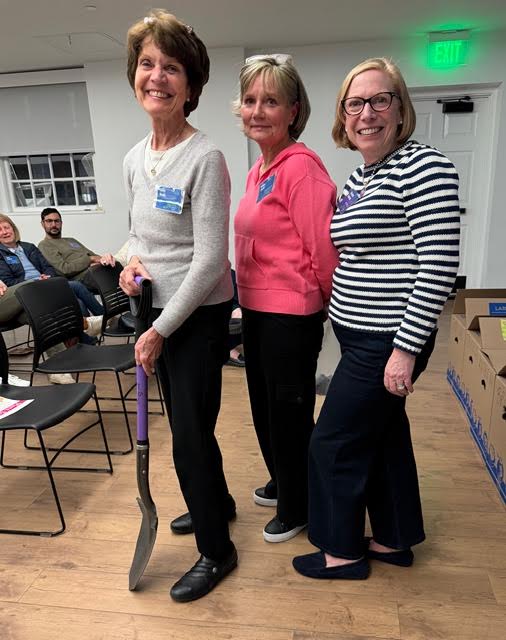
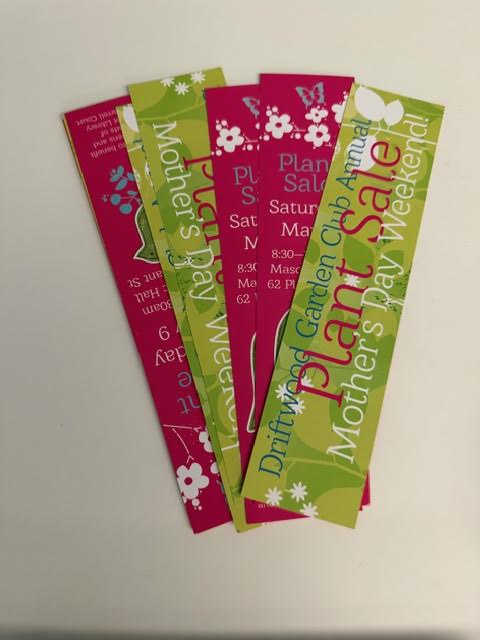
Before the close of the meeting, Susan and Adrienne chose a name from the hat for the drawing for a Spearhead Shovel, and Ellen, a longtime member was the happy recipient! We left our April Meeting with smiles on our faces, carrying yard signs, flyers and bookmarks, all to be used in spreading the word to people that the Driftwood Garden Club Plant Sale 2026 is NOT to be missed!
Most gardeners are well-aware of the importance of perennials in our gardens (especially native perennials), but our March speaker was here to remind us of the importance and various uses of annual plants. Sally McGuire Muspratt holds a graduate certificate in Landscape Design from Radcliffe College and has spent her career designing gardens that showcase both. As she told us, “The definition of a perennial is a plant that, if it had lived, would have come back every year,” which made us all laugh. There is definitely a need for both annuals and perennials in a garden!Rethinking Uses for Annuals.
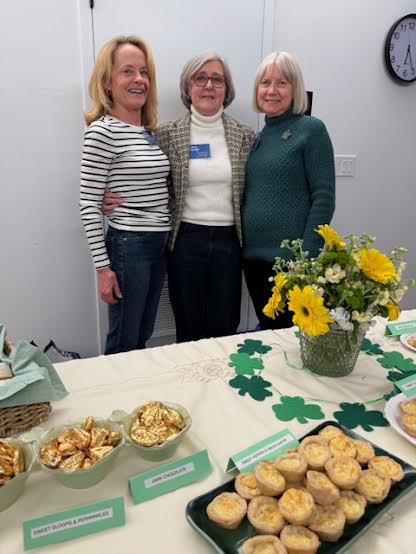
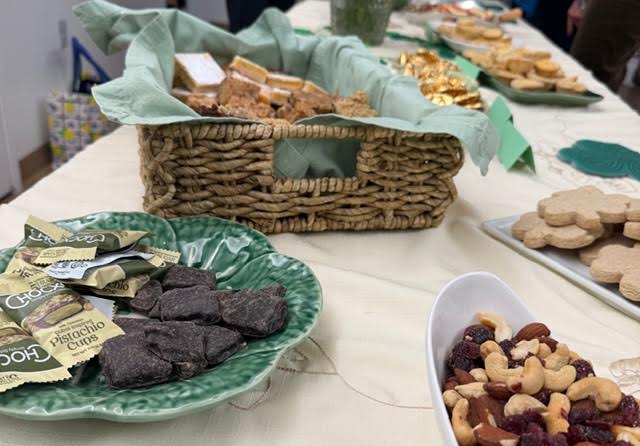
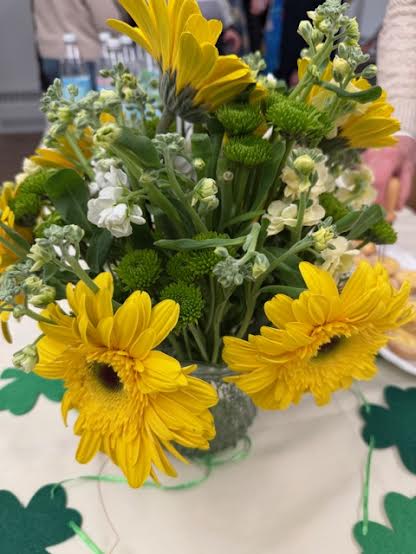
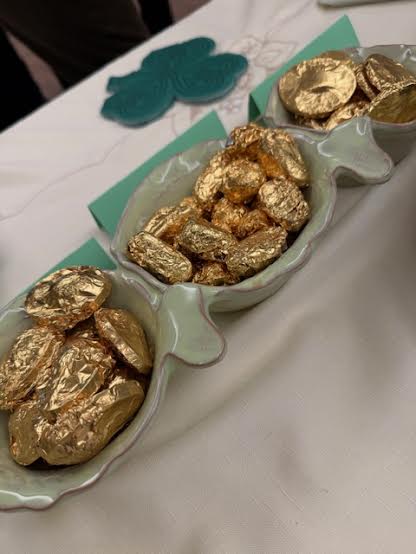
Thank you to our hosts for bringing the luck of the Irish to our table this month! With a bright yellow centerpiece of gerbera daisies, and many delicious snacks, including little pots of gold from Harbor Sweets, we chatted with old friends and new before our program began. I think we all felt spring is just around the corner!
Sally began her program with some history of the explorations in the 19th century to South America and South Africa. Exotic plants were brought back to home countries, and those wealthy enough built greenhouses to sustain the plants. Eventually, these gardens and greenhouses were opened to the public. Examples from this period are The Crystal Palace, Longwood Gardens, and the Isabella Stewart Gardner Museum. In the1800s, public gardens began to emerge as places for people to spend time in nature, surrounded by trees, perennials, and seasonal displays of annual plants. Public gardens also provided year-round jobs for many workers in maintaining the grounds.
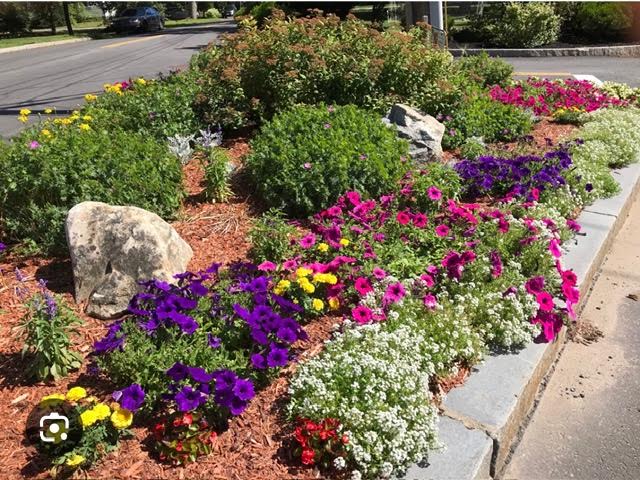
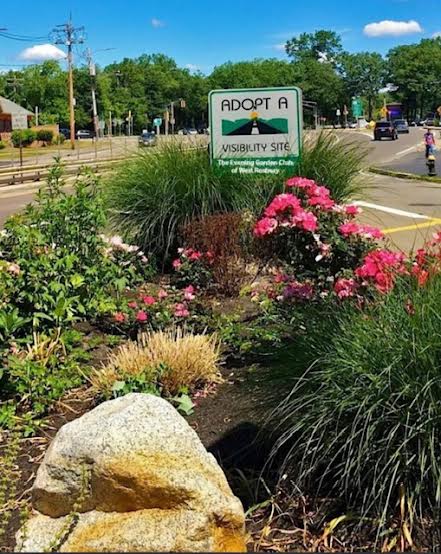
As a landscape designer, Sally developed an interest in overcoming difficult growing conditions such as those in traffic islands. She became a cheerleader for garden clubs that took on the challenge of creating a beautiful spot of living color in the middle of moving traffic and hot pavement. Her advice for success with annuals to those taking on a traffic island or gardeners designing a section of their own garden or a container:
SECRET #1: Supply soil appropriate to the plants, gypsum if the soil is salty, enough water for the plants, and good drainage.
SECRET #2: Include three or four levels of plantings (vary the heights). Some of Sally’s favorites:
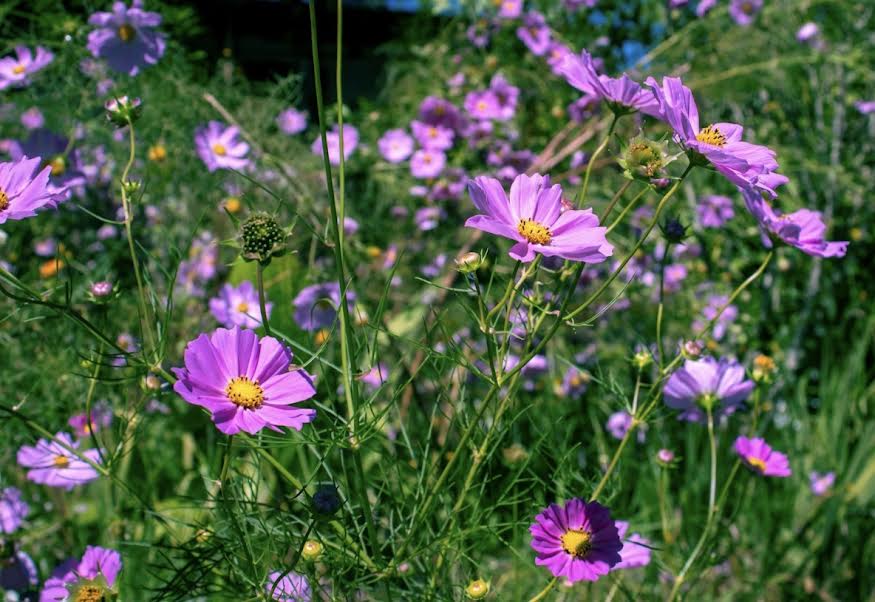
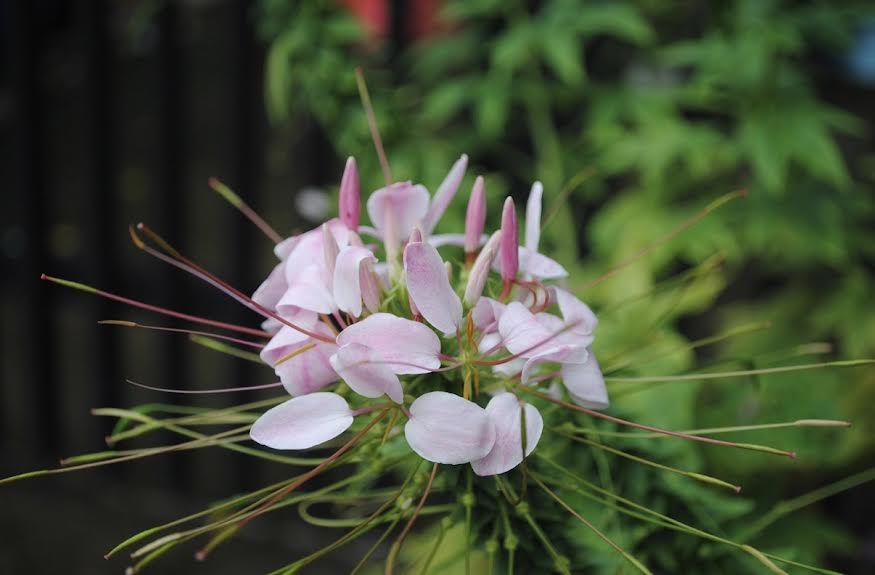
–High: cleome, cosmos, verbena, giant zinnias, and grasses.
–Medium or rounded: asters, chrysanthemums, coleus, lantana, sedum.
–Short: ageratum, alyssum, impatiens, lobelia.
–Dripping: dichondra Silver Falls, ivy, black or lime sweet potato vine.
SECRET #3: Acquiring annuals. When acquiring annuals, remember that seeds and six-packs are more affordable than full grown plants.
She showed several slides of traffic islands, including one of her own design. She wrote and was awarded a grant from her hometown of West Roxbury to restructure a traffic island which is the first thing people see when entering the town. As a result of this project, she was named Volunteer of the Year by West Roxbury Main Streets.
In our own gardens, we can use annuals to add color to different areas, to try something new, or even create an inexpensive rough draft for a future perennial garden by using annuals. And, of course, using planters and pots, whether beautiful handmade ceramic, or lightweight fiberglass that look like concrete, can be welcome additions to our gardens, patios and doorways. Sally’s suggestion was to browse catalogs, make lists of what looks interesting, think of colors that you would like in your garden, heights of the annual, the soil conditions it grows best in, and the plant’s needs for light — then just begin!
If you can grow tomatoes, you can grow dahlias. – Betsy Szymczak
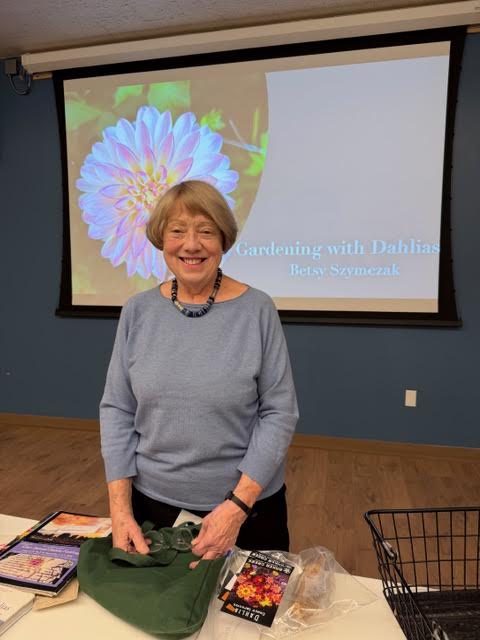
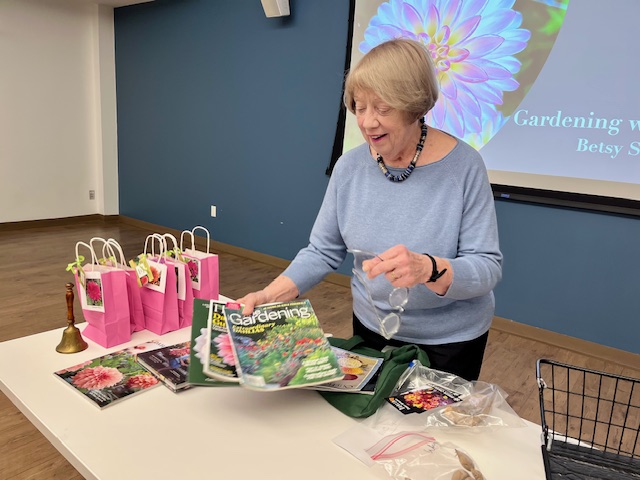
The above quote is from our guest speaker, Betsy Szymczak, who is not only passionate about growing dahlias, but also passionate about educating and encouraging other gardeners to grow these magnificent flowers. Growing dahlias seems a bit tricky for most of us: planting at the correct time, patiently waiting for the blooms, digging up the tubers in the fall, and carefully storing them for the winter. It takes a little work, but by the end of the evening, Betsy made everything sound easy and very much worth the effort.
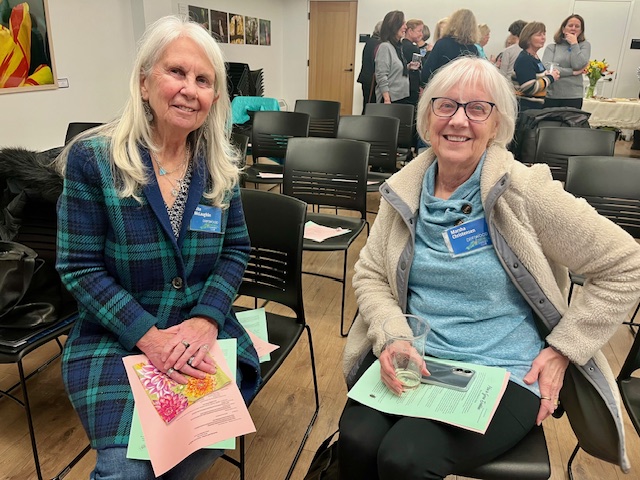
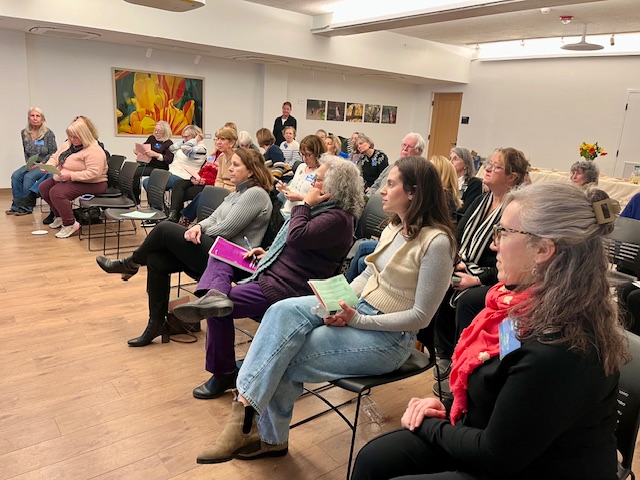
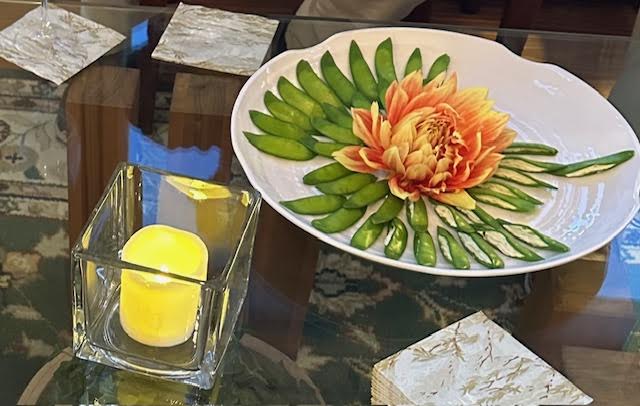
Thank you once again to our wonderful hosts who set a beautiful table and supplied us with tasty treats. This social hour lets us reconnect with old friends and introduce ourselves to new members before our program begins.
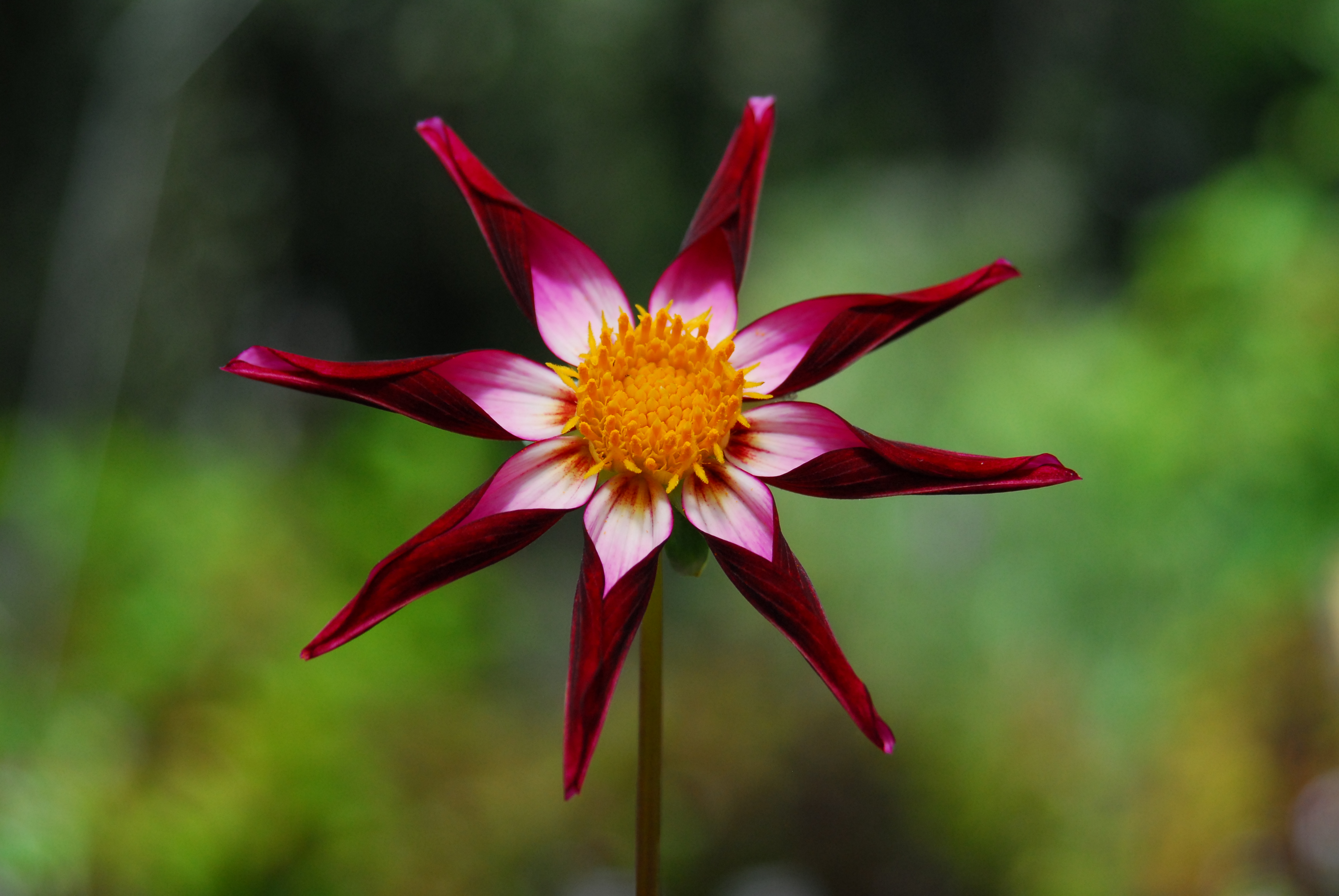
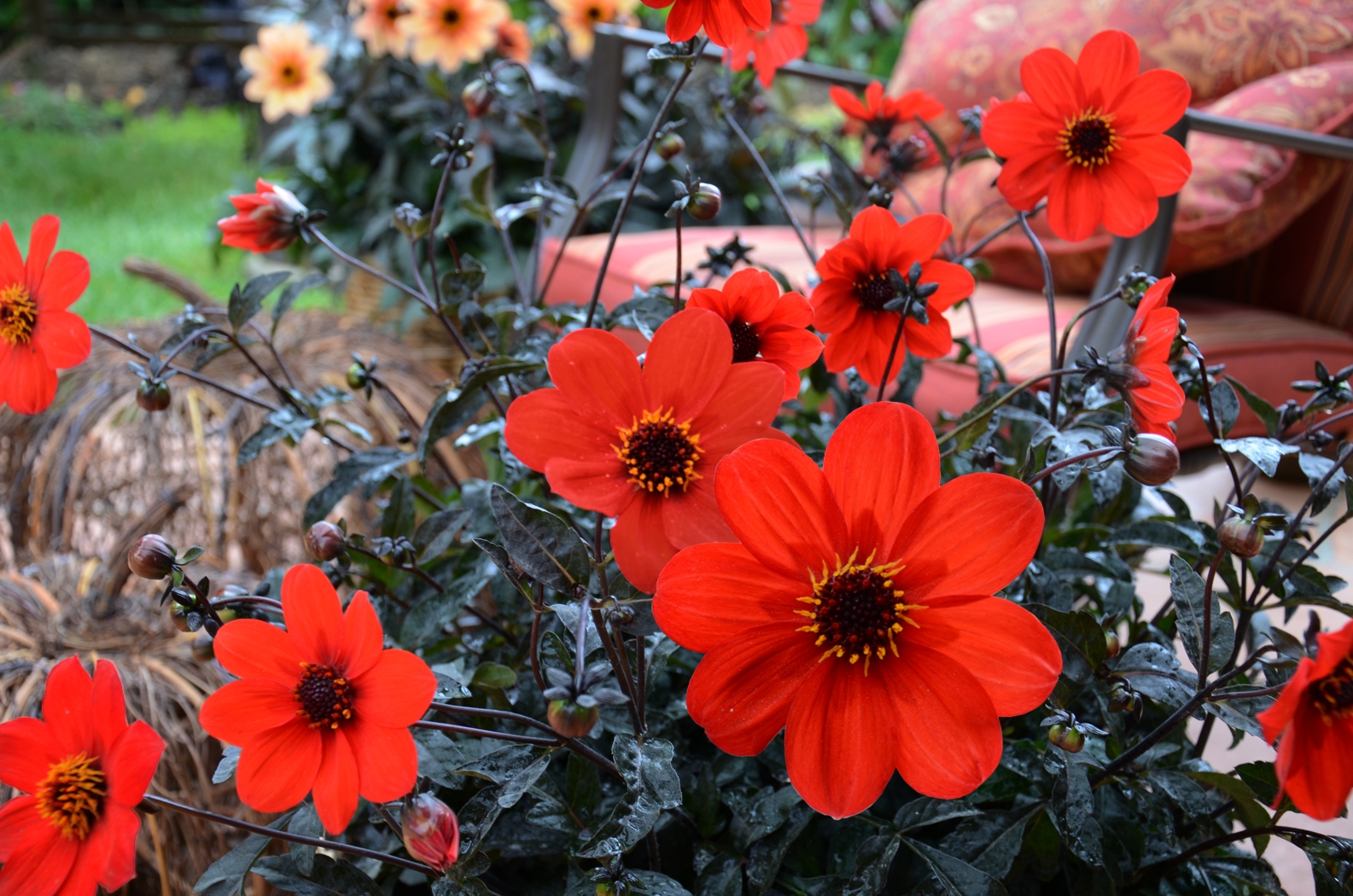
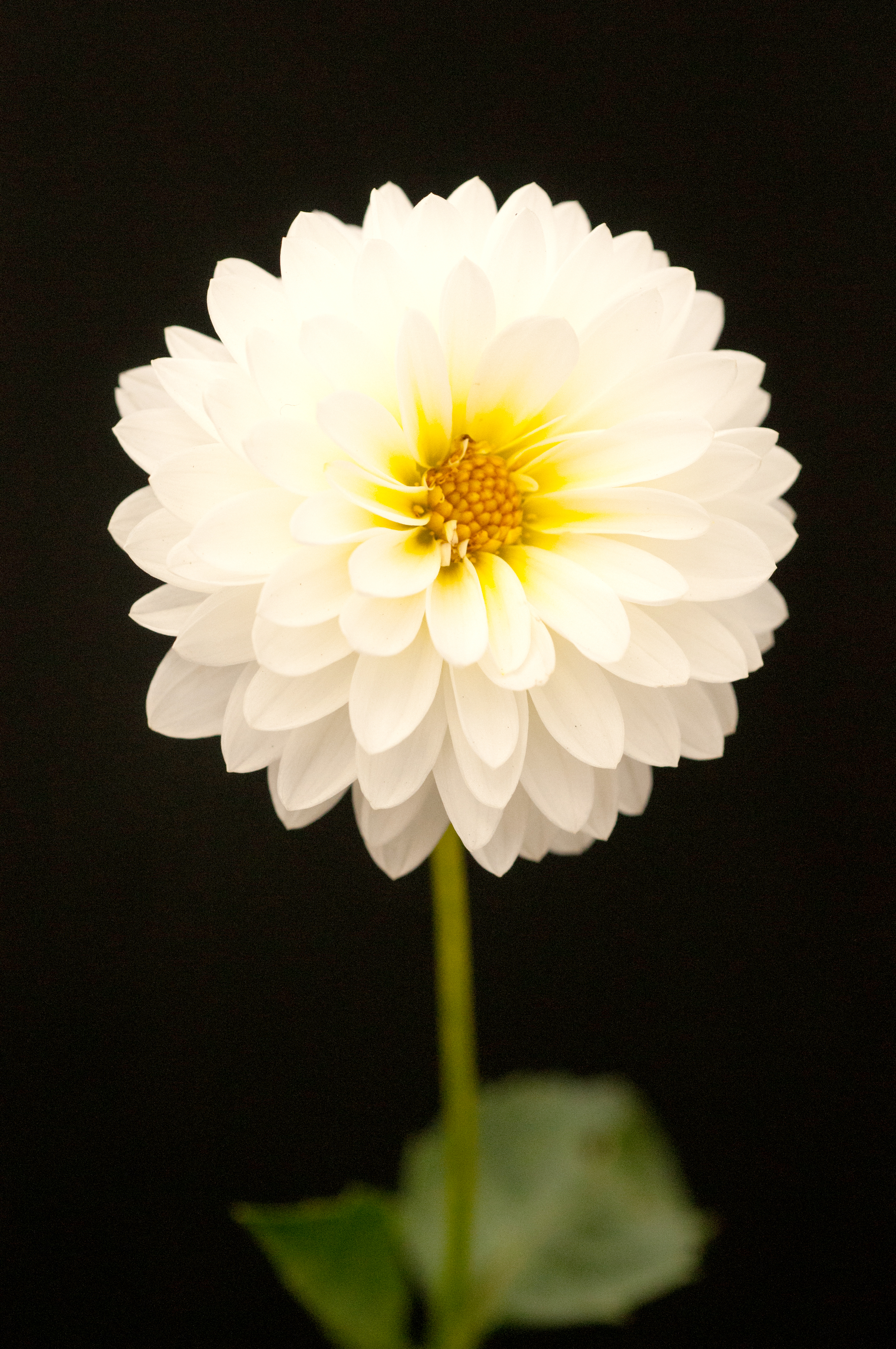
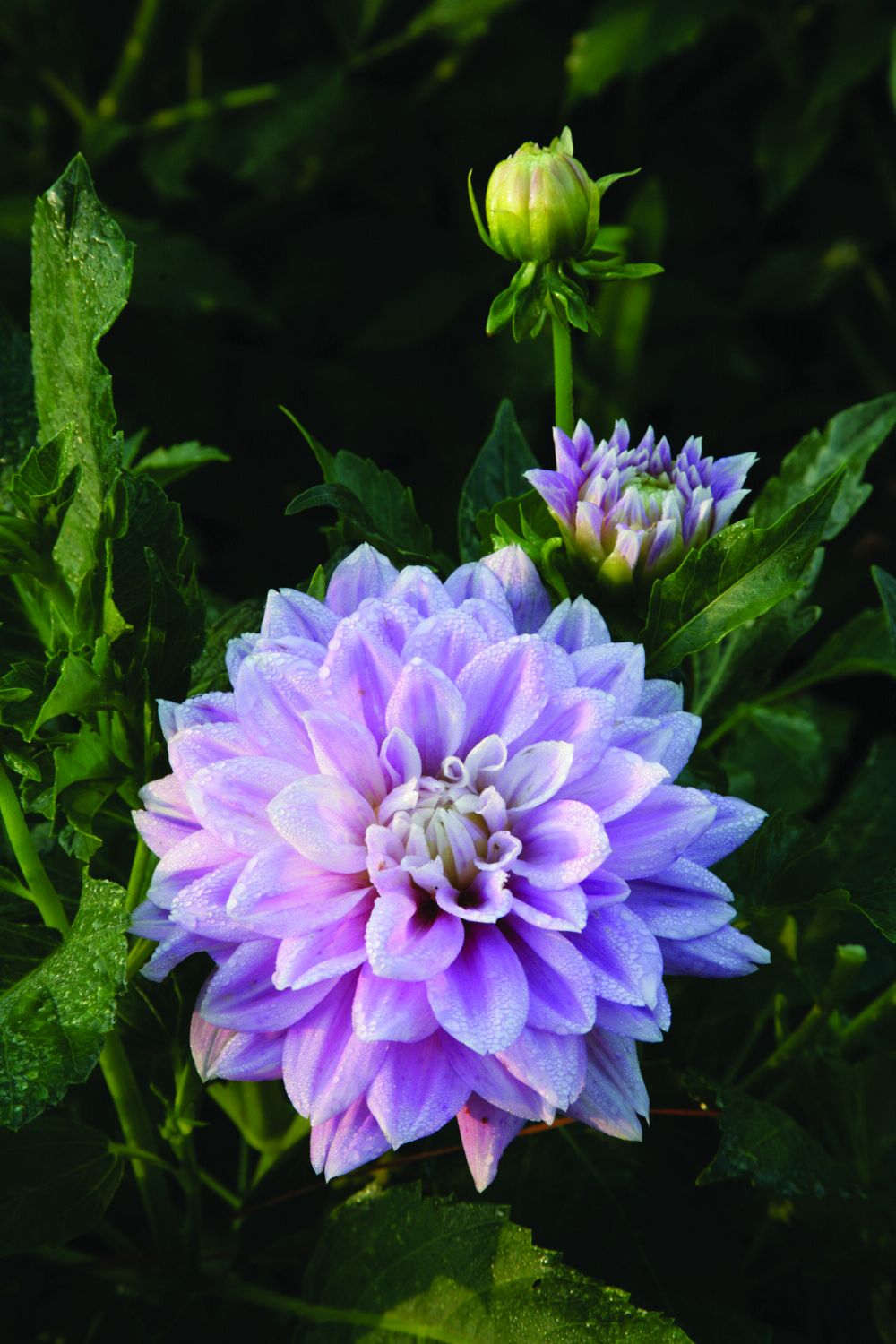
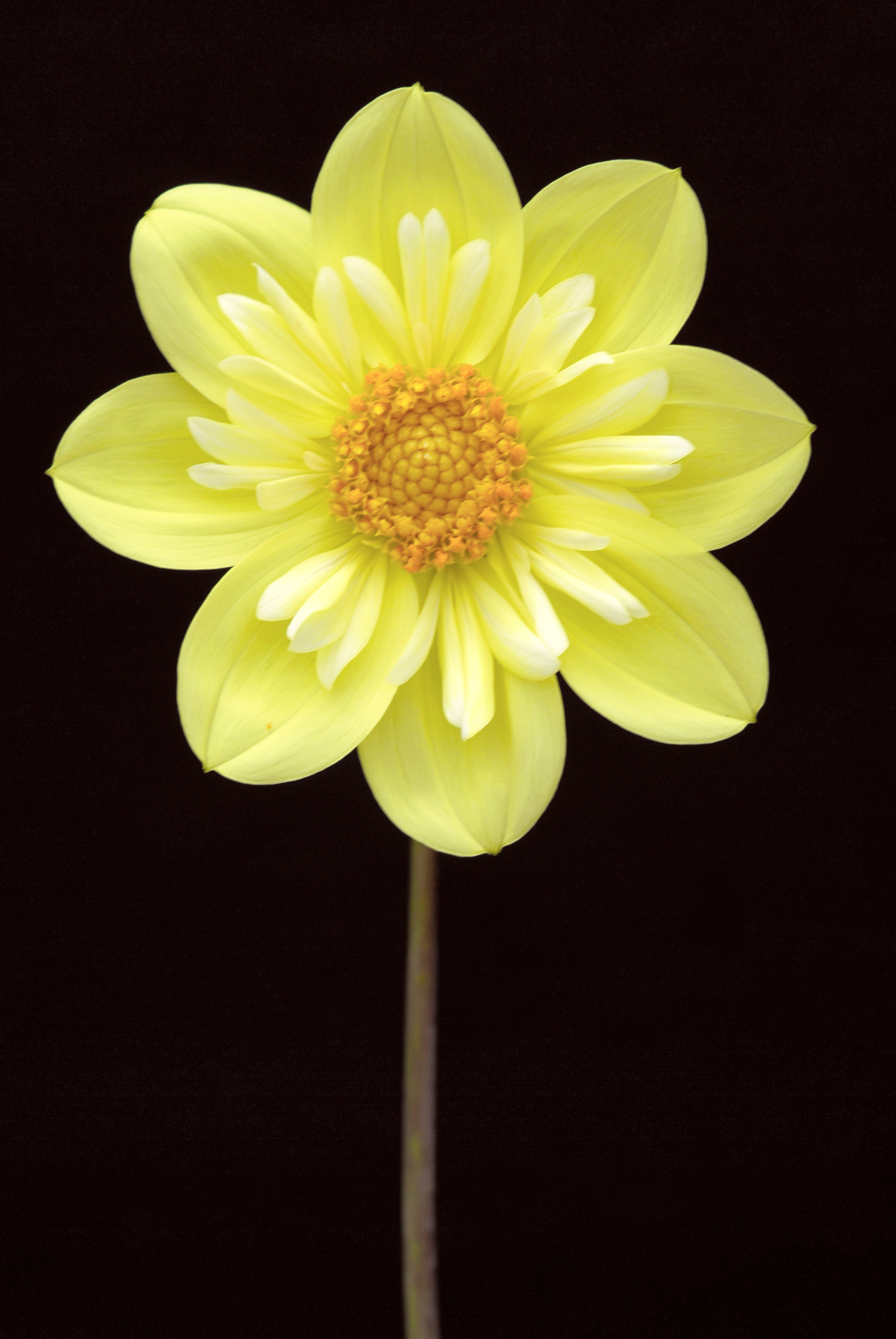
Betsy began her talk with a bit of history and description of dahlias. The dahlia is native to Mexico and is Mexico’s national flower. Although dahlias are not native to our area, they do attract pollinators and that is one reason there may be so many varieties of dahlias. The basic dahlia has eight petals, with either an open center or a closed center. Between humans hybridizing and bees pollinating, there are now about 55,000 varieties of dahlias. One of the many striking characteristics of dahlias, of course, is the vibrant color of each variety. Comparing the colors to the Pantone Color of the year, Betsy showed us pictures of dahlias in Living Coral, Illuminating Yellow, Vivid Magenta, Peach Fuzz, Mocha Mousse and Cloud Dancer (white!).
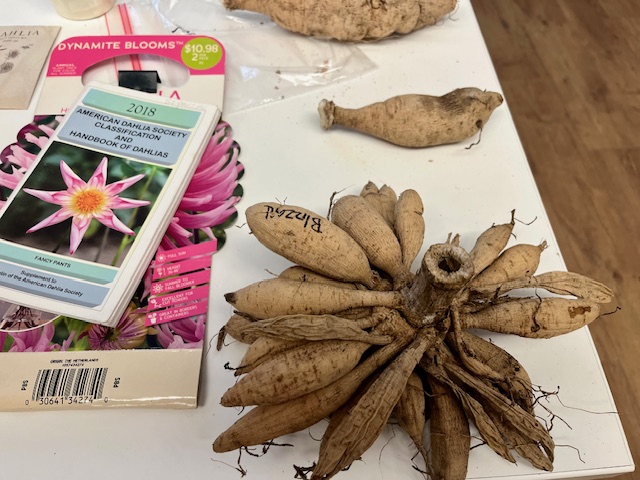
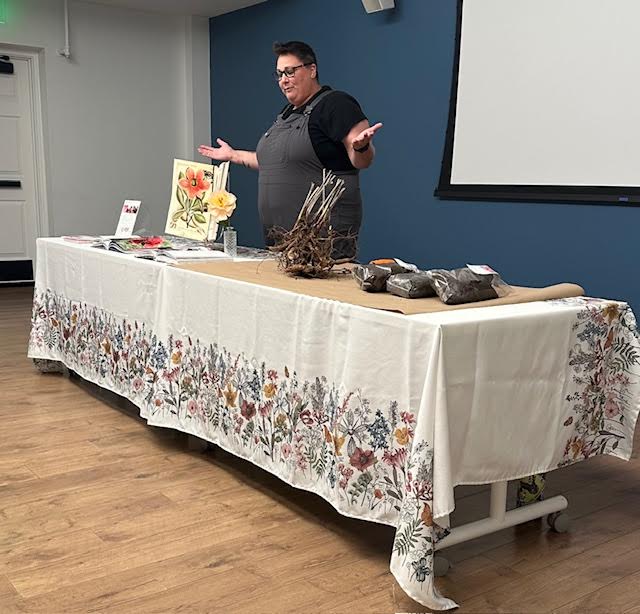
Most gardeners know that dahlias grow from tubers which store their food and energy. The tuber should have three parts (the tuber, the neck and the crown) in order to grow. Dahlia tubers should not be planted in the ground until the ground reaches 60 degrees. The soil should be well-drained, in an open sunny location (six hours of sun, afternoon shade), and slightly acidic. Plant the tuber 4-6” deep with eyes up. Cover with soil and do not water directly after planting. Wait until after the sprouts have appeared. After the dahlias are established, water with a soaker hose two to three times a week. You will be rewarded well into October for all of your careful tending with magnificent dahlia blooms to use for arrangements or just to enjoy in your garden. About two weeks after a killing frost, the plants will turn brown. Tubers dug too early are still “green” and will not store. Wash dirt from the roots, and allow to air dry 24 hours. Mark your tubers with their name and color and store in plastic or cardboard boxes and vermiculite. Store in a cool dry area (40-50 degrees) until spring.
Betsy left us information for web resources, how and where to purchase dahlia tubers, and contact information for dahlia societies. If you become a real dahlia connoisseur, there is also this website: www.dahliaaddict.com. Good luck and happy gardening!
NEW TO OUR MONTHLY PROGRAMS:
There are two new additions to the DGC monthly program meetings:
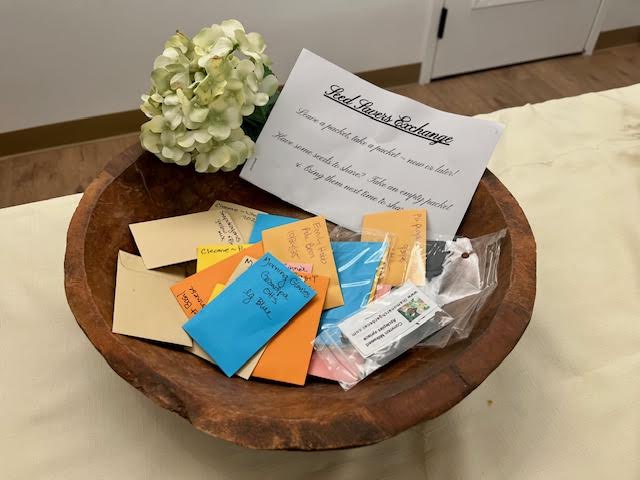
— A seed sharing program. Bring seeds to exchange with other members each month
–Donations to the food banks of Marblehead and Swampscott
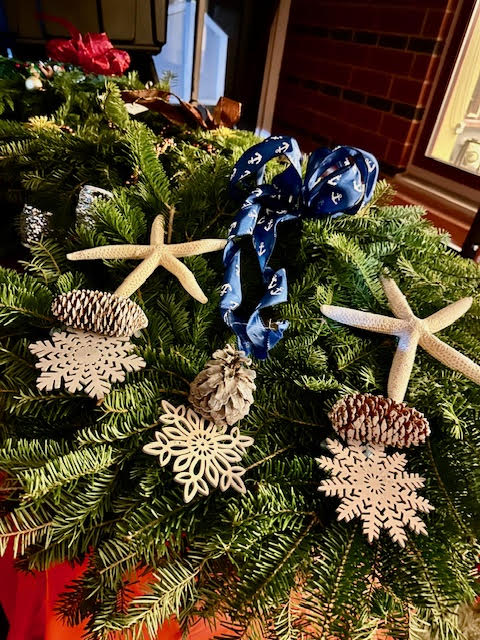
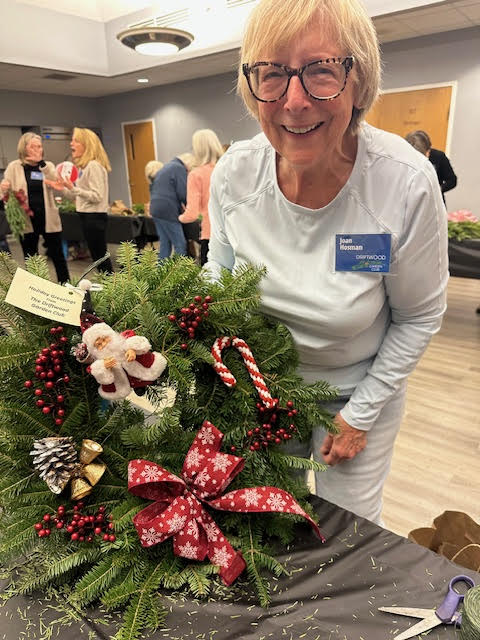
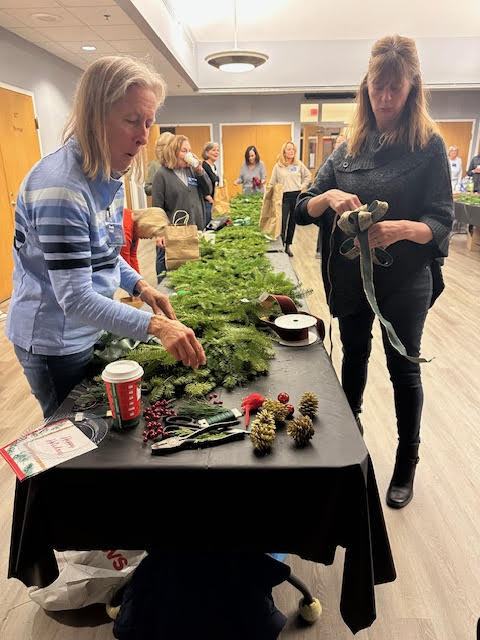
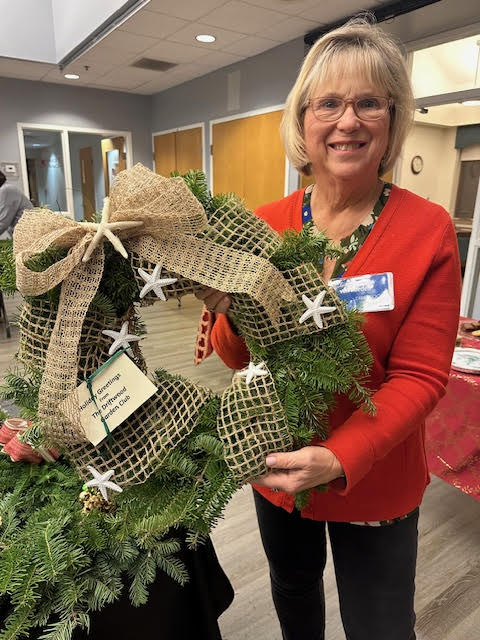
Members of the Driftwood Garden Club gathered once again at the Marblehead Community Center to participate in our annual wreath decorating program. In collaboration with the Marblehead Council on Aging, Driftwood members decorate wreaths and swags as one of our civic programs, thus giving back to the community during this holiday season.
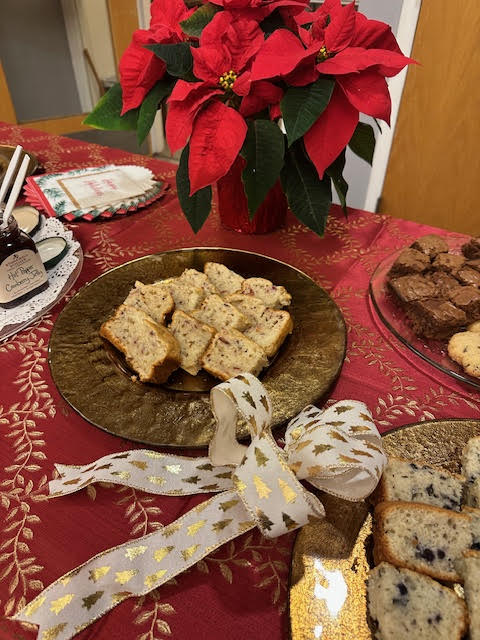
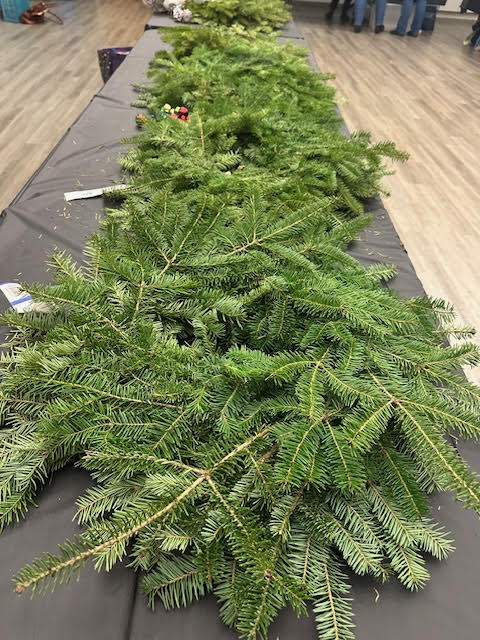
After members enjoyed a social time with delicious homemade treats provided by our hosts for the evening, we got to work. Members came prepared with scissors, glue, floral wire, ribbons and various decorations to use in their decorating endeavors. There was also a table, provided by the Driftwood, laden with pre-made bows, pinecones, and assorted ribbons and decorations for all to share.
As the members worked, they chatted and laughed and shared in the spirit of the season. They began to turn the fresh wreaths and swags into lovely gifts to be given to Marblehead residents who participate in the lunch program through the Council on Aging. Each of these residents will receive a decorated wreath or swag with their lunch which is delivered the following day.
We know, through the Marblehead Council on Aging, that the recipients of our wreaths are delighted to be part of the program, and we know how it brightens their day to receive a beautiful wreath. We receive many thank yous in return, and we hope they know that we are just as delighted to do this for them. Happy Holidays, everyone!
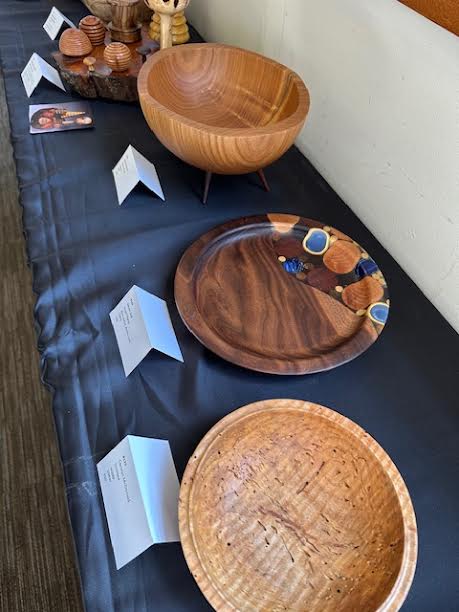
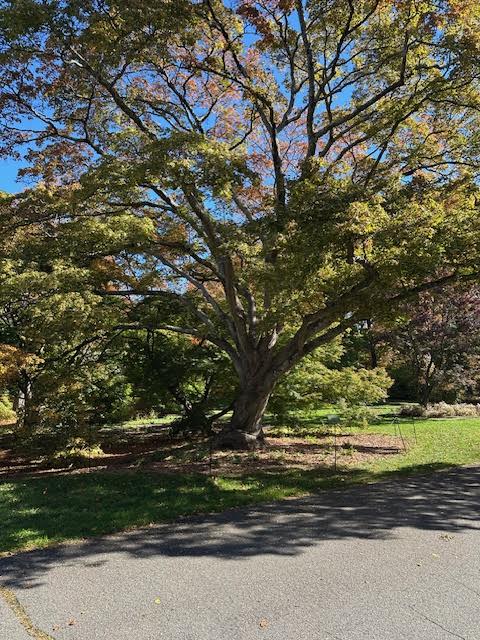
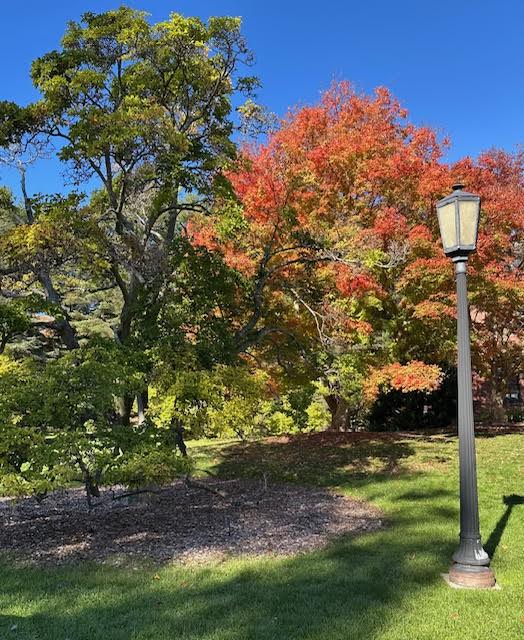
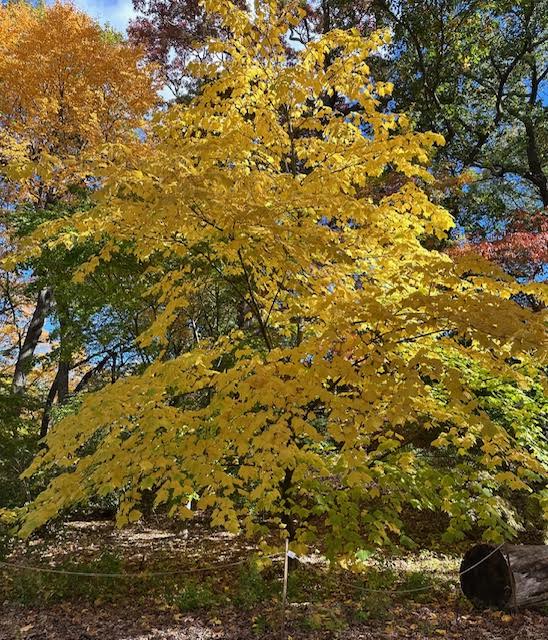
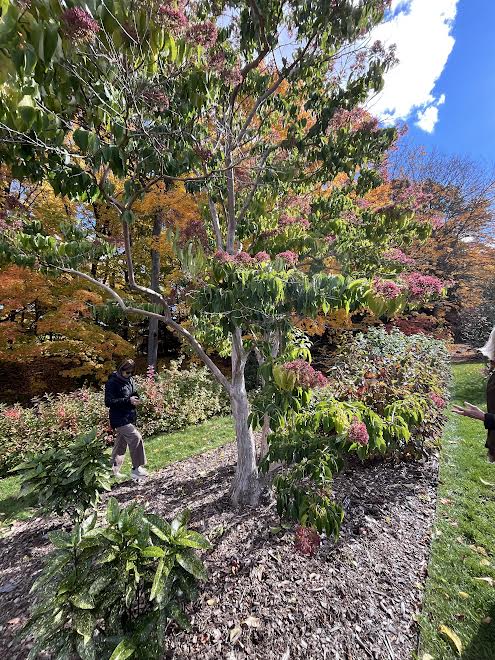
It was a perfect fall day for members of the Driftwood Garden Club to embark on a field trip. Our destination: The Arnold Arboretum in the Jamaica Plain neighborhood of Boston. The air was crisp, the sun was shining, and the leaves on the trees had turned beautiful shades of yellow, gold, orange, and red. While waiting for our group to assemble, we viewed a wood turners’ exhibit inside the Hunnewell Visitor Center. Some of the wood bowls exhibited were turned from wood that had come from trees within the Arboretum. We learned that each year around 400 trees are removed from the collection due to disease, damage, or managing the collection with a goal of creating opportunities for new plants to be introduced. If possible, that wood is repurposed in several different ways.
We met our very knowledgeable and friendly guide, Brad, outside of the building to begin our walking tour of the trees. He first gave us a little history of the Arboretum. It began in the mid-1800’s when two men made gifts to Harvard College: Benjamin Bussey, a wealthy Boston merchant, left land (about 300 acres) to the school in 1842; and James Arnold, a New Bedford whaling merchant, left a financial bequest ($100,000) in 1868 with the purpose of creating a public arboretum. Together, The Arnold Arboretum was founded in March 1872. The first director was Charles Sprague Sargent who partnered with Frederick Law Olmsted on the landscape layout. The two men formed a partnership with the city of Boston: Harvard gave the land to the city and then leased it back for $1/year, on a thousand year lease, with a renewal option. The Arnold Arboretum was born, and with that knowledge, we were ready to see some trees!
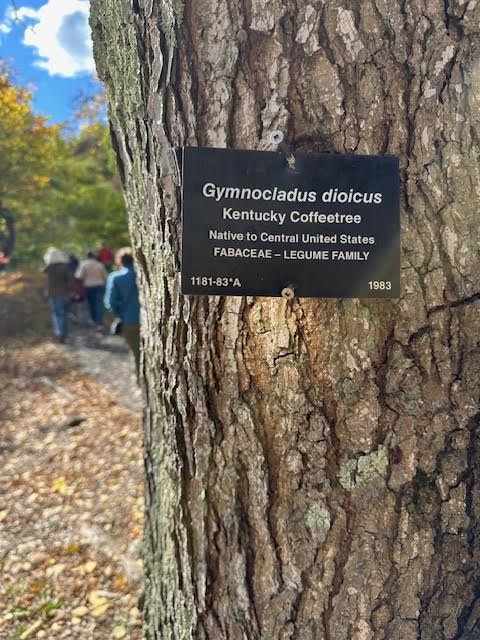
Brad explained that, just like an art museum that has rooms with particular periods of art, the arboretum is organized by types of trees. We saw linden trees, cork trees, tulip trees, and horse chestnuts, stopping along the way so Brad could tell us about a particular tree. He was a wealth of knowledge! There are over 16,000 plants (trees, vines and shrubs) within the arboretum. The Arboretum’s mission is to cultivate and care for all of the woody plants that can survive in Boston’s climate, so these are not just native trees. Some plants come from right around the corner (Mr. Sargent, the first director, took a red maple from his neighbor’s yard to plant here); and some plants come from around the world. Remember that The Arnold Arboretum, as part of Harvard University, is also a research institution, and the arboretum itself is a laboratory for students and professors alike. Each tree in the Arboretum has a tag with its common and scientific names, family, and origin, and we found ourselves stopping to investigate various name tags.
Many people who visit the Arboretum come especially for Lilac Sunday, that time in May when the lilacs are in full bloom and their scent fills the air. It is one of the busiest times at the Arboretum. Brad informed us that, although it was a beautiful event at the Arboretum, he was really not a fan of lilacs. Why? He thought that the flower did not give enough bang for the buck; it had a very short bloom time, and there were other plants that did a better job, if a longer bloom is what you wanted.
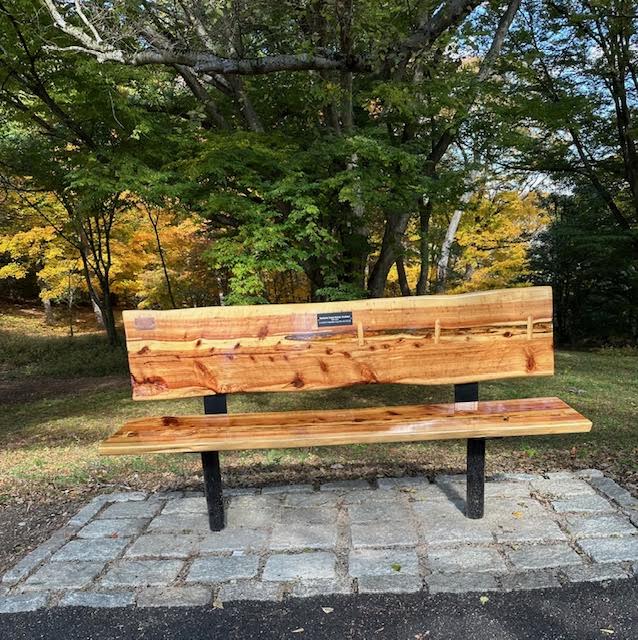
As we made our way along the lilacs path, we stopped to admire a backdrop of golden leaves behind a wooden bench. We asked to stop for a photo op, and of course, Brad obliged by taking our group picture. The bench was made of wood from a tree that had been taken down and repurposed, and there was a dedication and name on the bench. Brad explained that for $1,000 a year, you could buy a bench in honor or memory of someone. At the end of 10 years (that’s $10,000), you could renew your bench. We all had the same thought: “What a great idea!”
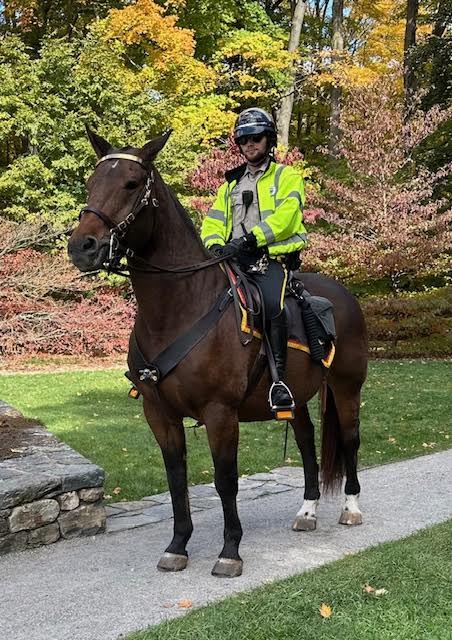
Returning to our starting point, a park ranger on horseback passed us on his patrol around the arboretum. We thanked Brad for a wonderful and information-filled tour and headed to our next destination: lunch!
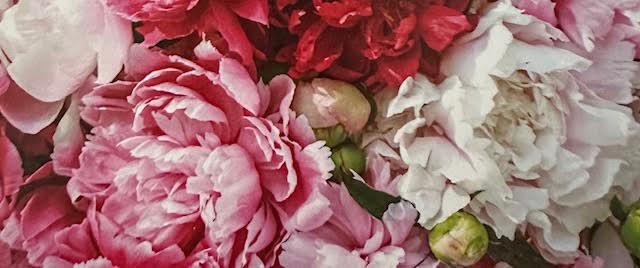
Members of the Driftwood Garden Club enjoyed a very informative program about growing and caring for peonies, one of the most lush and beautiful of all the flowers in our gardens. Stacey Lee, our presenter, is a floral designer and sustainability advocate. They own and operate Paeonia Designs in Framingham, and their knowledge and enthusiasm was contagious. Stacey’s career began as a civil engineer, working on projects relating to clean water sustainability. But they always had a passion for flowers, so they created Paeonia Designs as a side hustle. At the same time that Stacey was asked to create the floral designs for her close friend’s wedding, their engineering career was waning, and Paeonia Designs became a new, full-time endeavor.
Stacey’s talk began with a few fun facts, such as:
-Did you know that Homer, Alaska has the largest peony market in America? (Our climates are very similar.)
-Did you know that it is an old wives’ tale that ants crawl on peony blossoms to help them open? (The ants just want the peony sugar.)
-Did you know that peonies can live for over 100 years? (Just ask Stacey who has some peony plants from her grandmother’s garden!)
Stacey was a wealth of serious information as well, beginning with the three types of peonies:
the tree peony which has woody stems, grows quite tall, needs more shade, and is not cut back in fall,
the herbaceous peony, the most common, which needs lots of sun and, when cut back in the fall, will regrow from the roots the following spring, and
the intersectional peony, a hybrid of tree and herbaceous peonies, and has elements of both plant types.
No matter what type of peony you choose to grow, it is that spectacular blossom that we all admire. There are many varieties of peonies, and many variations in color, but they are all beautiful. Stacey’s professional tip for cutting the blooms is to cut BEFORE the flower is in full bloom. They called it a marshmallow pouf. If you cut the flower at this stage, wrap it in newspaper, and refrigerate it, the bloom will last for several days. When you put it in your floral arrangement, the “marshmallow pouf” will open and will last longer.
To avoid powdery mildew, plant your peonies in full sun with room around them for good air circulation, and water them at the base, not on the leaves. If you are planting a new peony plant or rerooting from an existing peony, patience is the key. Peonies usually take three years before they are established and are blooming successfully. Just remember these three words: roots, shoots, and fruits. If you follow these suggestions, your peony will live a long and happy life.
As always, a very sincere thank you to our hosts for the evening. They prepared and helped serve a beautifully laid table full of delicious sweet and savory offerings. It always makes our social time together extra special thanks to our hosts for the evening.
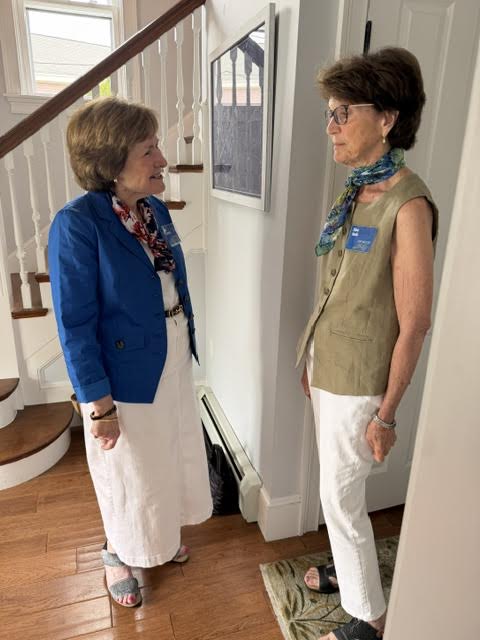
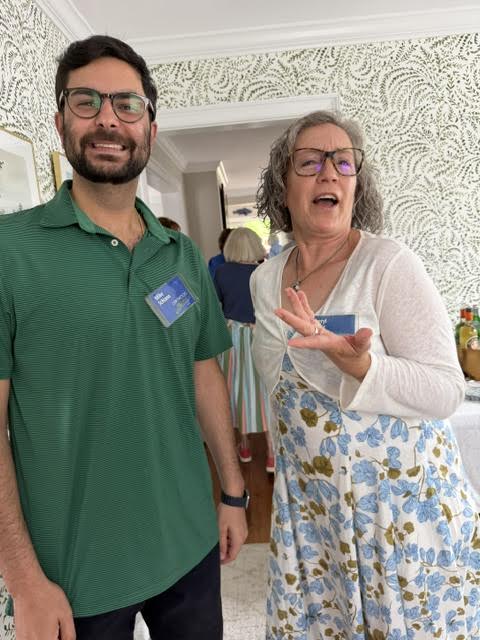
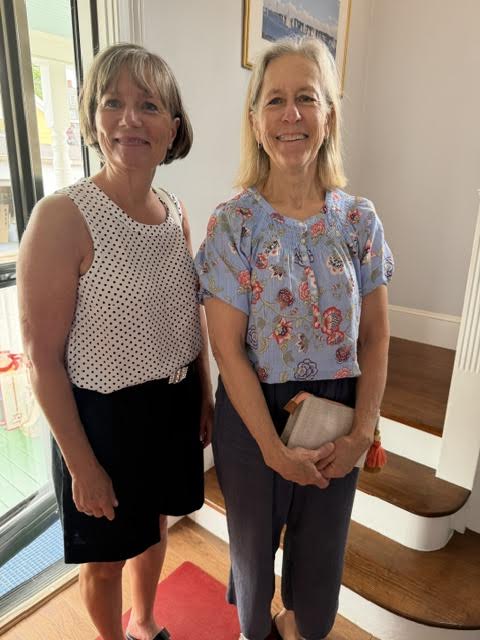
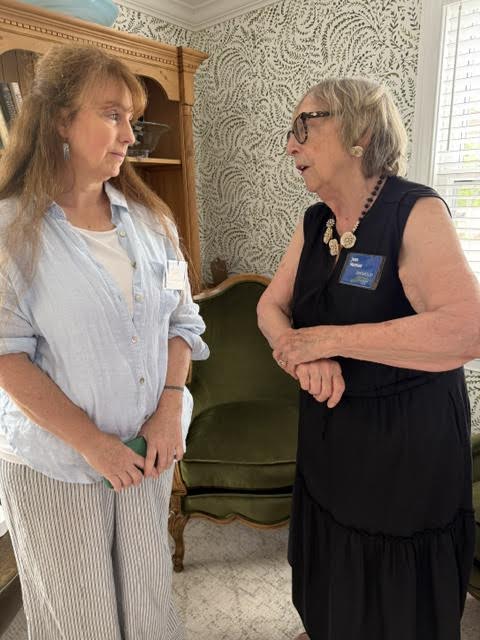
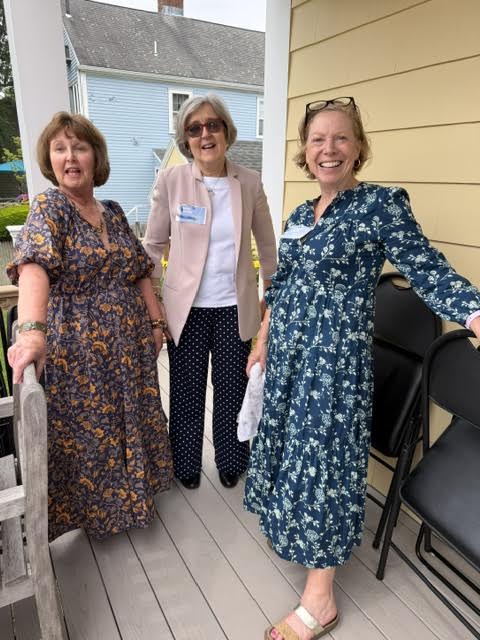
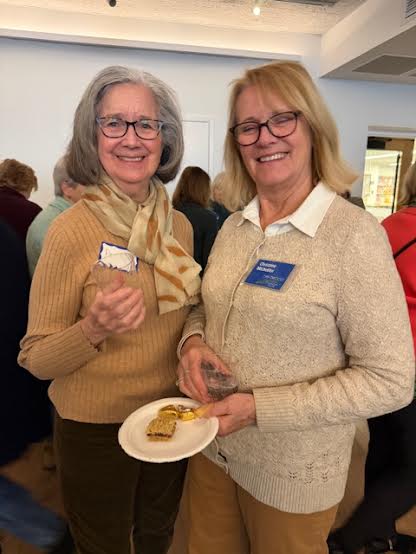
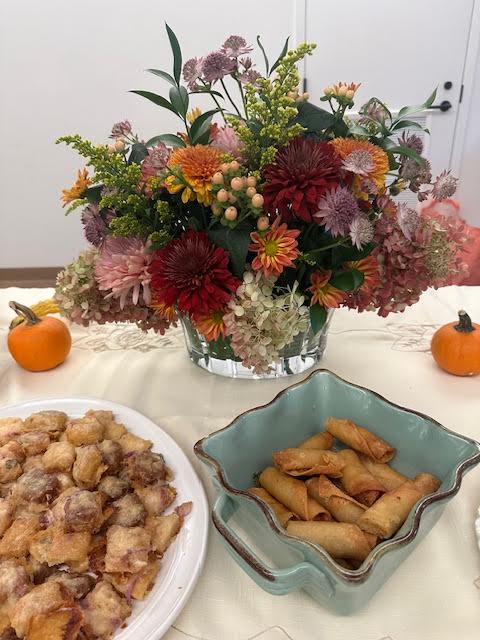
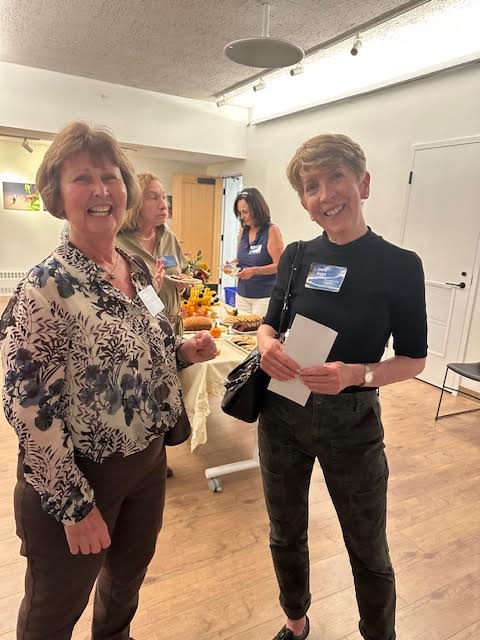
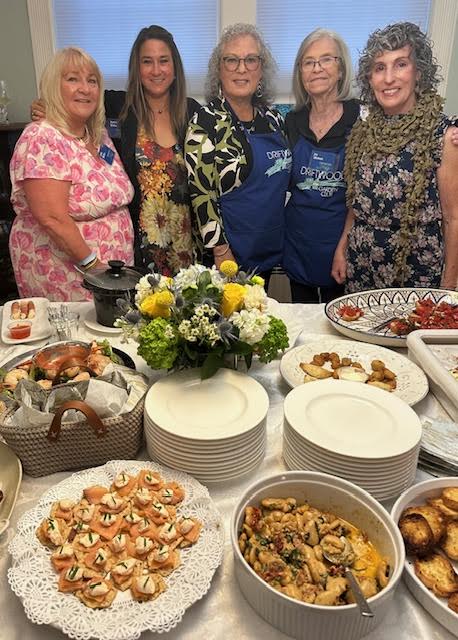
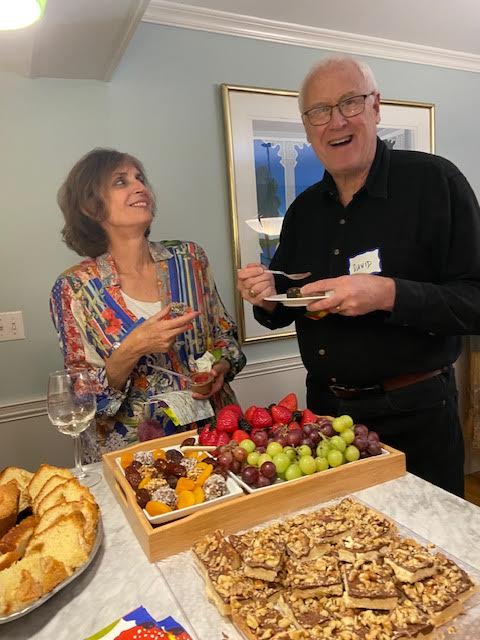
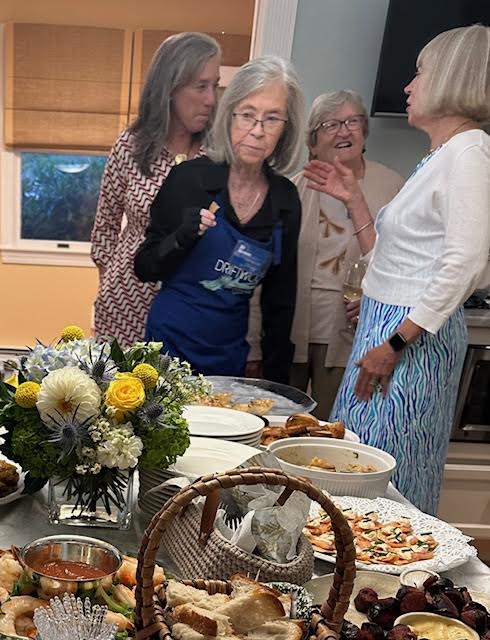
Driftwood Garden Club members, along with their guests, gathered at the lovely home of Joy Purdin to kick off the 2025/2026 season. Our annual cocktail party is a popular event for everyone, allowing people to mingle and get to know one another outside of the gardens that we care for throughout the spring, summer and fall.
The savory hors-d’oeurves and sweet desserts are made and contributed by our members and are always delicious. The member hostesses seamlessly served, replenished plates and kept the kitchen area spotless, as they also circulated and enjoyed the party. A special shout-out to our bartenders, Cliff and Joe, who manned the wine bar and kept everyone happy.
Members, old and new, shared stories of gardens, trips, and family, as well as all that was accomplished by their hard work in the gardens of Abbot Library and Farrell Court this past season.
The Driftwood Garden Club is looking forward to the fantastic schedule of workshops, speakers, and field trips planned over the coming year. There is definitely something everyone can enjoy!







































 Driftwood Garden Club