
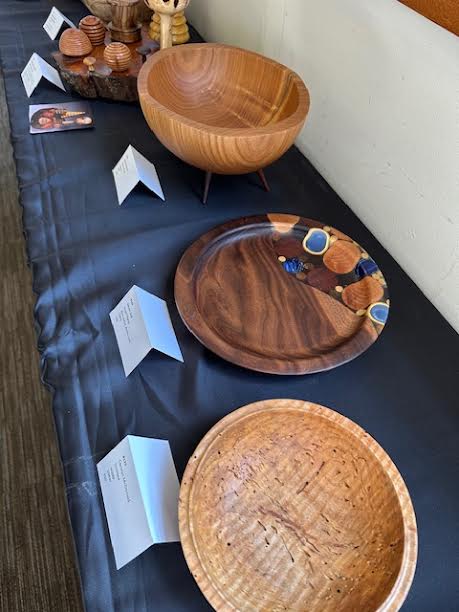
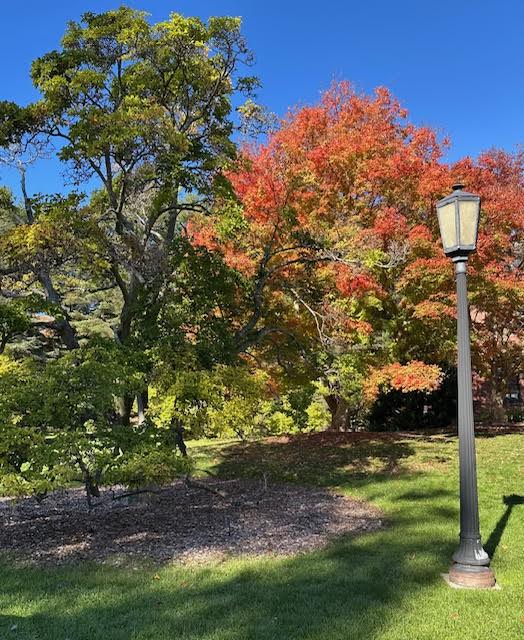
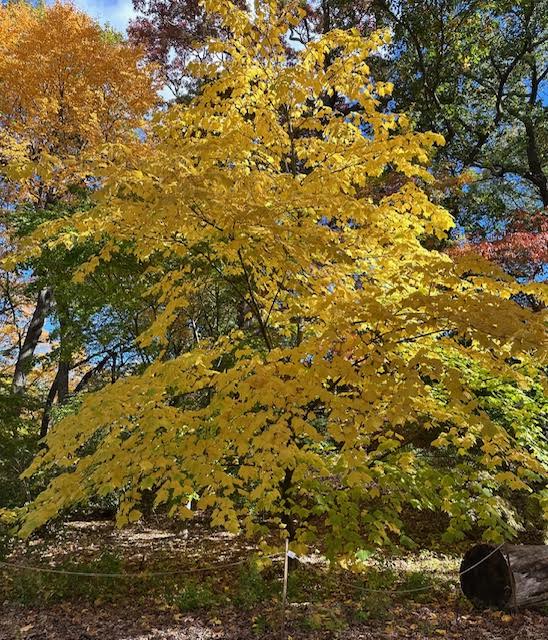
It was a perfect fall day for members of the Driftwood Garden Club to embark on a field trip. Our destination: The Arnold Arboretum in the Jamaica Plain neighborhood of Boston. The air was crisp, the sun was shining, and the leaves on the trees had turned beautiful shades of yellow, gold, orange, and red. While waiting for our group to assemble, we viewed a wood turners’ exhibit inside the Hunnewell Visitor Center. Some of the wood bowls exhibited were turned from wood that had come from trees within the Arboretum. We learned that each year around 400 trees are removed from the collection due to disease, damage, or managing the collection with a goal of creating opportunities for new plants to be introduced. If possible, that wood is repurposed in several different ways.

We met our very knowledgeable and friendly guide, Brad, outside of the building to begin our walking tour of the trees. He first gave us a little history of the Arboretum. It began in the mid-1800’s when two men made gifts to Harvard College: Benjamin Bussey, a wealthy Boston merchant, left land (about 300 acres) to the school in 1842; and James Arnold, a New Bedford whaling merchant, left a financial bequest ($100,000) in 1868 with the purpose of creating a public arboretum. Together, The Arnold Arboretum was founded in March 1872. The first director was Charles Sprague Sargent who partnered with Frederick Law Olmsted on the landscape layout. The two men formed a partnership with the city of Boston: Harvard gave the land to the city and then leased it back for $1/year, on a thousand year lease, with a renewal option. The Arnold Arboretum was born, and with that knowledge, we were ready to see some trees!


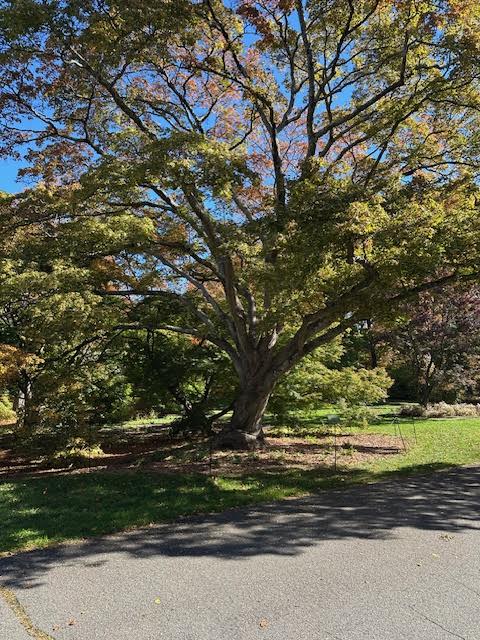
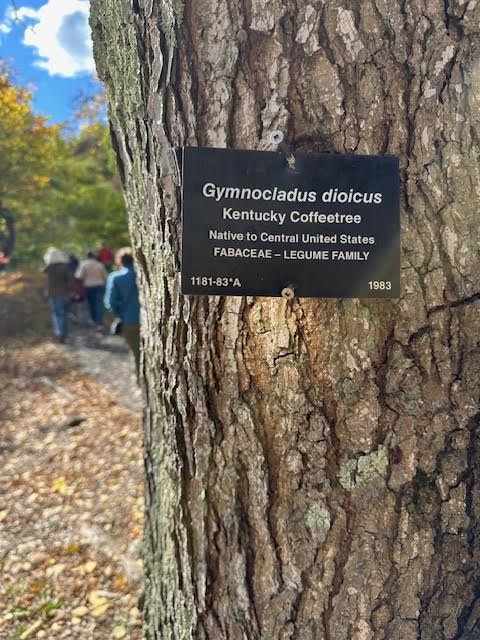
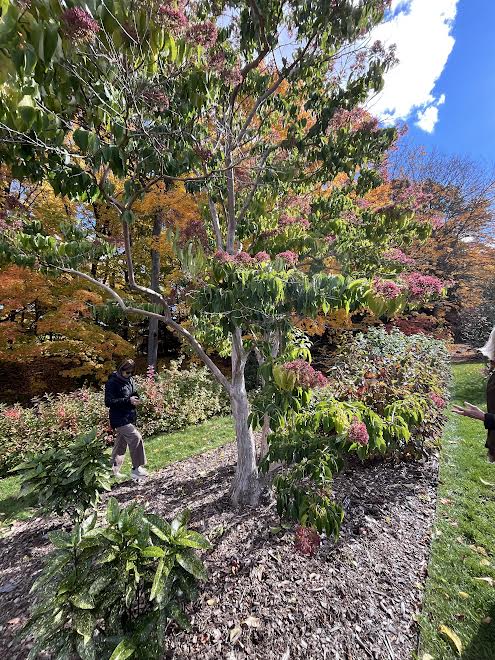
Brad explained that, just like an art museum that has rooms with particular periods of art, the arboretum is organized by types of trees. We saw linden trees, cork trees, tulip trees, and horse chestnuts, stopping along the way so Brad could tell us about a particular tree. He was a wealth of knowledge! There are over 16,000 plants (trees, vines and shrubs) within the arboretum. The Arboretum’s mission is to cultivate and care for all of the woody plants that can survive in Boston’s climate, so these are not just native trees. Some plants come from right around the corner (Mr. Sargent, the first director, took a red maple from his neighbor’s yard to plant here); and some plants come from around the world. Remember that The Arnold Arboretum, as part of Harvard University, is also a research institution, and the arboretum itself is a laboratory for students and professors alike. Each tree in the Arboretum has a tag with its common and scientific names, family, and origin, and we found ourselves stopping to investigate various name tags.
Many people who visit the Arboretum come especially for Lilac Sunday, that time in May when the lilacs are in full bloom and their scent fills the air. It is one of the busiest times at the Arboretum. Brad informed us that, although it was a beautiful event at the Arboretum, he was really not a fan of lilacs. Why? He thought that the flower did not give enough bang for the buck; it had a very short bloom time, and there were other plants that did a better job, if a longer bloom is what you wanted.


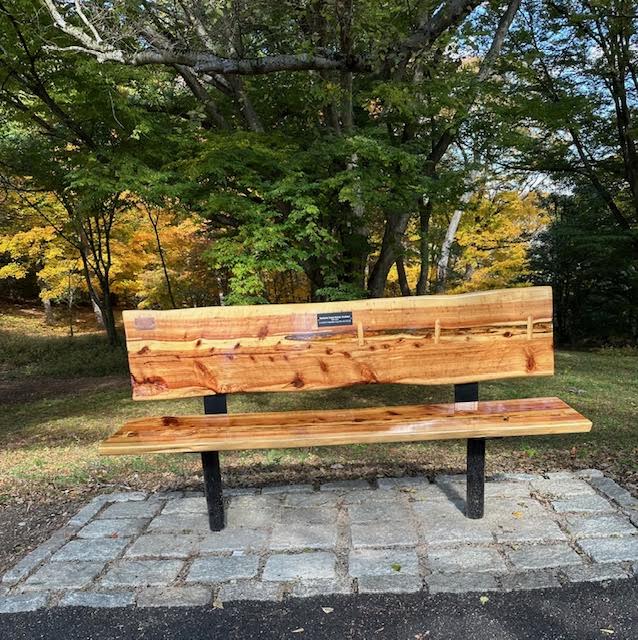
As we made our way along the lilacs path, we stopped to admire a backdrop of golden leaves behind a wooden bench. We asked to stop for a photo op, and of course, Brad obliged by taking our group picture. The bench was made of wood from a tree that had been taken down and repurposed, and there was a dedication and name on the bench. Brad explained that for $1,000 a year, you could buy a bench in honor or memory of someone. At the end of 10 years (that’s $10,000), you could renew your bench. We all had the same thought: “What a great idea!”
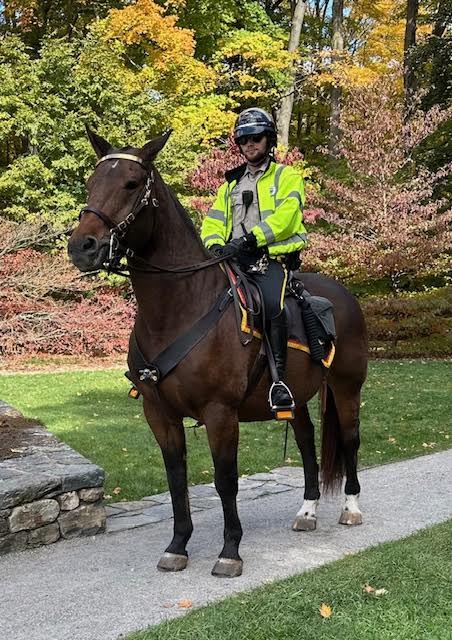

Returning to our starting point, a park ranger on horseback passed us on his patrol around the arboretum. We thanked Brad for a wonderful and information-filled tour and headed to our next destination: lunch!







 Driftwood Garden Club