Uncategorized

A Doubleheader: Nifty Garden Tools plus a Warm-up for Dig & Divide.

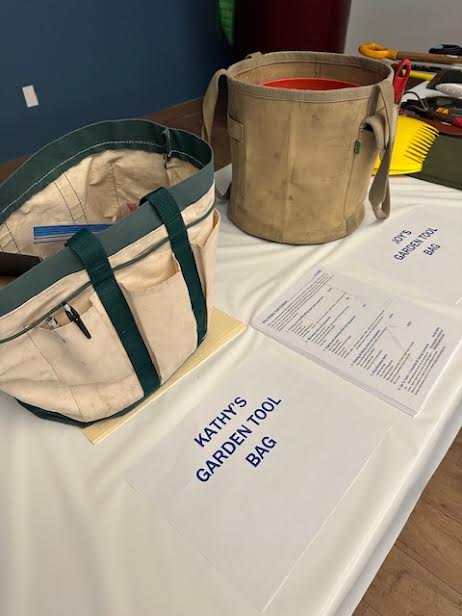
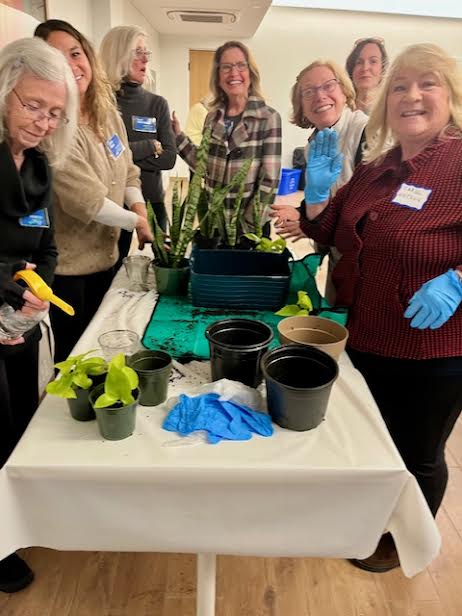
Members of the Driftwood Garden Club enjoyed a doubleheader at their April program. Past-Presidents Kathy Bradford and Joy Purdin presented first with “Nifty Garden Tools” that every gardener should know about, and the essential tools to carry in your garden bag. Then Lisa Biggio, our Civic Beautification Chair, talked with members about the importance of our upcoming Dig & Divide, demonstrating dividing and repotting a plant, as well as having members participate in a hands-on dig and divide activity.

Thank you to our Hostess Committee for a beautifully prepared table of treats for the socializing portion of our meeting. The centerpiece was a perfect reflection of the evening’s theme with four miniature pots planted with miniature daffodils and miniature blue muscari. As an added touch, there were miniature garden tools to complement the potted flowers!

Kathy and Joy organized the tools by categories of use and created a hand-out for people to follow as each tool was discussed. All of the tools were laid out on the table, and as they talked about each tool, they could pick it up for display. The categories were tools for: Pruning and Deadheading; Weeding; Digging and Planting; Clearing and Tidying; and Miscellaneous Items. Miscellaneous items included a choice of a garden bag, gloves (long and short), and a bar of soap to scrape your fingernails on before you put on your gloves to start working in the dirt. At the end, each presenter selected their three favorite tools. Both gardeners agreed that the Spearhead shovel was their top favorite. Joy chose dutch hoe (Japanese hoe) and the pruning saw to complete her three, while Kathy chose her trowel (both her new trowel and the trowel that had belonged to her mom) and her pruning clippers. 

For the second part of our program, Lisa did a wonderful job talking to members about the importance of the upcoming Dig & Divide. She thanked our Plant Sale Committee for their incredible job of finding the thirteen “volunteer” gardens that we will use this year. The Plant Sale Committee coordinates the Captains for each garden, organizes the signups for members to work, and supplies all the needed materials for the Captains’ boxes. This is definitely a team endeavor, and the Plant Sale Committee does the groundwork to organize it all. The perennials that are dug from a garden during Dig & Divide are then divvied up among members of the team and brought home to be cared for until the Plant Sale. Lisa gave some suggestions such as putting all of the newly dug plants in a shady spot in your yard for the first few days, as the plants are in shock from the transplant. Perennials that require full sun can then be moved to a sunnier spot in a day or two.

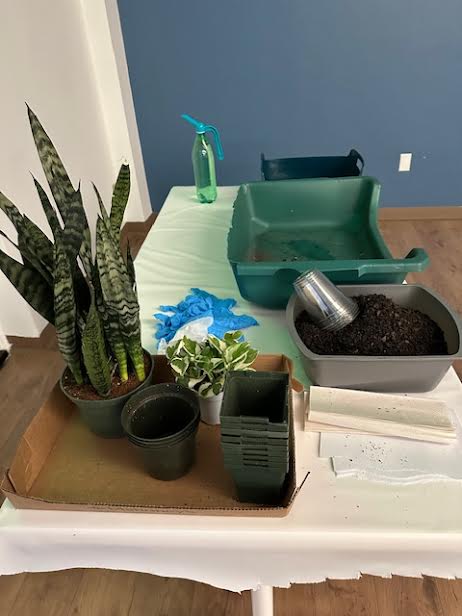
Lisa then demonstrated how to “dig” and divide and repot a portion of a snake plant. As she worked, she chatted about the snake plant (also known as mother-in-law tongue because of the leaf shape). She said this was a great indoor plant because it was very low-maintenance, and it was also a plant that releases quite a bit of oxygen, even during the night, making it a great plant for the bedroom. She answered questions from the audience about the plant as well as questions about the Dig and Divide. Members then had an opportunity to practice the dig and divide technique on their own at work tables Lisa had set up around the room.

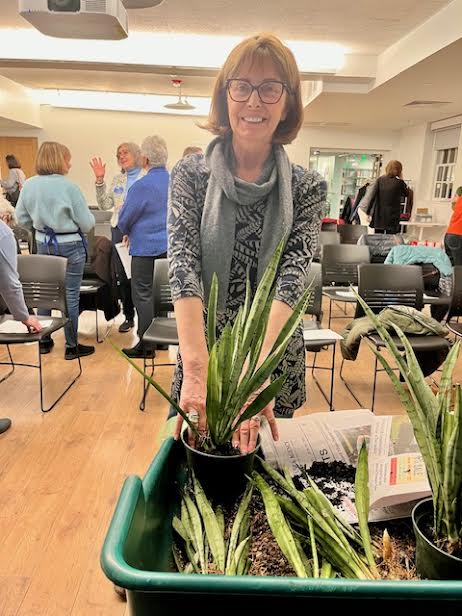
Our program was a good review for everyone, a wonderful team builder, and, at the end of the evening, our members were ready for their Dig & Divide. They also had a lovely plant to take home with them.    

Uncategorized

Pruning Workshop at Long Hill

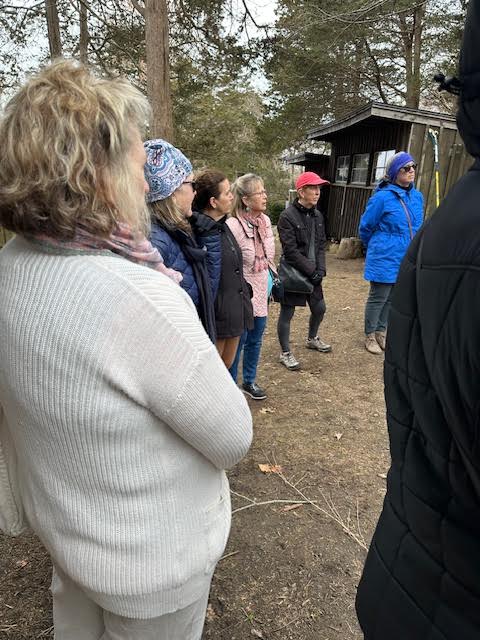
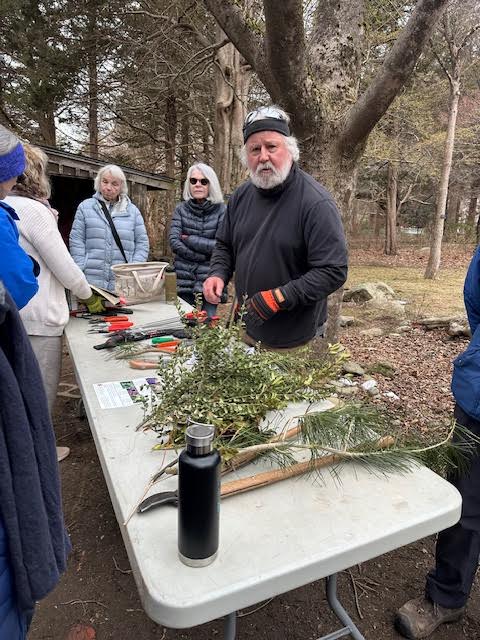
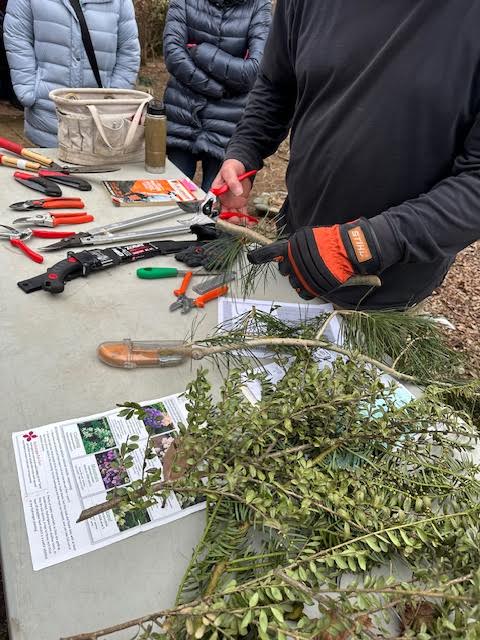
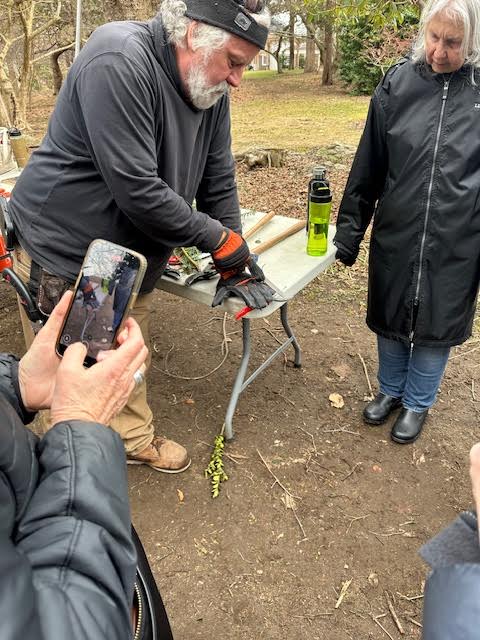
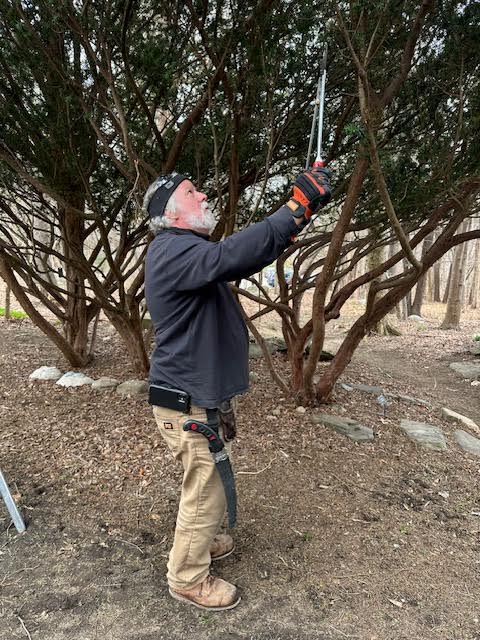
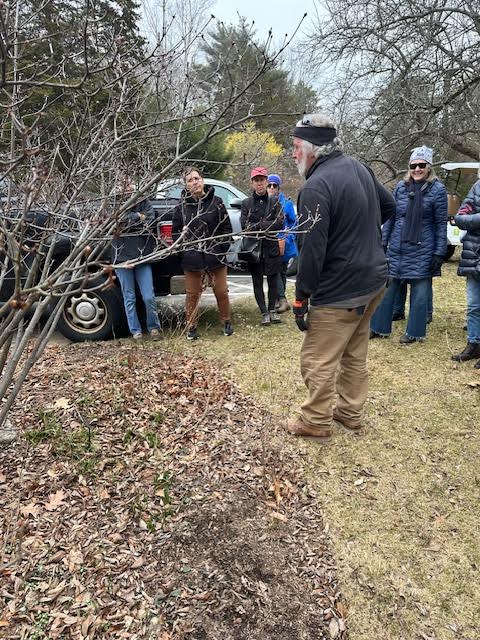
It was a chilly, overcast afternoon when our group of gardeners from the Driftwood Garden Club arrived at Long Hill Reservation in Beverly to participate in a pruning workshop. Dan and Melissa, who care for the Long Hill property year round, were our friendly and knowledgeable instructors for the afternoon. They greeted us outside at a work table laid out with various pruning tools.

After an introduction, Dan began his talk with why and when we prune our trees and shrubs. He said to follow the four D’s: if a branch is dead, diseased, damaged, or dysfunctional (a branch might cross over another branch or grow in an awkward position), it is time to be pruned. Then he and Melissa talked in length about appropriate tools and how to use them.
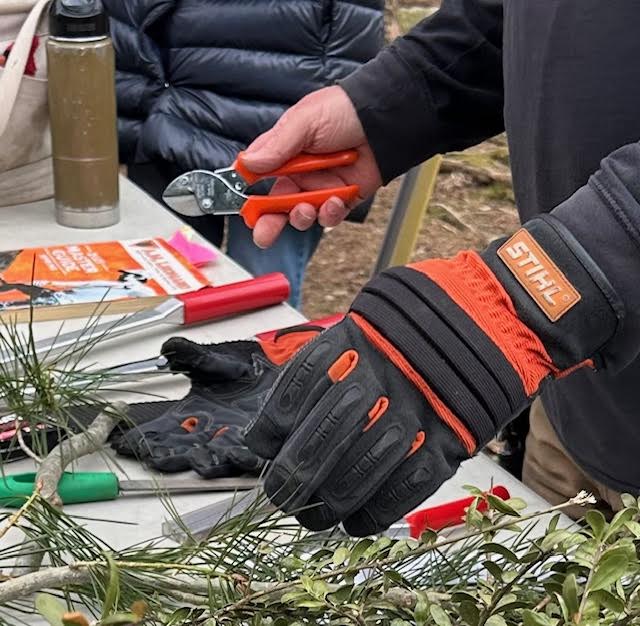
Beginning with an ordinary pair of pruning shears (the blade can be curved or straight), Dan said that gardeners often attempt to cut too large a branch with these small shears, and they can injure the tree by crushing the remaining edge of the branch. He said that trees heal themselves after pruning, but that a crushed edge can impede the healing and even invite bacteria into the tree. Their advice was to not cut anything larger than your pinky finger with the handheld pruner. In fact, he said, trimming flowers and stems of a rose bush is what these pruners should be used for.

The lopper, everyone’s favorite, is another misused pruning tool. Again, gardeners attempt to cut a branch that is either too high overhead (not allowing you to get a good clean cut) or by cutting something too big, thus damaging the remaining branch. Need to cut a larger branch? Use a small pruning saw which can be folded and stored in your garden tool bag. There is even a pocket-sized pruning saw which is very convenient and very sharp. Dan and Melissa also demonstrated how, with a small file, we could sharpen our own bladed tools if we wanted to. Just be careful, and slowly follow the edge of the blade with the file.

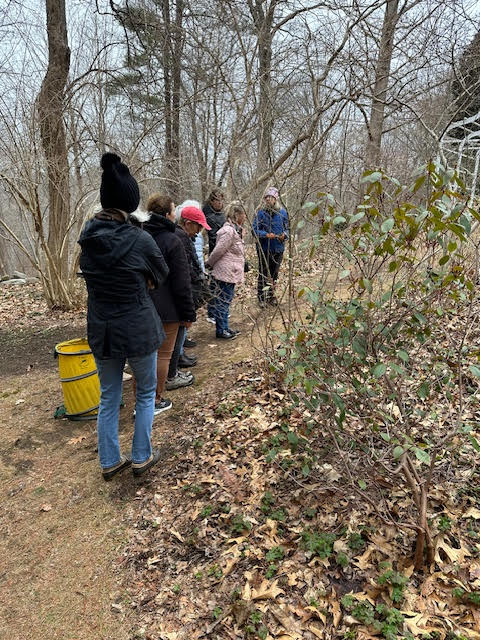
The group then followed Dan and Melissa to a large viburnum bush in need of some care. We looked for the four D’s and pointed out some of the branches that could be taken out. Several of our members demonstrated their pruning skills on the viburnum, and it looked much better after being pruned.

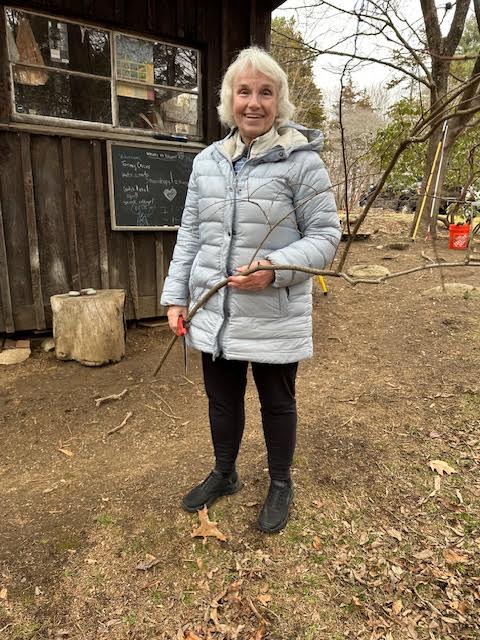
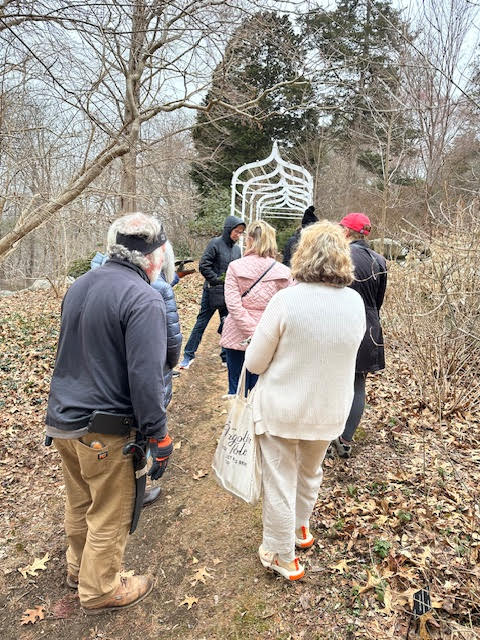
We made our way to the lower gardens, taking pruning shears with us, and spent the remainder of our time pruning roses and other small bushes in the gardens. We all learned some new things, refreshed our knowledge of others, and had a wonderful afternoon at Long Hill.

Uncategorized

Hydrangea Ps and Qs

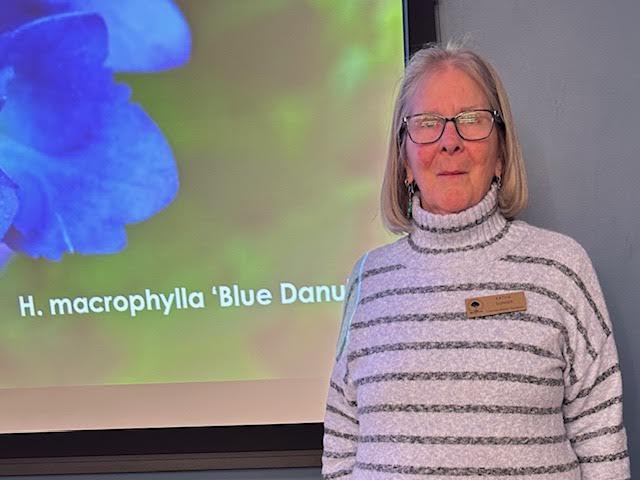
It was a full house for our March program on hydrangeas! Our presenter, Kathie Skinner, is a Lifetime Master Gardener and a retired educator with over 40 years experience in teaching and administration. Although her home is in Cambridge, her gardens are on Martha’s Vineyard, and she was a wealth of experience and knowledge of how to grow beautiful and healthy hydrangeas in our own gardens here in Marblehead.

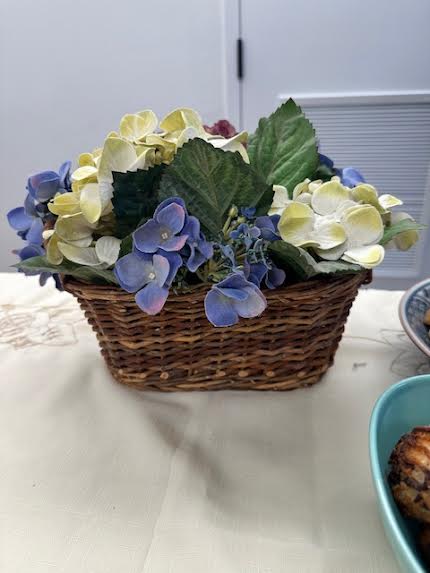
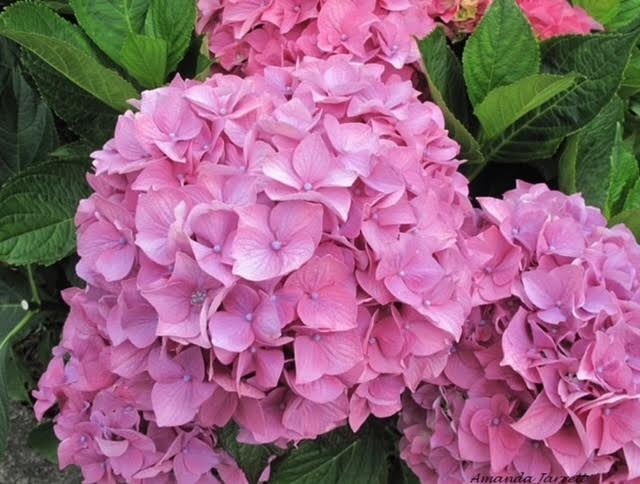
As always, our Hostess Committee provided us with a delicious assortment of goodies, and a beautiful centerpiece of silk hydrangeas, perfect for the presentation.

Kathie began her talk by letting us know we had a bit of an advantage in Marblehead because hydrangeas thrive in a maritime environment. Fog and early morning dew, as well as a temperate climate, help these plants thrive. As we all know, with changes in our climate, our winters can be colder and our summers hotter, and these changing elements can affect hydrangeas.

Identifying the species of hydrangea we have in our own gardens is the most important thing we can do for success. Knowing what species you have will determine the amount of sun or shade, whether the color of the flower can be changed by Ph, and how to prune the plant. Although there are many species of hydrangea, there are seven that are normally found in our region and do well here. They are:

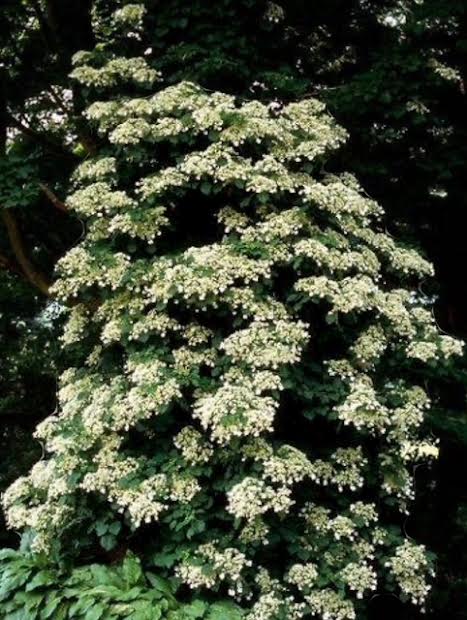
  1. H. anamola (climbing hydrangea). Does best in part-sun/full shade, has old and new wood varieties;
  2. H. arborescens (smooth-leaf). Does best in full-sun/part shade, blooms on new wood.
  3. H. aspera (rough-leaf). Does best in part-sun, blooms on old wood.
  4. H. macrophylla (Bigleaf). Does best in part-sun/full shade, blooms on old wood.
  5. H. paniculate (Panicle). Does best in full-sun, blooms on new wood.
  6. H. quercifolia (Oakleaf). Does best in full sun/part-shade, blooms on old wood.
  7. H. Serrata (Mountain). Does best in part sun, blooms on old wood.

Hydrangeas can be identified by leaf type and shape of blossom, so you may have to wait for spring to identify what you have in your garden. We also learned that hydrangeas should be watered from the bottom, at the base of the plant, where the water can be absorbed by the roots. Knowing the type of wood (old or new) on which you will get blooms, will determine when and how to prune. Kathie explained rejuvenation pruning vs. pruning on both old and new wood, and left us with a wonderful reference sheet to use, as well as a list of website and sources for hydrangea gardening.

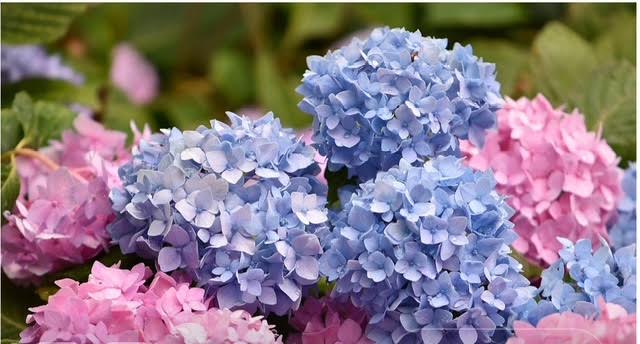
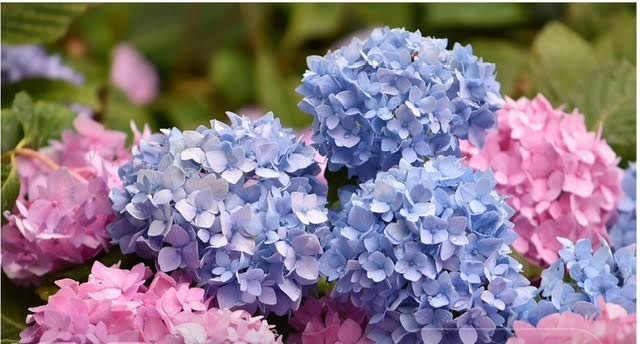
Although hydrangeas are not deer resistant, most are rabbit resistant, and, with the exception of H. macrophylla mophead, they are great pollinators in our gardens. Hydrangeas, whether climbing or a shrub, white, pink, blue or purple, are in a class of their own when it comes to a beautiful addition to our landscapes.

Uncategorized

A Begonia for Every Season

Have you ever received a beautiful begonia plant as a gift, enjoyed its beautiful blooms, and then had difficulty keeping the plant alive and thriving? Was it in the wrong light? Did it get too much water? Was it in a room that was too hot, too cold, or too dry?

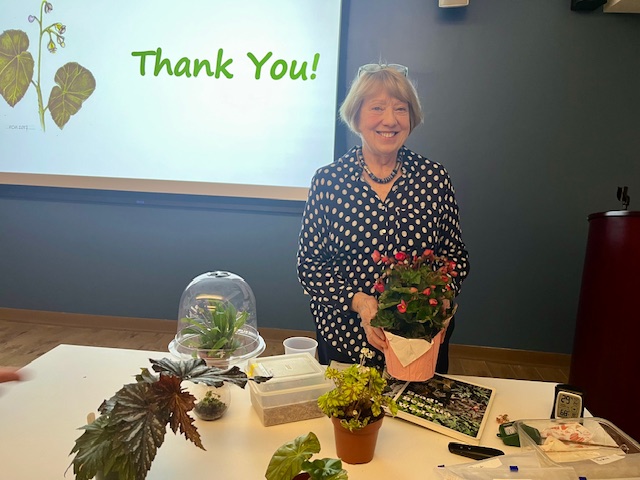
Well, all of these questions and more were answered at our February program, “A Begonia for Every Season.” Betsy Szymczak, our speaker, is a retired college professor of clinical microbiology, a past president of the Buxton Branch of the American Begonia Society, and an ABS certified begonia judge. She is also an avid gardener, with a particular interest in growing and propagating begonias.

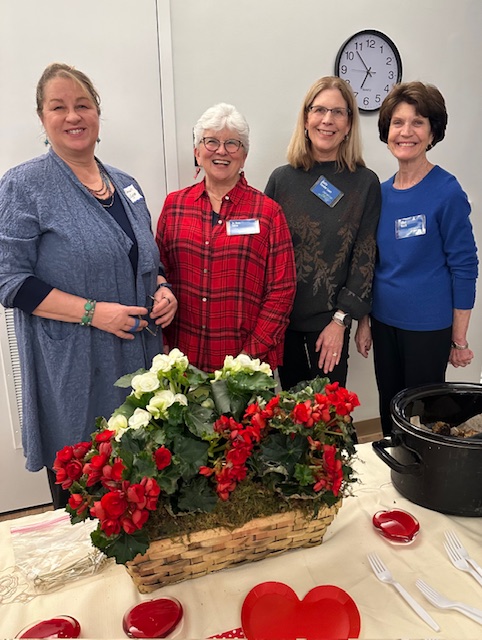
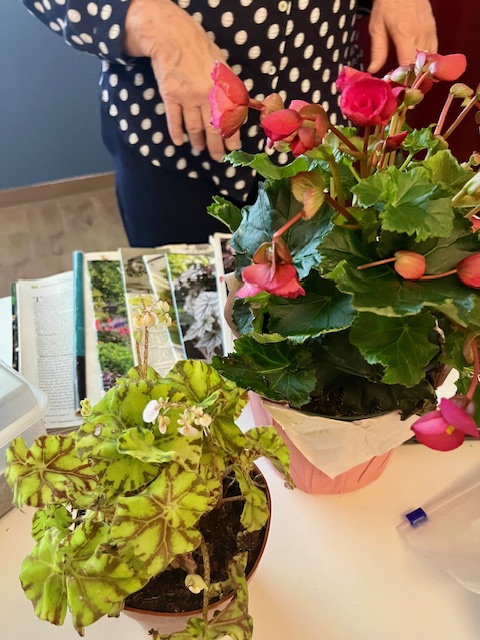
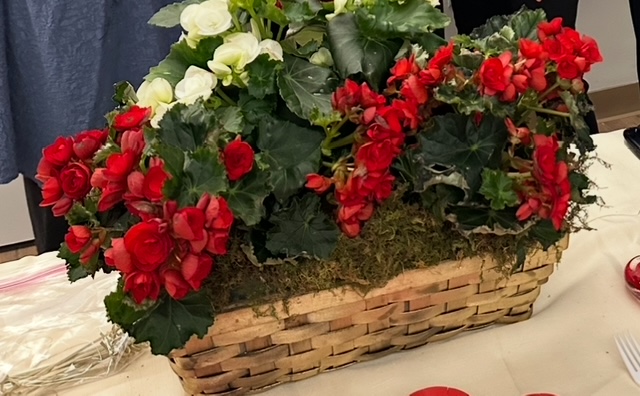
A warm thank you to our wonderful hostesses for the evening. They presented a beautiful table of sweet and savory treats, along with a gorgeous basket of red and white begonias as a centerpiece. It was a perfect tribute to our presentation on begonias, as well as Valentine’s Day, only a few days away.

Betsy’s presentation began with the biology of the begonia plant and its structure. We learned that male and female parts are on the same plant. The male makes the pollen, the female is where the seeds are produced. Begonias are pan tropical, meaning they are native to regions below the equator, although with the right conditions and care, they can be grown almost anywhere. We also learned that the French botanist, Charlies Plumier sailed on board an explorer ship to the West Indies in the early 1700s, discovered the plant genus “begonia,” and named it after Michel Begon, the governor of Haiti, as a tribute to Begon. 

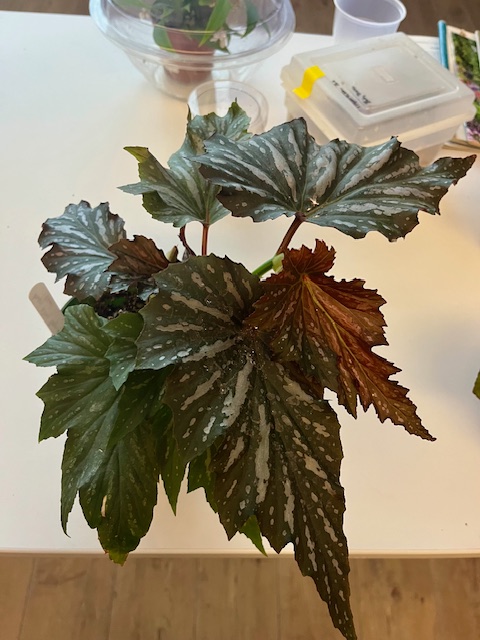
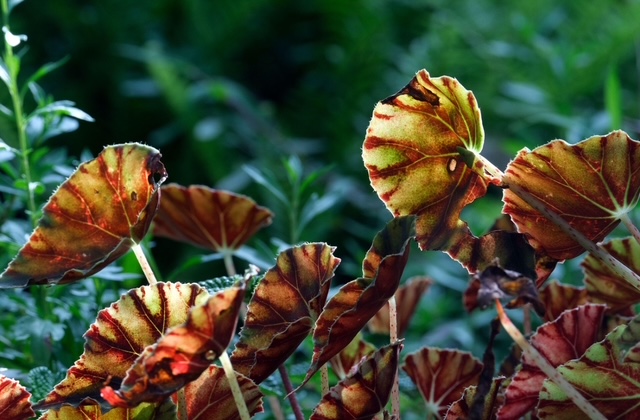
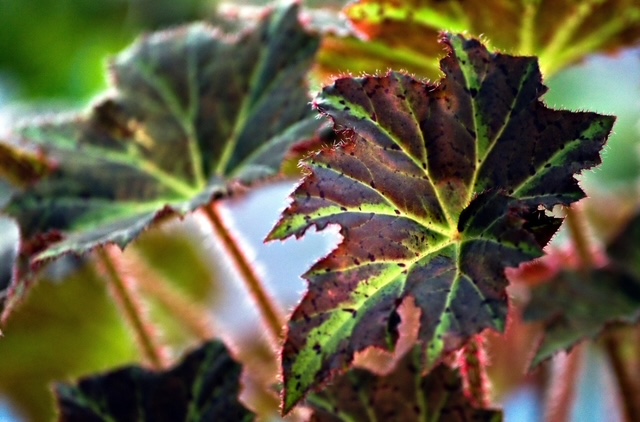
We think of begonias as a summertime plant because we see so many wax begonias used in landscaping, perhaps at your local mall, or in a hanging basket. Their blooms are magnificent, but there are also many begonias used for their beautiful foliage in planters or borders. The light, water, temperature and moisture (humidity) are the keys to the success of growing begonias. Outdoors, begonias need shade, never direct sunlight, and not too much watering.

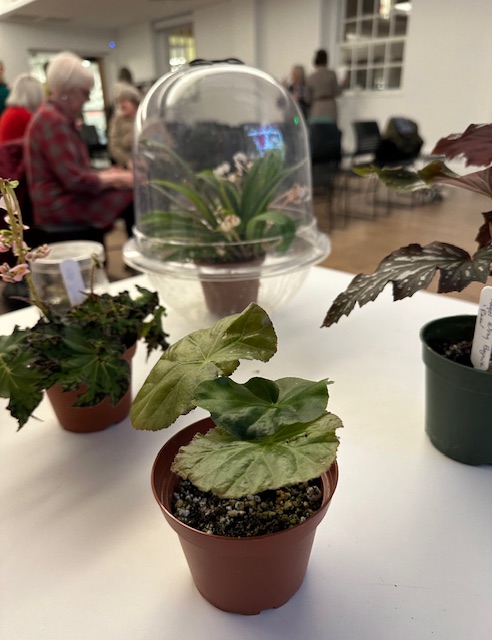
In the fall, begonias can be brought indoors. Again, the light they receive is important. East and west windows are best, and remember that overwatering can be a problem. Make sure the soil is dry before watering, or use a simple soil moisture meter (hygrometer) to help. Most begonias will tolerate temperatures between 55 and 75 degrees,  and some require more humidity than others. Betsy demonstrated how a delicate begonia could be placed under a plastic dome to retain the humidity. Fall is also the time you might try to propagate your begonia, and we learned several methods, including leaf cuttings, stem cuttings and division of tubers.

During the winter, with the right conditions, begonias can thrive inside. Begonia Kellermanii and Begonia Vitafolia are called “The Survivors” because they typically do well inside over the winter. Begonia Grandis, a tuber begonia, grows well in New England, and Rieger begonia blooms in winter with bright, indirect sunlight.

When spring comes, enjoy the flower shows in your area, while you wait for the weather to warm up, and you can bring your begonias outside again.

Uncategorized

Deck the Halls!

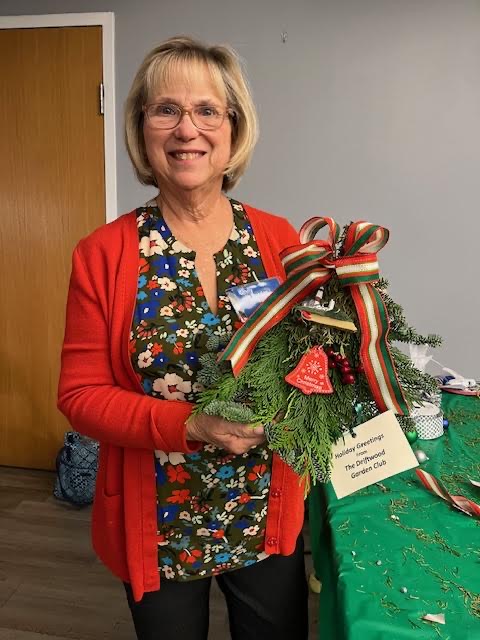
Members of the Driftwood Garden Club became Santa’s elves on Monday evening at the Marblehead Community Center. Each year, in collaboration with the Marblehead Council on Aging, one of our civic projects is to decorate holiday wreaths as a way to give back to the community.

After members enjoyed a social time with delicious homemade treats provided by our hostesses for the evening, our members got to work. They came prepared with scissors, glue glue guns, floral wire, and various decorations to use. There was also a table filled with bows, pinecones, ribbons and an assortment of decorations provided by the club for all to share.

As the members worked, they chatted and laughed and shared in the spirit of the season. They began to turn the fresh wreaths into lovely gifts to be given to Marblehead residents who participate in the bag lunch program through the Council on Aging. Each of these residents will receive a decorated wreath, or swag, with their lunch which is delivered to them the next day.

We know, through the Marblehead Council on Aging, that the recipients of our wreaths are delighted to be part of this program, and we know how it brightens their day to receive a beautiful wreath. We receive many thank yous in return, and we hope they know that we are just as delighted to do this for them. Happy Holidays, everyone!
Uncategorized

Hudson River Valley Garden Tour.

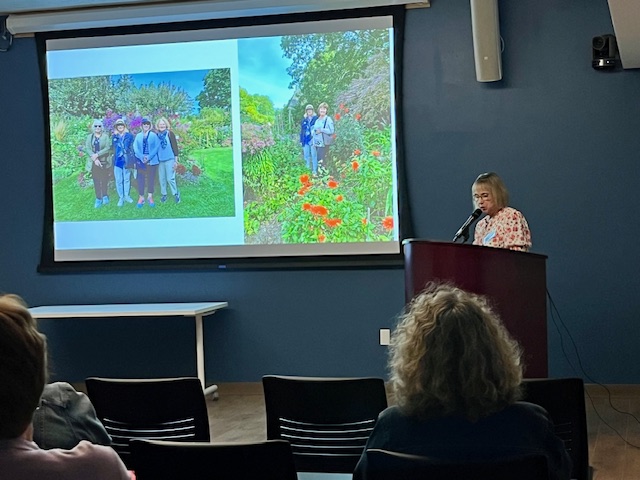
Our November ’24 program was a narrated slide show of the Hudson Valley Garden Tour taken in the fall of 2023 by members of the Driftwood Garden Club. Thank you to our valued member and past-president, Ginny von Rueden, for creating and presenting the program. This was an opportunity for all of our members to share some of the glorious gardens and gilded-age mansions of the Hudson River Valley. Delicious appetizers and sweet treats were provided by our gracious hostesses for the evening.

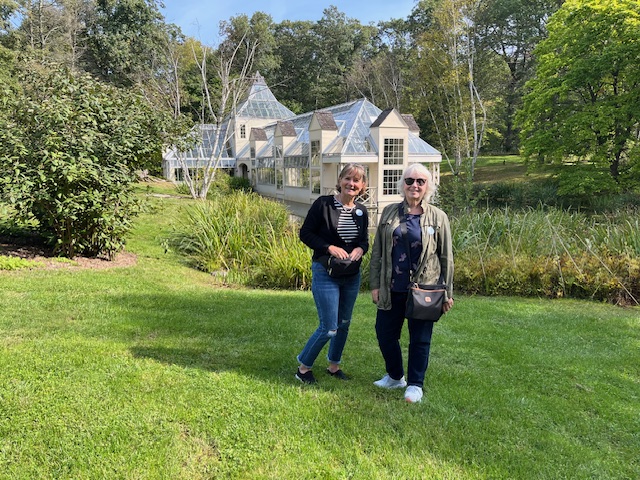
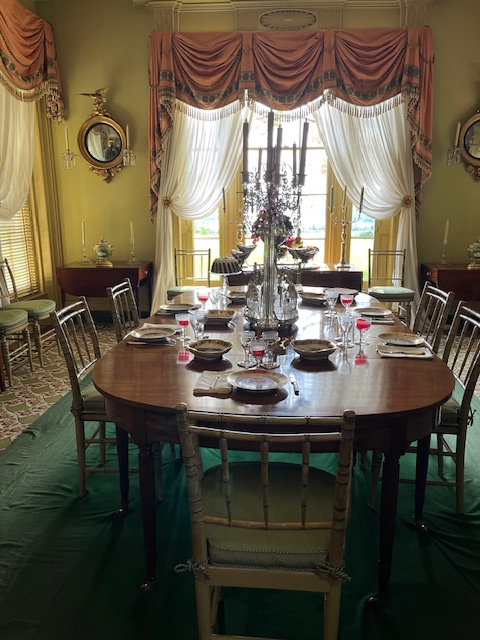
The tour began with a gourmet lunch at the Culinary Institute of America in Hyde Park. After lunch was a tour of the grounds of the Vanderbilt Mansion, followed by a guided tour of Beatrix Farrand’s private garden. Beatrix was a woman trailblazer in gardening and landscape architecture in the first half of the 20th century and defined American taste in gardens.

Stonecrop Gardens in Cold Spring, NY, home of Frank Cabot and his wife Anne, was built in 1958 and opened to the public in 1992. It is alive with woodland plants and stunning flowers, and is renowned for its collection of alpine plants.

Boscobel House and Gardens in Garrison, NY, offers stunning views across the river to West Point Academy. During the American revolutionary era, it was home to both patriots and loyalists. Falling into disrepair during the 1950s, preservationists rebuilt and restored it to its original grandeur, including 68 acres of lush gardens and trails.

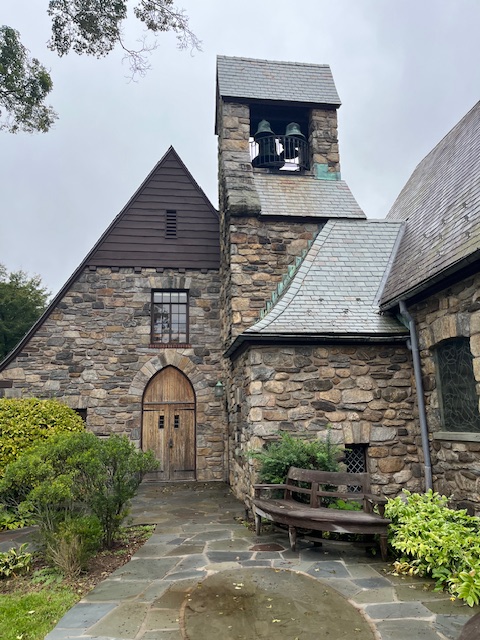
The stained-glass windows of Union Church of Pocantico Hills in Tarrytown, NY, were a favorite stop on the tour. The Rockefeller family commissioned the magnificent glass masterpieces in memory of family members. Nine windows were created by artist Marc Chagall. Union Church is especially meaningful to Ginny, as she and her husband, Rick, were married there!

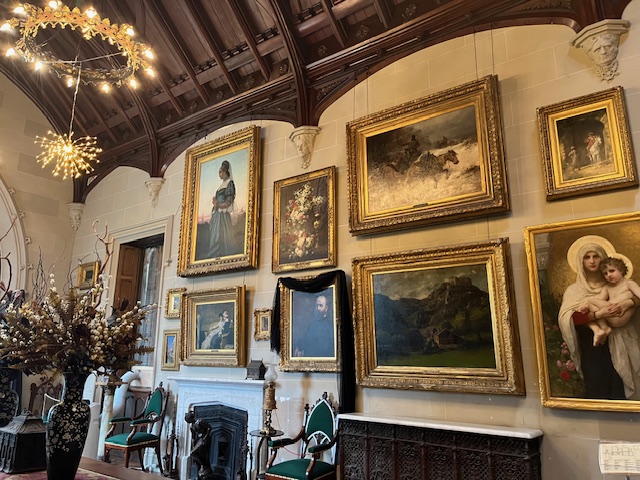
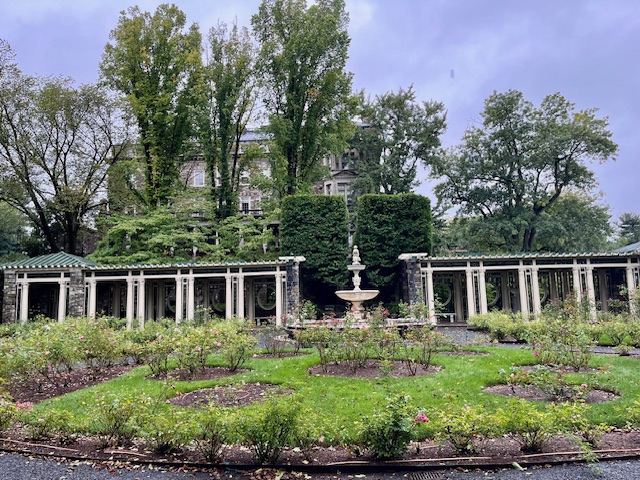
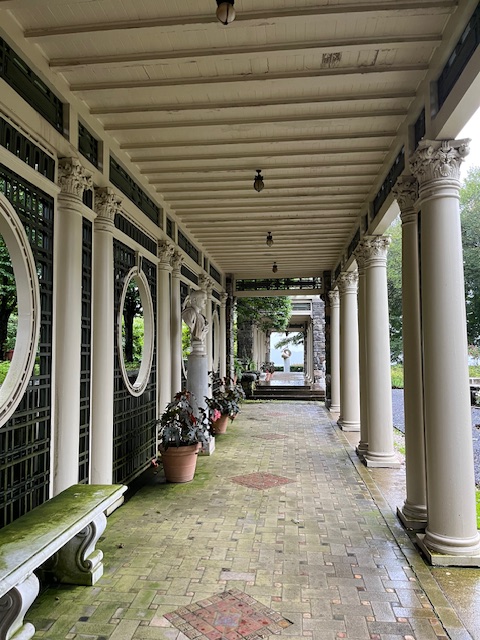
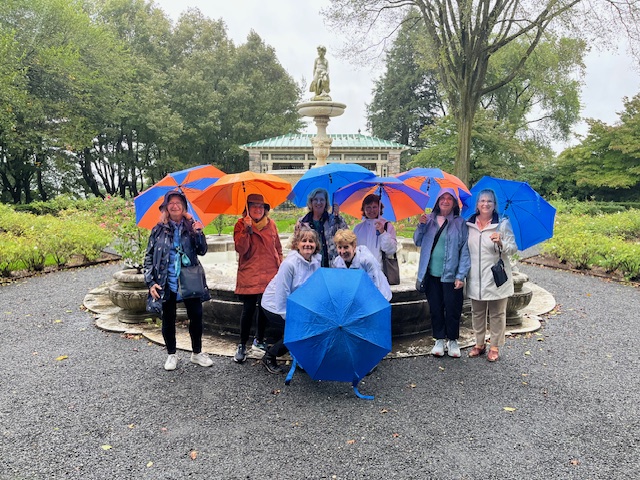
The tour of Lyndhurst Mansion in Tarrytown included the opulent mansion and access to the spectacular grounds. The views of the Hudson River were gorgeous, despite the overcast day.

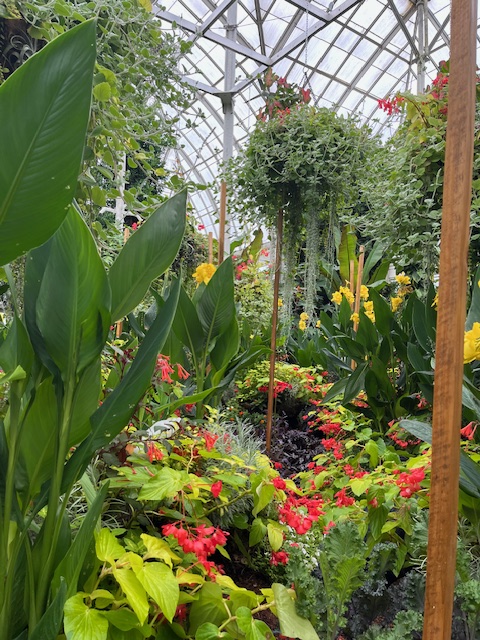
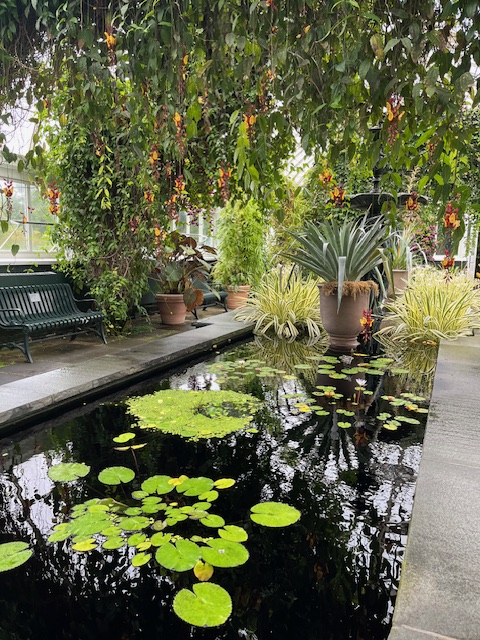
Even on a rainy day, the New York Botanical Garden is a magical place to visit. Members enjoyed touring the outside gardens as well as the Conservatory, containing plants from around the world.

The group then visited Kykuit Estates in Sleepy Hollow. The estate, with sweeping river views, was home to four generations of Rockefellers. The gardens, stone hardscape, sculptures, and outbuildings were spectacular, and our members said they would love to return some day.