Uncategorized

The Arnold Arboretum of Harvard University.

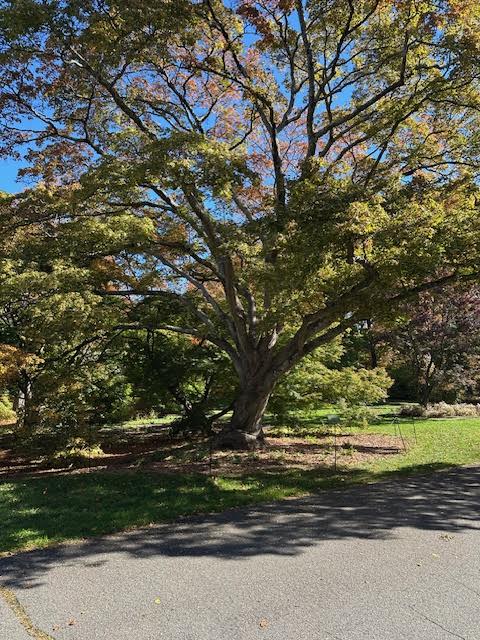
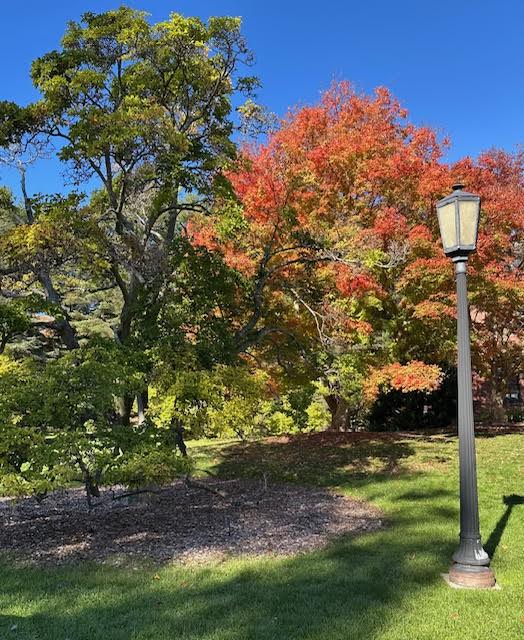
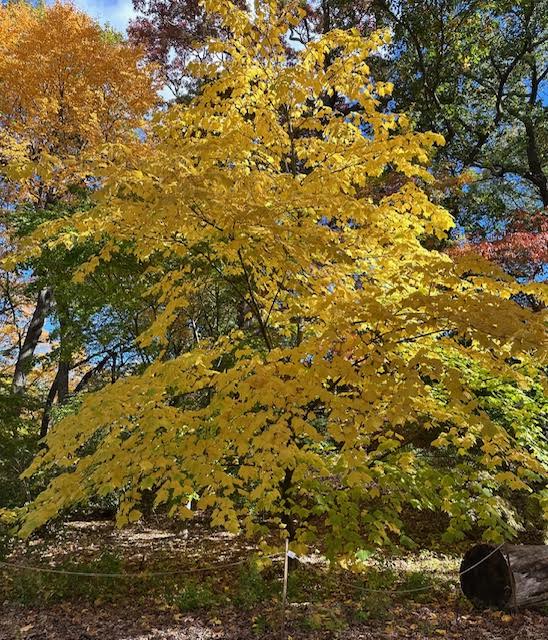
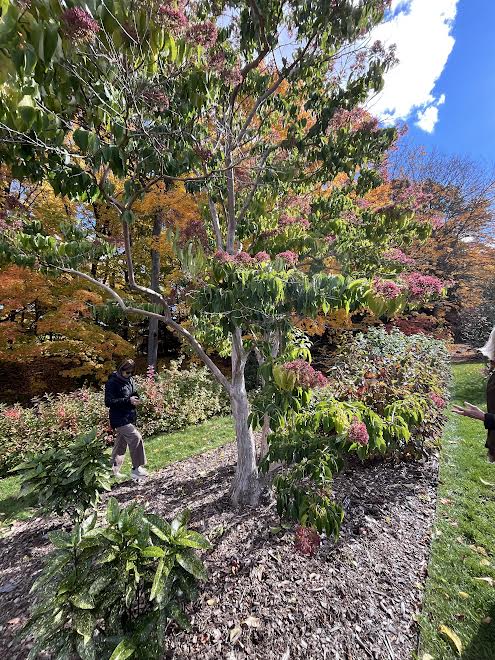
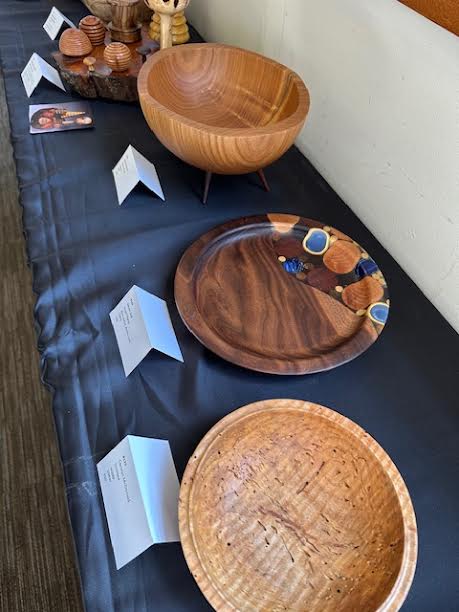
It was a perfect fall day for members of the Driftwood Garden Club to embark on a field trip. Our destination: The Arnold Arboretum in the Jamaica Plain neighborhood of Boston. The air was crisp, the sun was shining, and the leaves on the trees had turned beautiful shades of yellow, gold, orange, and red. While waiting for our group to assemble, we viewed a wood turners’ exhibit inside the Hunnewell Visitor Center. Some of the wood bowls exhibited were turned from wood that had come from trees within the Arboretum. We learned that each year around 400 trees are removed from the collection due to disease, damage, or managing the collection with a goal of creating opportunities for new plants to be introduced. If possible, that wood is repurposed in several different ways.

We met our very knowledgeable and friendly guide, Brad, outside of the building to begin our walking tour of the trees. He first gave us a little history of the Arboretum. It began in the mid-1800’s when two men made gifts to Harvard College: Benjamin Bussey, a wealthy Boston merchant, left land (about 300 acres) to the school in 1842; and James Arnold, a New Bedford whaling merchant, left a financial bequest ($100,000) in 1868 with the purpose of creating a public arboretum. Together, The Arnold Arboretum was founded in March 1872. The first director was Charles Sprague Sargent who partnered with Frederick Law Olmsted on the landscape layout. The two men formed a partnership with the city of Boston: Harvard gave the land to the city and then leased it back for $1/year, on a thousand year lease, with a renewal option. The Arnold Arboretum was born, and with that knowledge, we were ready to see some trees!

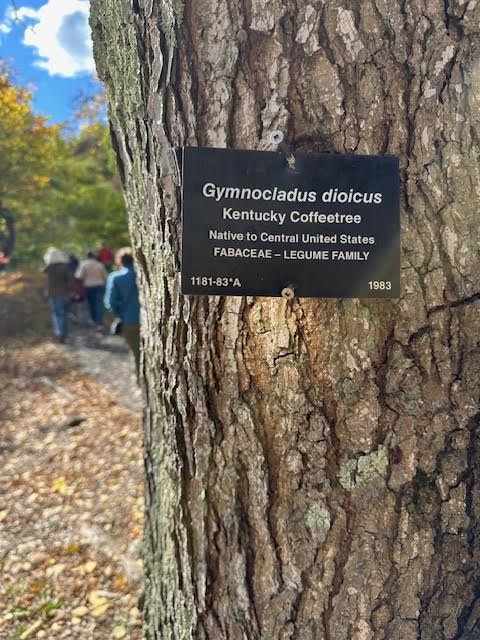
Brad explained that, just like an art museum that has rooms with particular periods of art, the arboretum is organized by types of trees. We saw linden trees, cork trees, tulip trees, and horse chestnuts, stopping along the way so Brad could tell us about a particular tree. He was a wealth of knowledge! There are over 16,000 plants (trees, vines and shrubs) within the arboretum. The Arboretum’s mission is to cultivate and care for all of the woody plants that can survive in Boston’s climate, so these are not just native trees. Some plants come from right around the corner (Mr. Sargent, the first director, took a red maple from his neighbor’s yard to plant here); and some plants come from around the world. Remember that The Arnold Arboretum, as part of Harvard University, is also a research institution, and the arboretum itself is a laboratory for students and professors alike. Each tree in the Arboretum has a tag with its common and scientific names, family, and origin, and we found ourselves stopping to investigate various name tags.

Many people who visit the Arboretum come especially for Lilac Sunday, that time in May when the lilacs are in full bloom and their scent fills the air. It is one of the busiest times at the Arboretum. Brad informed us that, although it was a beautiful event at the Arboretum, he was really not a fan of lilacs. Why? He thought that the flower did not give enough bang for the buck; it had a very short bloom time, and there were other plants that did a better job, if a longer bloom is what you wanted.

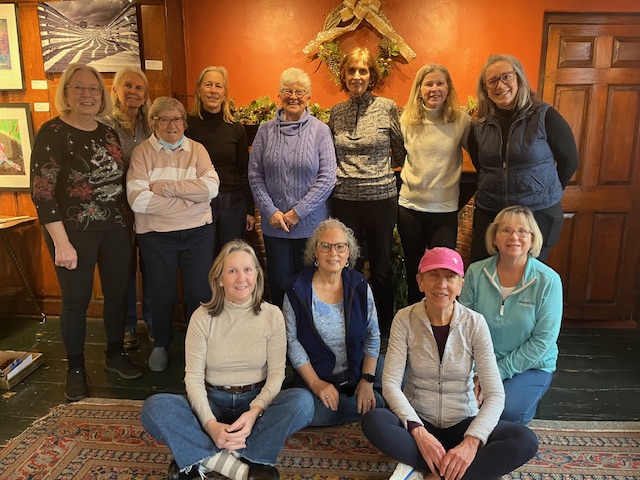
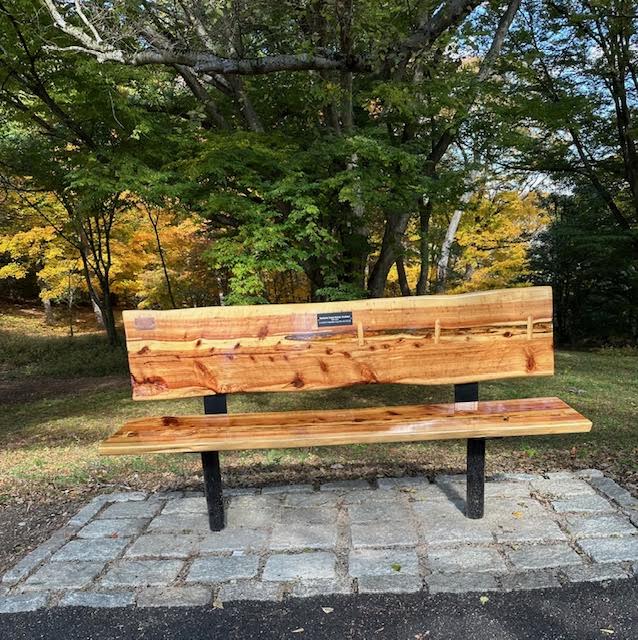
As we made our way along the lilacs path, we stopped to admire a backdrop of golden leaves behind a wooden bench. We asked to stop for a photo op, and of course, Brad obliged by taking our group picture. The bench was made of wood from a tree that had been taken down and repurposed, and there was a dedication and name on the bench. Brad explained that for $1,000 a year, you could buy a bench in honor or memory of someone. At the end of 10 years (that’s $10,000), you could renew your bench. We all had the same thought: “What a great idea!”

Returning to our starting point, a park ranger on horseback passed us on his patrol around the arboretum. We thanked Brad for a wonderful and information-filled tour and headed to our next destination: lunch!

Uncategorized

Beautiful Peonies

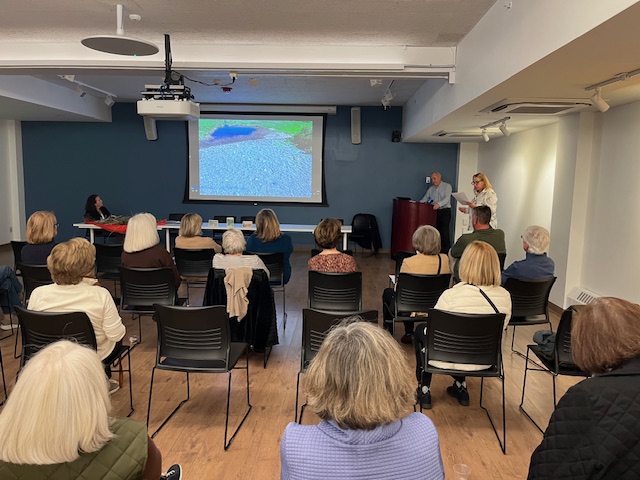
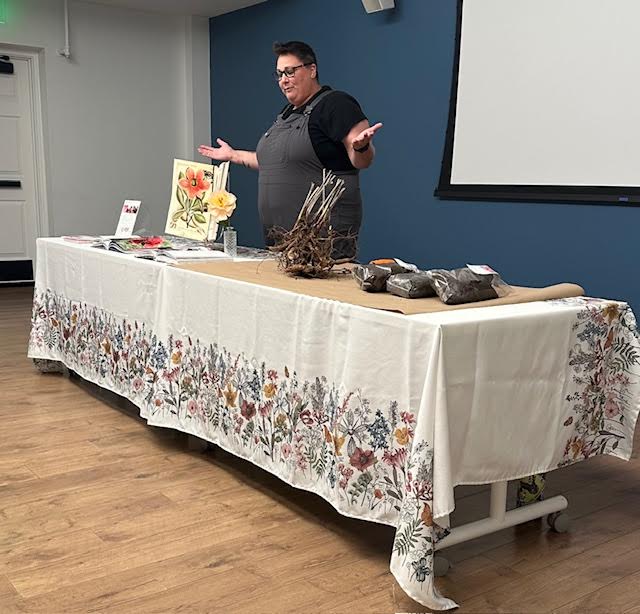
Members of the Driftwood Garden Club enjoyed a very informative program about growing and caring for peonies, one of the most lush and beautiful of all the flowers in our gardens. Stacey Lee, our presenter, is a floral designer and sustainability advocate. They own and operate Paeonia Designs in Framingham, and their knowledge and enthusiasm was contagious. Stacey’s career began as a civil engineer, working on projects relating to clean water sustainability. But they always had a passion for flowers, so they created Paeonia Designs as a side hustle. At the same time that Stacey was asked to create the floral designs for her close friend’s wedding, their engineering career was waning, and Paeonia Designs became a new, full-time endeavor.

Stacey’s talk began with a few fun facts, such as:

-Did you know that Homer, Alaska has the largest peony market in America? (Our climates are very similar.)

-Did you know that it is an old wives’ tale that ants crawl on peony blossoms to help them open? (The ants just want the peony sugar.)

-Did you know that peonies can live for over 100 years? (Just ask Stacey who has some peony plants from her grandmother’s garden!)

Stacey was a wealth of serious information as well, beginning with the three types of peonies:

  • the tree peony which has woody stems, grows quite tall, needs more shade, and is not cut back in fall,
  • the herbaceous peony, the most common, which needs lots of sun and, when cut back in the fall, will regrow from the roots the following spring, and
  • the intersectional peony, a hybrid of tree and herbaceous peonies, and has elements of both plant types.

No matter what type of peony you choose to grow, it is that spectacular blossom that we all admire. There are many varieties of peonies, and many variations in color, but they are all beautiful. Stacey’s professional tip for cutting the blooms is to cut BEFORE the flower is in full bloom. They called it a marshmallow pouf. If you cut the flower at this stage, wrap it in newspaper, and refrigerate it, the bloom will last for several days. When you put it in your floral arrangement, the “marshmallow pouf” will open and will last longer.

To avoid powdery mildew, plant your peonies in full sun with room around them for good air circulation, and water them at the base, not on the leaves. If you are planting a new peony plant or rerooting from an existing peony, patience is the key. Peonies usually take three years before they are established and are blooming successfully. Just remember these three words: roots, shoots, and fruits. If you follow these suggestions, your peony will live a long and happy life.

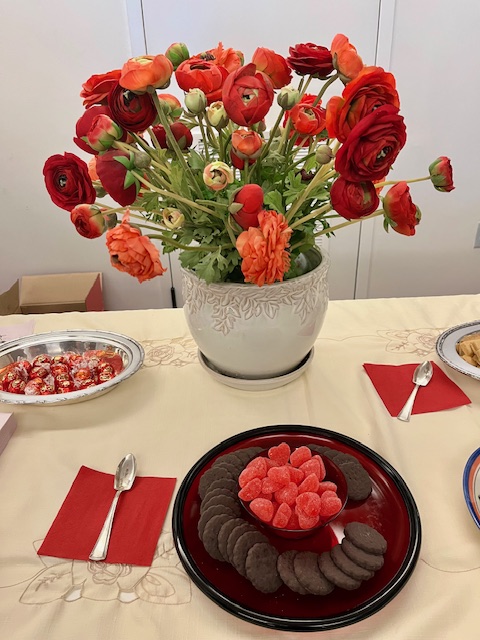
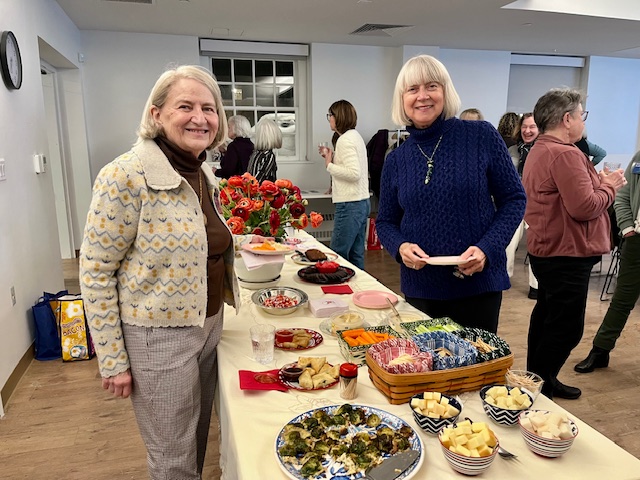
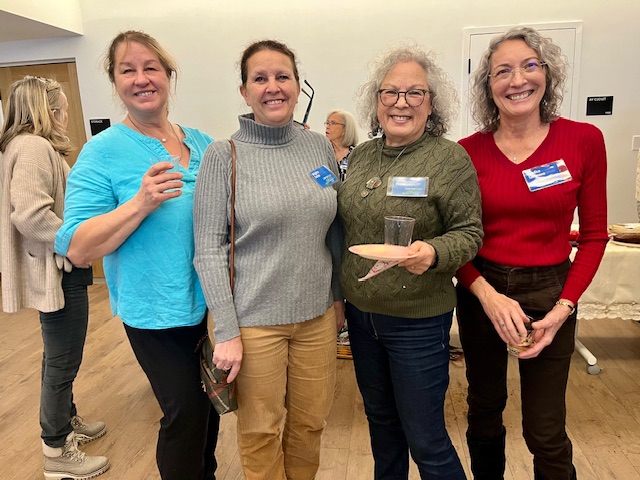
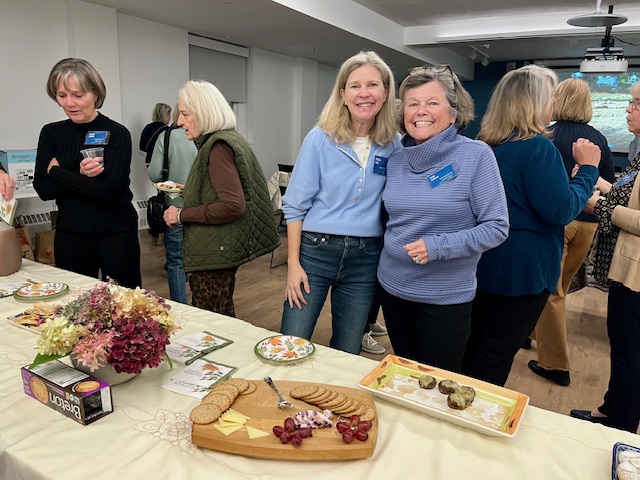
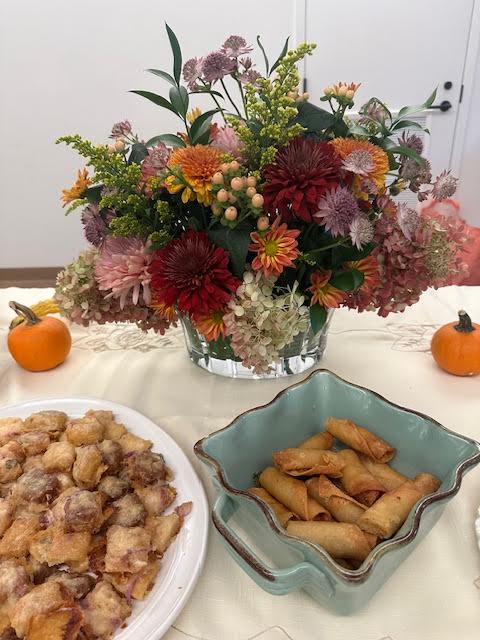
As always, a very sincere thank you to our hosts for the evening. They prepared and helped serve a beautifully laid table full of delicious sweet and savory offerings. It always makes our social time together extra special thanks to our hosts for the evening.

Uncategorized

COCKTAIL PARTY 2025

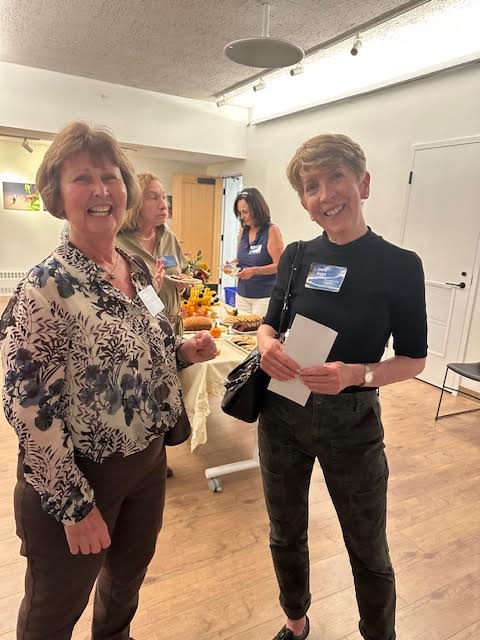
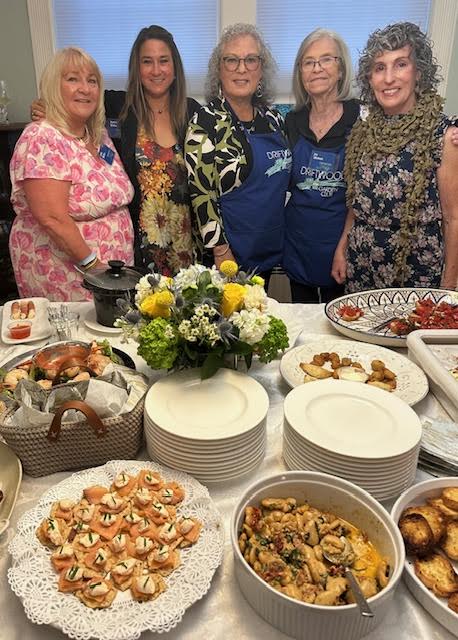
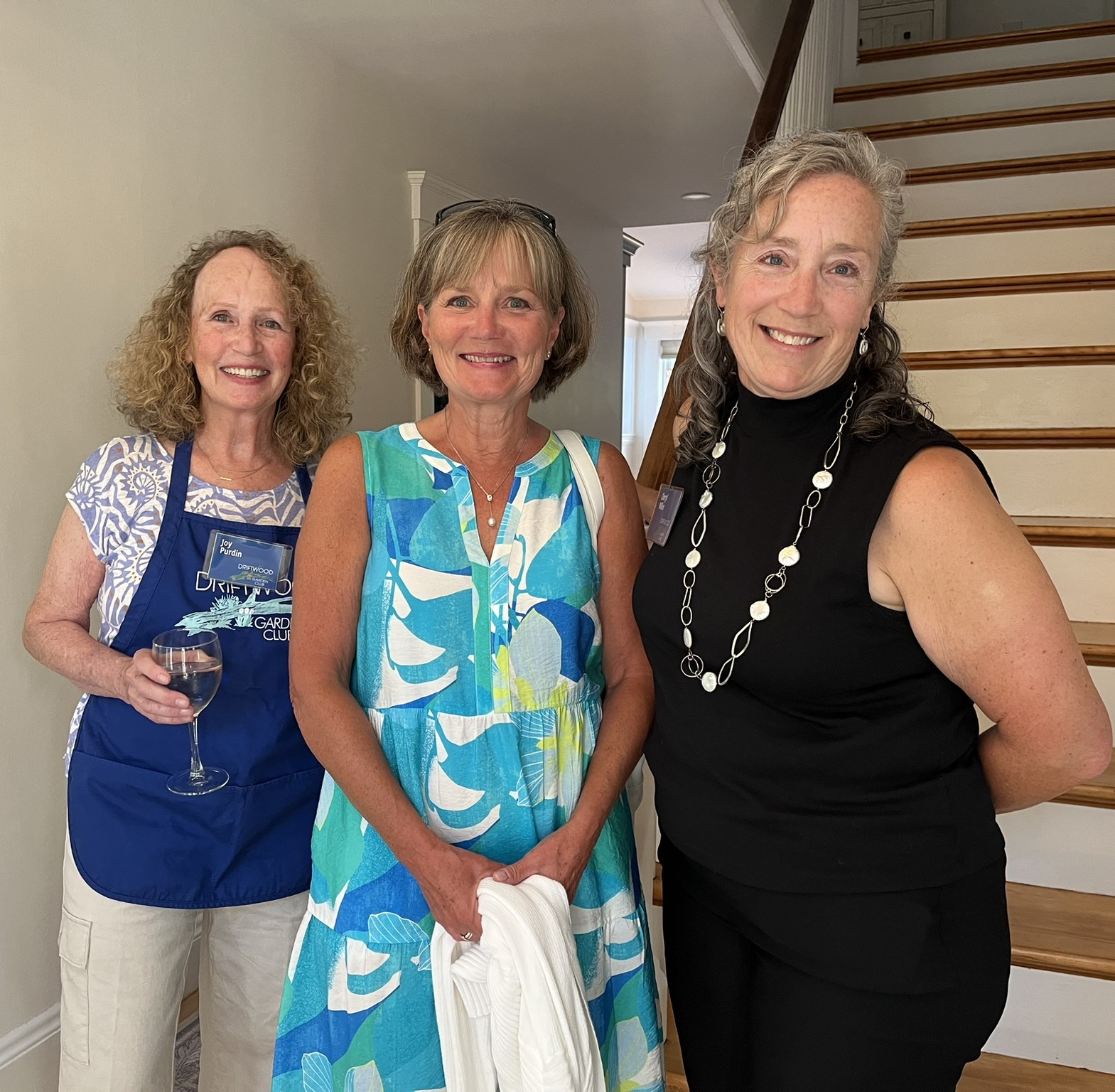
Driftwood Garden Club members, along with their guests, gathered at the lovely home of Joy Purdin to kick off the 2025/2026 season. Our annual cocktail party is a popular event for everyone, allowing people to mingle and get to know one another outside of the gardens that we care for throughout the spring, summer and fall.

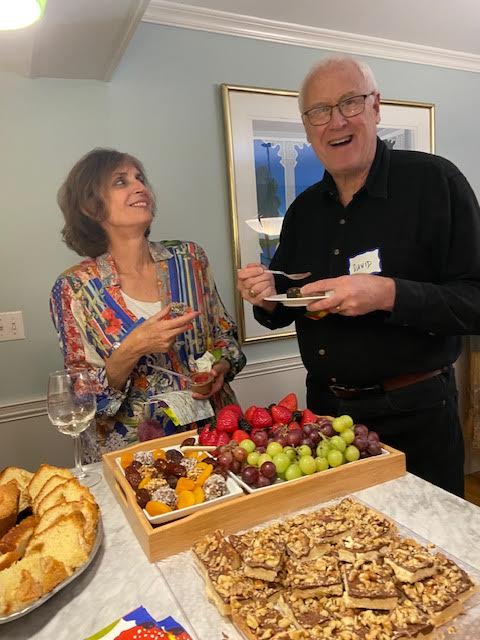
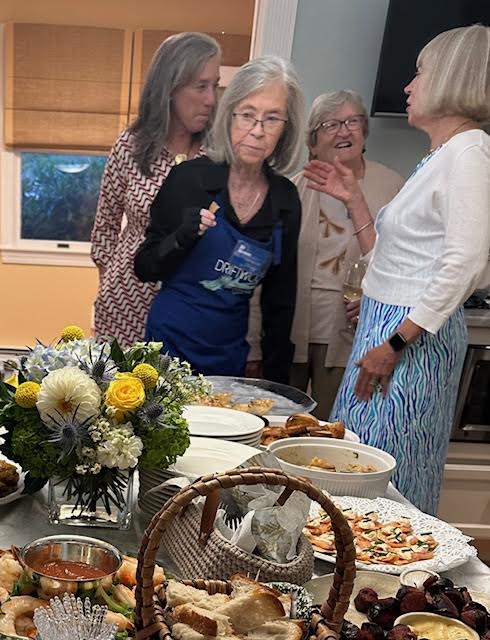
The savory hors-d’oeurves and sweet desserts are made and contributed by our members and are always delicious. The member hostesses seamlessly served, replenished plates and kept the kitchen area spotless, as they also circulated and enjoyed the party. A special shout-out to our bartenders, Cliff and Joe, who manned the wine bar and kept everyone happy.

Members, old and new, shared stories of gardens, trips, and family, as well as all that was accomplished by their hard work in the gardens of Abbot Library and Farrell Court this past season.

The Driftwood Garden Club is looking forward to the fantastic schedule of workshops, speakers, and field trips planned over the coming year. There is definitely something everyone can enjoy!

Uncategorized

End of the Summer New Members Social

Again this year, the DGC President hosted a get together to give new members a chance to chat with the Advisory Board and hear about activities and opportunities planned for the upcoming year. President Cheryl Miller opened her beautiful home and garden to members for delicious refreshments and great conversation.

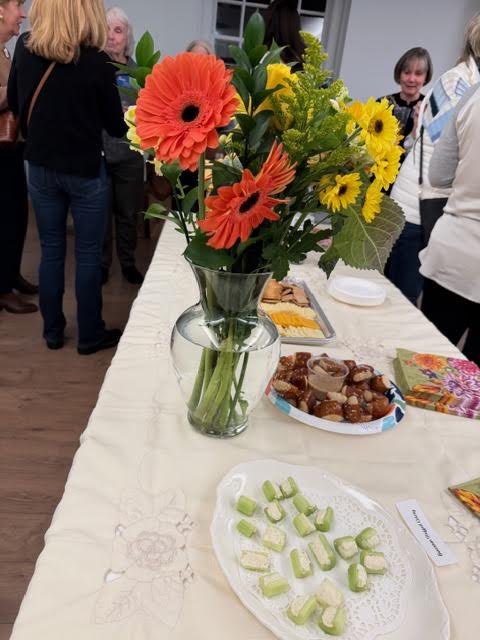
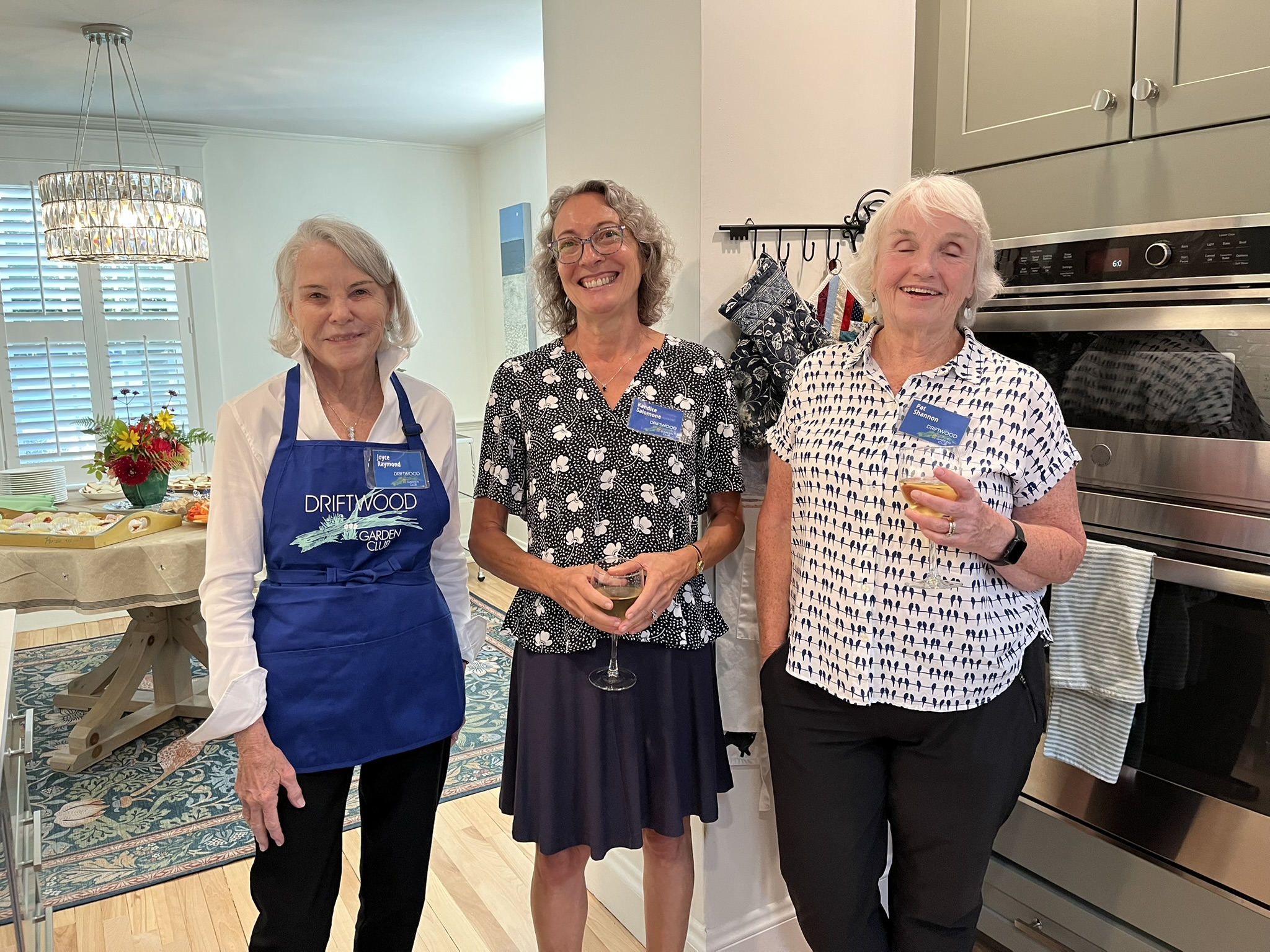
Hostesses Joy Purdin, Adrienne Sweetser, and Joyce Raymond provided delicious refreshments and Laurie Boggis created a beautiful centerpiece for the table using flowers from her own garden as well as from Adrienne’s.

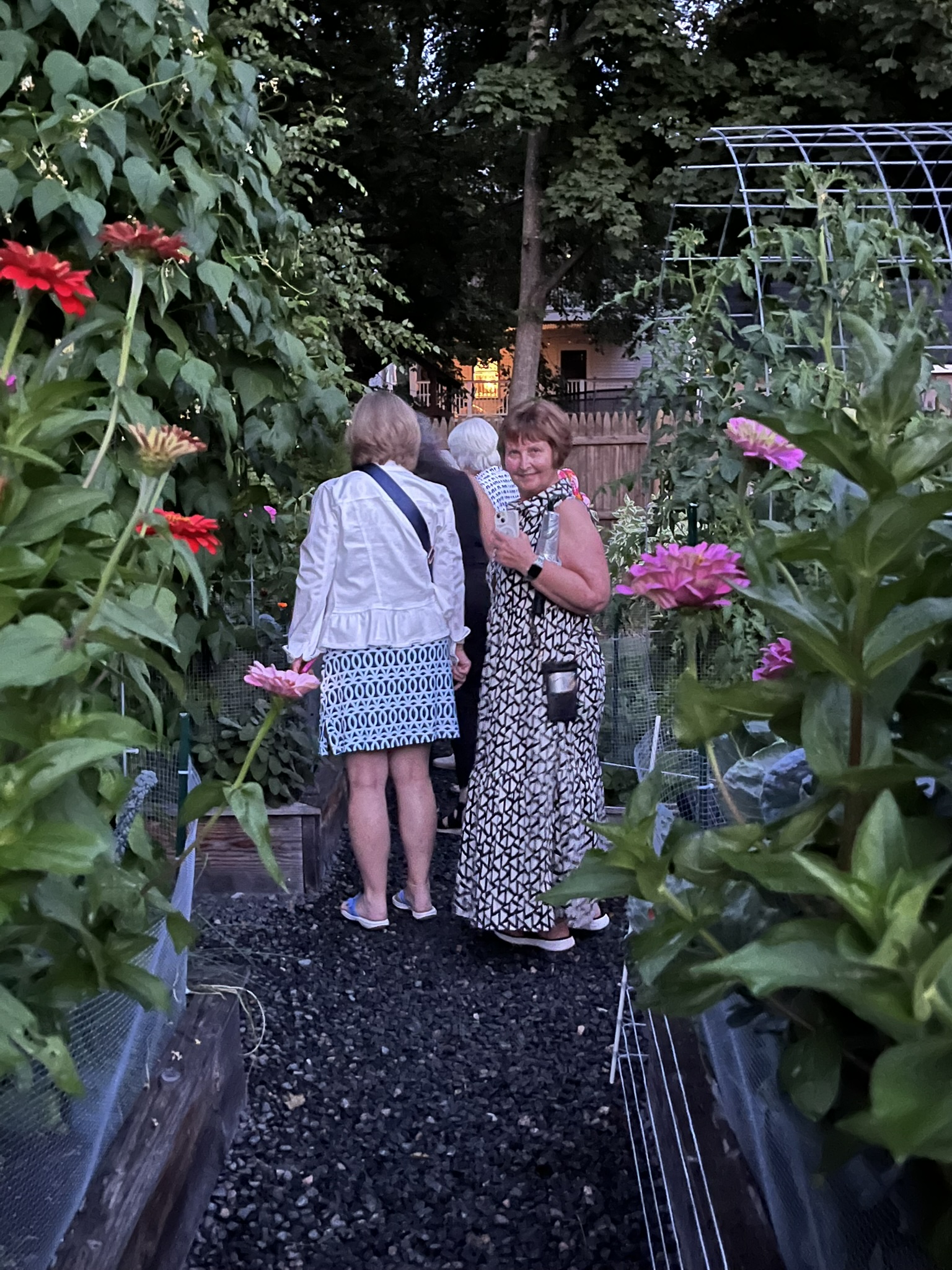
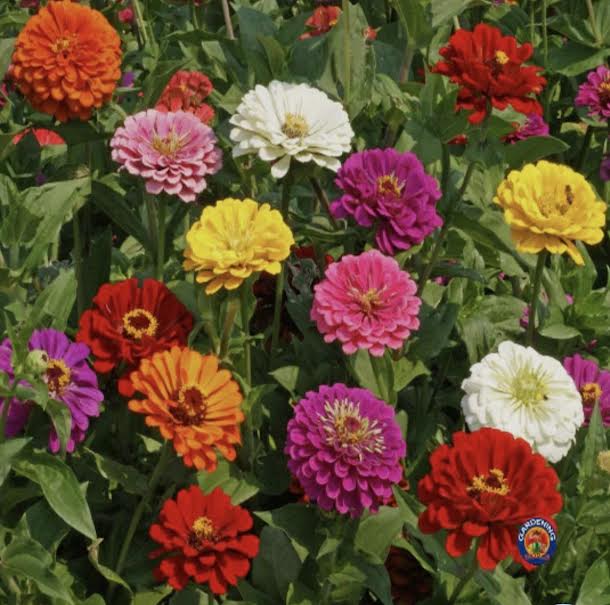
The evening ended with a tour of Cheryl’s garden which was a particular treat, if not downright magical – trellises, arches, fairy lights, and look at those zinnias!!

Uncategorized

Cement Birdbath Workshop!

Driftwood Garden Club members were up to their elbows in sand and cement while attending a cement birdbath workshop at The Trustees of Reservation Long Hill in Beverly, MA. Long Hill, the 114-acre estate built in 1916 as a summer home of Ellery Sedgwick, was a perfect setting for this event.

Our birdbath guru, horticulturalist Dan Bouchard, led us on a short walk in the woods to find perfect leaves for our creations. He stressed the importance of using a leaf with the right shape and curve, and with prominent veins on the underside.

We observed Dan mound his sand on a board, carefully position the leaf, then mix the cement into a perfect consistency. Not too wet, not too dry!  After his demo, we were on our own shoveling sand from the pile, mixing water into the cement powder, and carefully covering the leaf with wet cement. Each participant carved her initials on the underside of the birdbath.

Our birdbaths, covered in plastic, took about a week to dry in this summer humidity. We know local birds and butterflies will be thrilled with these stunning new birdbaths!

Uncategorized

2025 Annual Luncheon!
On an overcast afternoon in June, members of Driftwood Garden Club enjoyed their Annual Luncheon to celebrate the successful 2025 plant sale and all the wonderful educational programs held over the past year. Drizzle may have restricted the lovely views, but wet weather couldn’t dampen the smiles of all who attended.

Many thanks to our host Loretta Connolly for sharing her beautiful home and gardens for our annual meeting. DGC hostesses provided a delicious variety of fresh salads, fruit, and side dishes for all to enjoy.

We especially thank Louise Moore of ‘Every Little Breeze Catering’ for the amazing lobster rolls and lobster salads, as well as Lilly at ‘Three Hundred Fifty Bakery’ for the yummy cupcakes.

After DGC President Joyce Raymond reviewed the past year’s activities, we voted on by-law changes, welcomed new members, and approved the upcoming roster of officers and committee members. Each committee chairperson gave a brief overview of their team’s accomplishments and goals.

We truly have an exceptional slate of officers and committee members, and we look forward to many Driftwood Garden Club events and programs next year!
Uncategorized

Art In Bloom 2025: Winslow Homer’s ‘The Fog Warning’.

Congratulations to Driftwood Garden Club members Pinar Gokce and Susan McMullen for their stunning floral interpretation of Winslow Homer’s ‘The Fog Warning’.

Painted in Maine in 1885, this iconic oil painting depicts a local fisherman battling the elements in the hopes of returning to the safety of the ship far on the horizon. Susan and Pinar were struck by the intense drama and conflict in the painting, as well as the strong diagonals created by the dory and the impending fog.

This is the first time the duo collaborated to design for Boston’s Museum of Fine Arts annual Art in Bloom event. They chose their container because of the shape, composition, and color. The shape suggests a boat, the material is rough and elemental, and the color mimics cold ocean water. Then they scoured the New England Flower Exchange to find plant materials that best represented the painting. According to the designers, their creation is meant to express the contrast between the menacing fog bank, the solitude of the fisherman and the glimmer of hope in the pink sky reflected on the fish skin. In the arrangement, the diagonals of the fog and dory are represented by Ti leaves and Fantail Pussy Willows, and Quince branches and Rice Flowers provide a delicate pink shade. Other flowers used were Bush Ivy, Dusty Miller, and Sea Holly.

Art in Bloom, now in its 49th year, is a beloved event at the Museum of Fine Arts. The popular event showcases the expertise of New England garden clubs, professional designers, and MFA floral volunteers. Driftwood members were guided on a private tour by an MFA Tour Docent who described the art piece along with an MFA Floral Design Volunteer who commented on the accompanying floral design. Everyone agreed that Susan McMullen and Pinar Gokce’s beautiful floral design depicting ‘The Fog Warning’ was professionally executed in every way.

Enjoy these pictures of DGC members enjoying several other works of art with the corresponding Art in Bloom floral designs!

We hope to see you at Art in Bloom again next year!

Uncategorized

Plant Sale 2025 – Gratitude & Thanks.

The wind and rain could not stop the Driftwood Garden Club members from welcoming hundreds of people to their 2025 Plant Sale. Proceeds from the sale help fund the landscaping and maintenance of the Abbot Public Library gardens, as well as our civic gardening projects at Farrell Court in Marblehead.

It takes a coordinated effort of many people to orchestrate this amazing plant sale each year. We are grateful to our hardworking members, especially our Plant Sale Committee, as well as the Marblehead Masonic Hall for hosting the event. A shout out to Louise from Every Little Breeze Catering for providing a delicious luncheon for our members after the sale ended.

We would also like to thank the Marblehead Garden Center for partnering with us each year by providing the colorful annuals, herbs and hanging baskets. Between the tables of carefully tended perennials from our Dig & Divide, to the specialty tables (Dahlias, Woodland Plants, Mother’s Day gift orchids), and the pop of color with the hanging baskets and annuals, there was something for everyone. 

Our members were kept busy answering questions and helping people select plants, while member Ginny VonRueden was at her Window Box display helping people arrange various plants for their own planters at home.

We especially thank our gardening customers, both long-time friends and first-time buyers, who came to our sale. We love seeing everyone’s happy faces as they leave with a box, or two, of plants to transplant into their own gardens. With our plant sale over, the gardening season has officially begun!
Uncategorized

Dig and Divide: This is how we do it!

Ever wonder how Driftwood Garden Club gets over 1,000 plants to sell at our annual plant sale? 

Starting in early April, members don their waterproof boots, warm jackets and work gloves, and trek into 50 local gardens. We dig perennial plants from our own yards and many donor gardens in Marblehead.

Dividing hardy perennials is a ‘Win-Win’ for us and also for the plant. Dividing plants in early spring encourages vigorous growth, stimulates new growth, and reduces crowding in the garden bed. And we get to sell healthy new plants!

Driftwood members transplant the plants into half-gallon pots, add fresh potting soil, water well, then bring the plants home to care for them. By the time the plant sale arrives on May 10th, these plants have been in their pots for many weeks and have developed new roots. The plants we sell at the plant sale are happy, healthy, and ready to transplant into your garden!

We hope to see you at Driftwood Garden Club’s annual plant sale on Saturday, May 10th from 8:30-11:30 AM at the Masonic Hall, 62 Pleasant Street, Marblehead, MA. Come join us!

Uncategorized

A Doubleheader: Nifty Garden Tools plus a Warm-up for Dig & Divide.

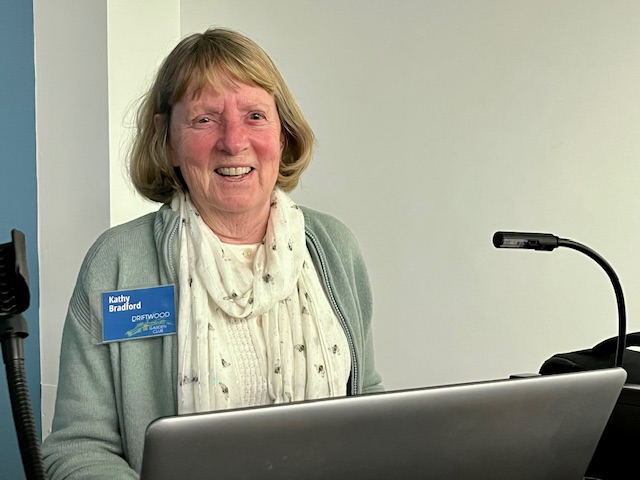
Members of the Driftwood Garden Club enjoyed a doubleheader at their April program. Past-Presidents Kathy Bradford and Joy Purdin presented first with “Nifty Garden Tools” that every gardener should know about, and the essential tools to carry in your garden bag. Then Lisa Biggio, our Civic Beautification Chair, talked with members about the importance of our upcoming Dig & Divide, demonstrating dividing and repotting a plant, as well as having members participate in a hands-on dig and divide activity.

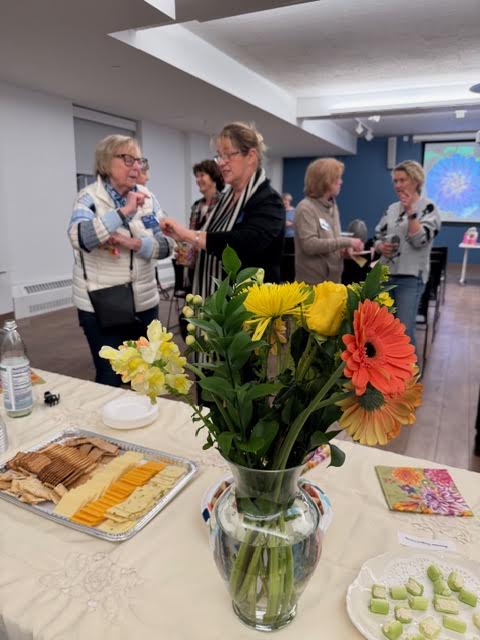
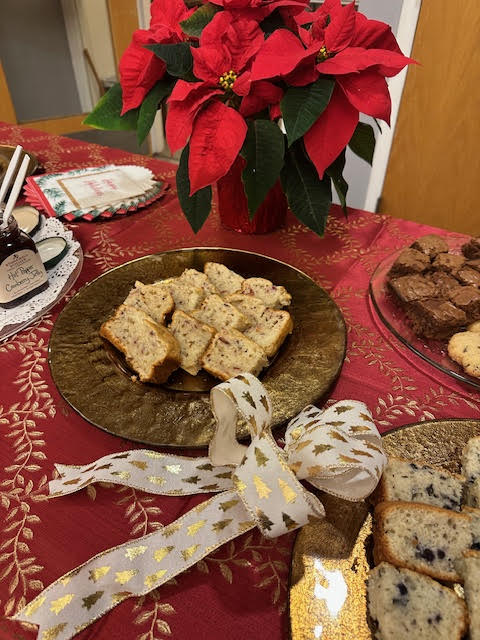
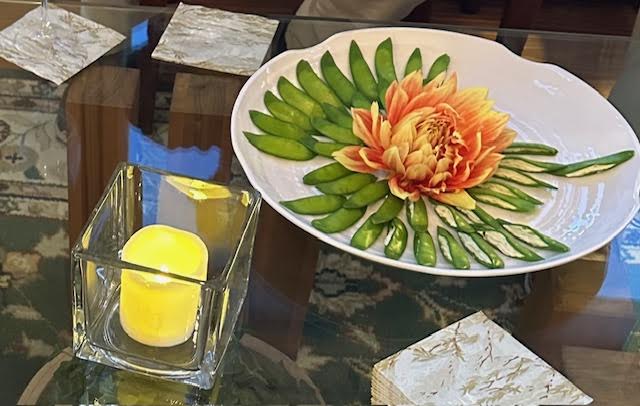
Thank you to our Hostess Committee for a beautifully prepared table of treats for the socializing portion of our meeting. The centerpiece was a perfect reflection of the evening’s theme with four miniature pots planted with miniature daffodils and miniature blue muscari. As an added touch, there were miniature garden tools to complement the potted flowers!

Kathy and Joy organized the tools by categories of use and created a hand-out for people to follow as each tool was discussed. All of the tools were laid out on the table, and as they talked about each tool, they could pick it up for display. The categories were tools for: Pruning and Deadheading; Weeding; Digging and Planting; Clearing and Tidying; and Miscellaneous Items. Miscellaneous items included a choice of a garden bag, gloves (long and short), and a bar of soap to scrape your fingernails on before you put on your gloves to start working in the dirt. At the end, each presenter selected their three favorite tools. Both gardeners agreed that the Spearhead shovel was their top favorite. Joy chose dutch hoe (Japanese hoe) and the pruning saw to complete her three, while Kathy chose her trowel (both her new trowel and the trowel that had belonged to her mom) and her pruning clippers. 

For the second part of our program, Lisa did a wonderful job talking to members about the importance of the upcoming Dig & Divide. She thanked our Plant Sale Committee for their incredible job of finding the thirteen “volunteer” gardens that we will use this year. The Plant Sale Committee coordinates the Captains for each garden, organizes the signups for members to work, and supplies all the needed materials for the Captains’ boxes. This is definitely a team endeavor, and the Plant Sale Committee does the groundwork to organize it all. The perennials that are dug from a garden during Dig & Divide are then divvied up among members of the team and brought home to be cared for until the Plant Sale. Lisa gave some suggestions such as putting all of the newly dug plants in a shady spot in your yard for the first few days, as the plants are in shock from the transplant. Perennials that require full sun can then be moved to a sunnier spot in a day or two.

Lisa then demonstrated how to “dig” and divide and repot a portion of a snake plant. As she worked, she chatted about the snake plant (also known as mother-in-law tongue because of the leaf shape). She said this was a great indoor plant because it was very low-maintenance, and it was also a plant that releases quite a bit of oxygen, even during the night, making it a great plant for the bedroom. She answered questions from the audience about the plant as well as questions about the Dig and Divide. Members then had an opportunity to practice the dig and divide technique on their own at work tables Lisa had set up around the room.

Our program was a good review for everyone, a wonderful team builder, and, at the end of the evening, our members were ready for their Dig & Divide. They also had a lovely plant to take home with them.